
How we got here
How we got here: the issues that divided the parties, 1790s to today
The short answer
Measured by how members of Congress vote, the two parties in 2025 are further apart than at any point since at least 1879, the first year in this record. The issues that divide them have changed many times, and on several, including tariffs, civil rights, the environment and the Equal Rights Amendment, the parties have stood on different sides at different times.
Together and Dug in
Together: a law passed with a majority of both major parties voting yes in both chambers, or a documented agreement across parties, shown with the vote. Dug in: a documented failure to settle by vote, or a break in the system, shown with what followed.
- Together: majorities of both parties voted yes
- Dug in: no settlement, and what followed
Together (14)
Together · 1890
Sherman Antitrust Act
Congress made contracts, combinations and conspiracies in restraint of trade unlawful.
- House, June 20, 1890: 242 to 0 (Democrats 115 yes, 0 no; Republicans 127 yes, 0 no; total 242 yes, 0 no) voteview.com
- Senate, April 8, 1890: 51 to 1 (Democrats 24 yes, 1 no; Republicans 27 yes, 0 no; total 51 yes, 1 no) voteview.com
Where it landed: Enacted as 26 Stat. 209, approved July 2, 1890, per the Voteview roll call description; the House vote is on the conference report.
Voteview, House roll call 215, 51st Congress voteview.com Voteview, Senate roll call 81, 51st Congress voteview.com
Together · 1919
19th Amendment, women's right to vote
Congress passed a constitutional amendment barring denial of the vote on account of sex and sent it to the states.
- House, May 21, 1919: 304 to 89 (Democrats 102 yes, 70 no; Republicans 200 yes, 19 no; total 304 yes, 89 no; Prohibitionist 1 yes, 0 no; Union Labor 1 yes, 0 no) voteview.com
- Senate, June 4, 1919: 56 to 25 (Democrats 20 yes, 17 no; Republicans 36 yes, 8 no; total 56 yes, 25 no) voteview.com
Where it landed: Ratified August 18, 1920, when Tennessee became the 36th state to ratify, and certified August 26, 1920.
Voteview, House roll call 2, 66th Congress voteview.com Voteview, Senate roll call 13, 66th Congress voteview.com National Archives, 19th Amendment milestone document archives.gov
Together · 1935
Social Security Act
Congress created federal old-age benefits and related welfare programs.
- House, April 19, 1935: 372 to 33 (Democrats 288 yes, 13 no; Republicans 77 yes, 18 no; total 372 yes, 33 no; Progressive 6 yes, 0 no; Farmer-Labor 1 yes, 2 no) voteview.com
- Senate, June 19, 1935: 77 to 6 (Democrats 60 yes, 1 no; Republicans 15 yes, 5 no; total 77 yes, 6 no; Progressive 1 yes, 0 no; Farmer-Labor 1 yes, 0 no) voteview.com
Where it landed: Enacted as Public Act 271 of the 74th Congress, per the Voteview roll call description. Votes shown are each chamber's passage vote; later conference votes are not shown.
Voteview, House roll call 39, 74th Congress voteview.com Voteview, Senate roll call 82, 74th Congress voteview.com
Together · 1944
GI Bill (Servicemen's Readjustment Act)
Congress provided federal aid to help World War II veterans return to civilian life.
- House, June 13, 1944: 380 to 0 (Democrats 181 yes, 0 no; Republicans 195 yes, 0 no; total 380 yes, 0 no; Progressive 2 yes, 0 no; American Labor 1 yes, 0 no; Farmer-Labor 1 yes, 0 no) voteview.com
- Senate, March 24, 1944: 50 to 0 (Democrats 23 yes, 0 no; Republicans 26 yes, 0 no; total 50 yes, 0 no; Progressive 1 yes, 0 no) voteview.com
Where it landed: No recorded member of either party voted no in either chamber on the votes shown (House conference report, Senate passage).
Voteview, House roll call 131, 78th Congress voteview.com Voteview, Senate roll call 173, 78th Congress voteview.com
Together · 1948
Marshall Plan (Economic Cooperation Act, S. 2202)
Congress authorized economic aid to European countries that agreed to cooperate in their recovery.
- House, April 2, 1948: 318 to 75 (Democrats 151 yes, 11 no; Republicans 167 yes, 62 no; total 318 yes, 75 no; American Labor 0 yes, 2 no) voteview.com
- Senate, March 13, 1948: 69 to 17 (Democrats 38 yes, 4 no; Republicans 31 yes, 13 no; total 69 yes, 17 no) voteview.com
Where it landed: The House vote shown is adoption of the conference report on April 2, 1948; the Senate vote is passage on March 13, 1948.
Voteview, House roll call 109, 80th Congress voteview.com Voteview, Senate roll call 153, 80th Congress voteview.com
Together · 1956
Federal-Aid Highway Act (Interstate Highway Act)
Congress authorized funds for highway construction and new highway taxes to pay for them.
- House, April 27, 1956: 388 to 19 (Democrats 200 yes, 15 no; Republicans 188 yes, 4 no; total 388 yes, 19 no) voteview.com
- Senate, June 22, 1956: 89 to 1 (Democrats 46 yes, 1 no; Republicans 42 yes, 0 no; total 89 yes, 1 no; Independent 1 yes, 0 no) voteview.com
Where it landed: The House vote shown is passage on April 27, 1956; the Senate vote is adoption of the conference report on June 22, 1956.
Voteview, House roll call 95, 84th Congress voteview.com Voteview, Senate roll call 171, 84th Congress voteview.com
Together · 1958
National Defense Education Act
Congress authorized a seven-year program of federal aid to students and schools.
- House, August 23, 1958: 212 to 85 (Democrats 140 yes, 30 no; Republicans 72 yes, 55 no; total 212 yes, 85 no) voteview.com
- Senate, August 22, 1958: 66 to 15 (Democrats 37 yes, 7 no; Republicans 29 yes, 8 no; total 66 yes, 15 no) voteview.com
Where it landed: Both votes shown are on the conference report; the Senate description gives the authorization as $1 billion. House Republicans split 81 yes to 72 no, a narrow majority yes.
Voteview, House roll call 193, 85th Congress voteview.com Voteview, Senate roll call 300, 85th Congress voteview.com
Together · 1964
Civil Rights Act of 1964
Congress outlawed discrimination in public accommodations, federally funded programs and employment.
- House, July 2, 1964: 289 to 126 (Democrats 153 yes, 91 no; Republicans 136 yes, 35 no; total 289 yes, 126 no) voteview.com
- Senate, June 19, 1964: 73 to 27 (Democrats 46 yes, 21 no; Republicans 27 yes, 6 no; total 73 yes, 27 no) voteview.com
- House first passage, February 10, 1964: 290 to 130 (Democrats 152 yes, 96 no; Republicans 138 yes, 34 no; total 290 yes, 130 no) voteview.com
Where it landed: The House gave final approval on July 2, 1964 by adopting H. Res. 789, accepting the Senate version; the Senate passed it on June 19, 1964. A majority of each party voted yes in both chambers.
Voteview, House roll call 182, 88th Congress voteview.com Voteview, Senate roll call 409, 88th Congress voteview.com Voteview, House roll call 128, 88th Congress (first House passage) voteview.com
Together · 1965
Voting Rights Act of 1965
Congress enacted federal enforcement of the right to vote.
- House, August 3, 1965: 328 to 74 (Democrats 218 yes, 54 no; Republicans 110 yes, 20 no; total 328 yes, 74 no) voteview.com
- Senate, August 4, 1965: 79 to 18 (Democrats 49 yes, 17 no; Republicans 30 yes, 1 no; total 79 yes, 18 no) voteview.com
Where it landed: Both votes shown are on the conference report on S. 1564.
Voteview, House roll call 107, 89th Congress voteview.com Voteview, Senate roll call 178, 89th Congress voteview.com
Together · 1970
Clean Air Act Amendments of 1970 (H.R. 17255)
Congress expanded federal authority to set and enforce air quality standards.
- House, June 10, 1970: 375 to 1 (Democrats 210 yes, 0 no; Republicans 165 yes, 1 no; total 375 yes, 1 no) voteview.com
- Senate, September 22, 1970: 73 to 0 (Democrats 43 yes, 0 no; Republicans 30 yes, 0 no; total 73 yes, 0 no) voteview.com
Where it landed: Votes shown are each chamber's passage of H.R. 17255: one House Republican voted no and no senator voted no.
Voteview, House roll call 268, 91st Congress voteview.com Voteview, Senate roll call 543, 91st Congress voteview.com
Together · 1983
Social Security Amendments of 1983 (H.R. 1900)
Congress passed changes to protect the solvency of the Social Security trust funds.
- House, March 24, 1983: 243 to 102 (Democrats 163 yes, 54 no; Republicans 80 yes, 48 no; total 243 yes, 102 no) voteview.com
- Senate, March 24, 1983: 58 to 14 (Democrats 26 yes, 6 no; Republicans 32 yes, 8 no; total 58 yes, 14 no) voteview.com
Where it landed: Both chambers adopted the conference report on March 24, 1983.
Voteview, House roll call 43, 98th Congress voteview.com Voteview, Senate roll call 54, 98th Congress voteview.com
Together · 1986
Tax Reform Act of 1986
Congress lowered individual and corporate tax rates and ended or curtailed many credits and deductions.
- House, September 25, 1986: 292 to 136 (Democrats 176 yes, 74 no; Republicans 116 yes, 62 no; total 292 yes, 136 no) voteview.com
- Senate, September 27, 1986: 74 to 23 (Democrats 33 yes, 12 no; Republicans 41 yes, 11 no; total 74 yes, 23 no) voteview.com
Where it landed: Both votes shown are on the conference report on H.R. 3838.
Voteview, House roll call 818, 99th Congress voteview.com Voteview, Senate roll call 677, 99th Congress voteview.com
Together · 1990
Americans with Disabilities Act
Congress prohibited discrimination on the basis of disability.
- House, July 12, 1990: 377 to 28 (Democrats 232 yes, 5 no; Republicans 145 yes, 23 no; total 377 yes, 28 no) voteview.com
- Senate, July 13, 1990: 91 to 6 (Democrats 54 yes, 0 no; Republicans 37 yes, 6 no; total 91 yes, 6 no) voteview.com
Where it landed: Both votes shown are on the conference report on S. 933.
Voteview, House roll call 583, 101st Congress voteview.com Voteview, Senate roll call 464, 101st Congress voteview.com
Together · 2001
Authorization for Use of Military Force after September 11
Congress authorized the use of the armed forces against those responsible for the September 11, 2001 attacks.
- House, September 14, 2001: 420 to 1 (Democrats 204 yes, 1 no; Republicans 214 yes, 0 no; total 420 yes, 1 no; Independent 2 yes, 0 no) voteview.com
- Senate, September 14, 2001: 98 to 0 (Democrats 50 yes, 0 no; Republicans 47 yes, 0 no; total 98 yes, 0 no; Independent 1 yes, 0 no) voteview.com
Where it landed: Signed September 18, 2001 as P.L. 107-40. The one no vote in either chamber was a House Democrat. Voteview files the House 420 to 1 vote under H.J. Res. 64; the Congressional Research Service reports the House tabled H.J. Res. 64 and passed S.J. Res. 23 by that 420 to 1 vote.
Voteview, House roll call 339, 107th Congress voteview.com Voteview, Senate roll call 281, 107th Congress voteview.com Congressional Research Service, RS22357, AUMF (P.L. 107-40): Legislative History everycrsreport.com
Dug in (9)
Dug in · 1836
The gag rule, 1836 to 1844
The House adopted a rule that every petition, memorial or resolution on slavery be tabled automatically with no further action.
- House, May 26, 1836: 117 to 68 (Jacksonians 93 yes, 21 no; Anti-Jacksonians 23 yes, 34 no; total 117 yes, 68 no; Anti Masonic 0 yes, 12 no; Nullifier 1 yes, 1 no) voteview.com
- House repeal, December 3, 1844: 108 to 80 (Democrats 55 yes, 64 no; Whigs 49 yes, 16 no; total 108 yes, 80 no; Ind. Democrat 1 yes, 0 no; Law and Order 2 yes, 0 no; Ind. Whig 1 yes, 0 no) voteview.com
What followed: The House reinstated the rule each Congress until it was repealed on December 3, 1844, by a vote of 108 to 80 (Whigs 49 yes, 16 no; Democrats 55 yes, 64 no). Petitions on slavery went unconsidered for eight years.
Voteview, House roll call 197, 24th Congress voteview.com Voteview, House roll call 423, 28th Congress voteview.com U.S. House History, Art and Archives, The gag rule history.house.gov
Dug in · 1861
Crittenden Compromise fails, secession and the Civil War
The Senate rejected the Crittenden constitutional amendments on slavery, 19 to 20, as Southern states were leaving the Union.
- Senate, March 2, 1861: 19 to 20 (Democrats 17 yes, 0 no; Republicans 0 yes, 20 no; total 19 yes, 20 no; American 2 yes, 0 no) voteview.com
- Senate jan16 substitute, January 16, 1861: 25 to 23 (Democrats 0 yes, 21 no; Republicans 25 yes, 0 no; total 25 yes, 23 no; American 0 yes, 2 no) voteview.com
- House, February 27, 1861: 80 to 113 (Democrats 50 yes, 1 no; Republicans 1 yes, 109 no; total 80 yes, 113 no; Anti-Lecompton Democrat 4 yes, 1 no; American 4 yes, 1 no; Ind. Democrat 6 yes, 0 no; Opposition 15 yes, 1 no) voteview.com
What followed: South Carolina declared secession on December 20, 1860; seven seceded states created the Confederate States of America on February 4, 1861; the war began with the attack on Fort Sumter on April 12, 1861, and eleven states seceded in all. An estimated 620,000 men died and an estimated 1.5 million casualties were reported.
Voteview, Senate roll call 602, 36th Congress (passage of S.J. Res. 54, the Crittenden resolution, failed) voteview.com Voteview, Senate roll call 403, 36th Congress (January 16, 1861 substitute, 25 to 23) voteview.com Voteview, House roll call 404, 36th Congress (Crittenden plan as a referendum amendment, failed 80 to 113) voteview.com National Park Service, Kennesaw Mountain, War Declared nps.gov American Battlefield Trust, Civil War Casualties battlefields.org
Dug in · 1919
Senate rejects the Treaty of Versailles and the League of Nations
The Senate voted down the Treaty of Versailles, with and without reservations, in November 1919 and again in March 1920.
- Senate with reservations, November 19, 1919: 41 to 51 (Democrats 7 yes, 38 no; Republicans 34 yes, 13 no; total 41 yes, 51 no) voteview.com
- Senate unconditional, November 19, 1919: 38 to 53 (Democrats 37 yes, 7 no; Republicans 1 yes, 46 no; total 38 yes, 53 no) voteview.com
- Senate march 1920, March 19, 1920: 49 to 35 (Democrats 21 yes, 23 no; Republicans 28 yes, 12 no; total 49 yes, 35 no) voteview.com
What followed: On November 19, 1919 the Senate rejected a peace treaty for the first time in its history. The March 19, 1920 vote of 49 to 35 fell short of the two-thirds needed, and the United States never joined the League of Nations.
Voteview, Senate roll call 138, 66th Congress voteview.com Voteview, Senate roll call 139, 66th Congress voteview.com Voteview, Senate roll call 263, 66th Congress voteview.com U.S. Senate, Senate Rejects Treaty of Versailles senate.gov U.S. Department of State, Office of the Historian, The League of Nations, 1920 history.state.gov
Dug in · 1995
Government shutdowns of 1995 and 1996
Federal funding lapsed twice in fiscal year 1996 when the President and Congress did not agree on appropriations.
What followed: The first shutdown ran from November 14 to 19, 1995, five full days, with about 800,000 federal employees furloughed; the second ran from December 16, 1995 to January 6, 1996, 21 full days, with 284,000 furloughed as of January 2, 1996. OMB estimated the two together cost over $1.4 billion.
Congressional Research Service, R41759, Past Government Shutdowns: Key Resources everycrsreport.com Congressional Research Service, RL34680, Shutdown of the Federal Government: Causes, Processes, and Effects everycrsreport.com
Dug in · 2011
Debt ceiling standoff of 2011 and the first U.S. credit downgrade
Congress raised the debt limit on August 2, 2011, after Treasury had projected its extraordinary measures would run out after about July 8, 2011.
- House, August 1, 2011: 269 to 161 (Democrats 95 yes, 95 no; Republicans 174 yes, 66 no; total 269 yes, 161 no) voteview.com
- Senate, August 2, 2011: 74 to 26 (Democrats 46 yes, 6 no; Republicans 28 yes, 19 no; total 74 yes, 26 no; Independent 0 yes, 1 no) voteview.com
What followed: On August 5, 2011 Standard and Poor's cut the U.S. long-term rating one notch from AAA to AA-plus. GAO estimated the delay raised Treasury's borrowing costs by about $1.3 billion in fiscal year 2011.
Voteview, House roll call 686, 112th Congress voteview.com Voteview, Senate roll call 123, 112th Congress voteview.com GAO-12-701, Debt Limit: Analysis of 2011-2012 Actions Taken and Effect of Delayed Increase on Borrowing Costs gao.gov GAO-12-701 full text gao.gov WBUR (AP), S&P downgrades U.S. credit, August 5, 2011 wbur.org
Dug in · 2013
Government shutdown of 2013
Federal funding lapsed on October 1, 2013, the first day of fiscal year 2014.
- House, October 16, 2013: 285 to 144 (Democrats 198 yes, 0 no; Republicans 87 yes, 144 no; total 285 yes, 144 no) voteview.com
- Senate, October 16, 2013: 81 to 18 (Democrats 52 yes, 0 no; Republicans 27 yes, 18 no; total 81 yes, 18 no; Independent 2 yes, 0 no) voteview.com
What followed: It lasted 16 full days and ended when the President signed a continuing resolution early on October 17, 2013. OMB reported 6.6 million furlough days, about 850,000 people furloughed per day at the peak, $2.0 billion in pay for furloughed time, and almost $4 billion in delayed tax refunds.
Voteview, House roll call 549, 113th Congress voteview.com Voteview, Senate roll call 219, 113th Congress voteview.com Congressional Research Service, RL34680 everycrsreport.com White House (archived), Impacts and Costs of the Government Shutdown, November 7, 2013 obamawhitehouse.archives.gov
Dug in · 2018
Government shutdown of 2018 to 2019
Funding for part of the federal government lapsed on December 22, 2018.
What followed: It ended January 25, 2019 after 35 days, then the longest in history. CBO estimated it reduced GDP by $11 billion, of which about $3 billion would not be recovered.
Congressional Research Service, R41759, Past Government Shutdowns: Key Resources everycrsreport.com FactCheck.org, reporting CBO, The Effects of the Partial Shutdown Ending in January 2019 factcheck.org CBO, The Effects of the Partial Shutdown Ending in January 2019 (primary source; blocked automated fetch) cbo.gov
Dug in · 2023
The House removes its Speaker
The House adopted a resolution declaring the office of Speaker vacant, 216 to 210.
- House, October 3, 2023: 216 to 210 (Democrats 208 yes, 0 no; Republicans 8 yes, 210 no; total 216 yes, 210 no) voteview.com
- House next speaker, October 25, 2023: 220 to 209 (Democrats 0 yes, 209 no; Republicans 220 yes, 0 no; total 220 yes, 209 no) voteview.com
What followed: The House had no Speaker from October 3 until it elected a new one on October 25, 2023, by 220 to 209.
Voteview, House roll call 518, 118th Congress voteview.com Voteview, House roll call 522, 118th Congress voteview.com
Dug in · 2025
Government shutdown of 2025
Federal funding lapsed on October 1, 2025 after the Senate did not reach the 60 votes needed to advance a continuing resolution.
- Senate sept19, September 19, 2025: 44 to 48 (Democrats 1 yes, 44 no; Republicans 43 yes, 2 no; total 44 yes, 48 no; Independent 0 yes, 2 no) voteview.com
- Senate oct1 cloture, October 1, 2025: 55 to 45 (Democrats 2 yes, 43 no; Republicans 52 yes, 1 no; total 55 yes, 45 no; Independent 1 yes, 1 no) voteview.com
- Senate nov10, November 10, 2025: 60 to 40 (Democrats 7 yes, 38 no; Republicans 52 yes, 1 no; total 60 yes, 40 no; Independent 1 yes, 1 no) voteview.com
- House nov12, November 12, 2025: 222 to 209 (Democrats 6 yes, 207 no; Republicans 216 yes, 2 no; total 222 yes, 209 no) voteview.com
What followed: It ended after 43 days when the House passed the Senate-amended bill 222 to 209 on November 12, 2025, funding most of the government through the end of January; 42 million SNAP participants did not receive food aid during the lapse.
Voteview, Senate roll call 528, 119th Congress voteview.com Voteview, Senate roll call 537, 119th Congress voteview.com Voteview, Senate roll call 618, 119th Congress voteview.com Voteview, House roll call 284, 119th Congress voteview.com NHPR (NPR), House votes to end the longest ever government shutdown, November 12, 2025 nhpr.org
- House
- Senate
Source: Lewis, Poole, Rosenthal et al., Voteview: Congressional Roll-Call Votes Database voteview.com. Only recorded roll calls count. Measures passed by voice vote or unanimous consent, most of them uncontested, never enter the index, so the share describes contested enough to record votes, not all laws.
How it is counted, and the numbers
Together index. For each Congress and chamber: n = recorded final passage roll calls on bills and joint resolutions; together = those where a majority of each of the two major parties voted Yea (party Yea count greater than party Nay count); share = together / n. Major parties = the two parties with the most members in that chamber in that Congress, from Voteview HSall_parties.csv n_members. Votes counted: Voteview cast_code 1 (Yea) and 6 (Nay) only, matching official tallies; paired, announced, present and not voting are excluded; the President's position records are excluded. Final passage filter. Congress 101 onward (vote_question populated): vote_question matches 'On Passage', 'On Passage of the Bill', 'Passage', 'On the Joint Resolution', 'On Motion to Suspend the Rules and Pass' (with or without ', as Amended', and the older 'Suspend the rules and pass' spellings), 'On Agreeing to the Conference Report', or 'On the Conference Report'; bill_number not a simple or concurrent resolution (HRES, SRES, HCONRES, SCONRES). Congress 1 to 100 and any row with an empty vote_question: dtl_desc begins 'TO PASS', 'ON PASSAGE', 'PASSAGE' or 'TO SUSPEND THE RULES AND PASS', or begins with agreeing to, adopting, accepting or approving a conference report; or is in the Congressional Quarterly style '<bill>. <title>. PASSAGE/PASSED' or '... CONFERENCE REPORT ADOPTED/AGREED TO' with no amendment, motion, substitute, rule, recommit, table or reconsider wording; in all cases excluding veto overrides and simple or concurrent resolutions, resolutions not marked joint, and votes on single amendments. Excluded by design: motions to concur in the other chamber's amendments (for example the House's final vote on the 2021 infrastructure law, House roll 368 of the 117th Congress), cloture, treaties and nominations, and any measure passed by voice vote or unanimous consent (no roll call exists). Roll calls where either major party cast no Yea or Nay votes are skipped and counted in skipped_no_party_votes.
- Only recorded roll calls count. Measures passed by voice vote or unanimous consent, most of them uncontested, never enter the index, so the share describes contested enough to record votes, not all laws.
- Recording practice changed over time: the House began recording Committee of the Whole and many more suspension votes in the 1970s, which raises n sharply after the 92nd Congress.
- The Senate number is small in recent Congresses because the Senate often clears House bills by unanimous consent or by a motion to concur, which this filter excludes.
- Before 1989 the vote type is read from free text descriptions written by different coders; the filter was spot checked but is approximate.
- Party labels are Voteview's for each Congress: Pro-Administration and Anti-Administration (1st to 3rd), Federalist and Democrat-Republican, the 1820s factions (Adams-Clay Republican, Jackson Republican, Crawford Republican, Adams, Jackson), Jackson and Anti-Jackson, Democrat and Whig, Opposition (34th House), then Democrat and Republican. Before 1856 the two largest groups are not the modern parties.
- The 119th Congress (2025 to 2027) is in progress; its numbers cover roll calls in the Voteview file as of its 2026-10-23 update.
| Congress | Years | House | Senate |
|---|---|---|---|
| 1 | 1789 to 1791 | 5 of 12 (42%) | 2 of 8 (25%) |
| 2 | 1791 to 1793 | 8 of 20 (40%) | 1 of 4 (25%) |
| 3 | 1793 to 1795 | 3 of 17 (18%) | 4 of 12 (33%) |
| 4 | 1795 to 1797 | 7 of 13 (54%) | 2 of 12 (17%) |
| 5 | 1797 to 1799 | 6 of 33 (18%) | 10 of 44 (23%) |
| 6 | 1799 to 1801 | 3 of 16 (19%) | 3 of 13 (23%) |
| 7 | 1801 to 1803 | 6 of 21 (29%) | 3 of 20 (15%) |
| 8 | 1803 to 1805 | 5 of 22 (23%) | 4 of 14 (29%) |
| 9 | 1805 to 1807 | 16 of 28 (57%) | 5 of 18 (28%) |
| 10 | 1807 to 1809 | 16 of 33 (49%) | 4 of 14 (29%) |
| 11 | 1809 to 1811 | 8 of 24 (33%) | 5 of 19 (26%) |
| 12 | 1811 to 1813 | 8 of 51 (16%) | 6 of 32 (19%) |
| 13 | 1813 to 1815 | 5 of 45 (11%) | 11 of 38 (29%) |
| 14 | 1815 to 1817 | 7 of 20 (35%) | 9 of 20 (45%) |
| 15 | 1817 to 1819 | 7 of 13 (54%) | 4 of 8 (50%) |
| 16 | 1819 to 1821 | 11 of 16 (69%) | 2 of 4 (50%) |
| 17 | 1821 to 1823 | 7 of 9 (78%) | 4 of 7 (57%) |
| 18 | 1823 to 1825 | 12 of 16 (75%) | 8 of 13 (62%) |
| 19 | 1825 to 1827 | 12 of 18 (67%) | 5 of 12 (42%) |
| 20 | 1827 to 1829 | 3 of 20 (15%) | 2 of 13 (15%) |
| 21 | 1829 to 1831 | 13 of 33 (39%) | 5 of 15 (33%) |
| 22 | 1831 to 1833 | 5 of 23 (22%) | 3 of 20 (15%) |
| 23 | 1833 to 1835 | 7 of 20 (35%) | 3 of 15 (20%) |
| 24 | 1835 to 1837 | 7 of 19 (37%) | 11 of 29 (38%) |
| 25 | 1837 to 1839 | 10 of 24 (42%) | 16 of 34 (47%) |
| 26 | 1839 to 1841 | 8 of 20 (40%) | 8 of 20 (40%) |
| 27 | 1841 to 1843 | 15 of 67 (22%) | 4 of 40 (10%) |
| 28 | 1843 to 1845 | 8 of 38 (21%) | 12 of 29 (41%) |
| 29 | 1845 to 1847 | 22 of 62 (36%) | 8 of 21 (38%) |
| 30 | 1847 to 1849 | 9 of 28 (32%) | 2 of 10 (20%) |
| 31 | 1849 to 1851 | 12 of 37 (32%) | 9 of 13 (69%) |
| 32 | 1851 to 1853 | 19 of 36 (53%) | 3 of 7 (43%) |
| 33 | 1853 to 1855 | 31 of 63 (49%) | 21 of 34 (62%) |
| 34 | 1855 to 1857 | 10 of 71 (14%) | 31 of 64 (48%) |
| 35 | 1857 to 1859 | 13 of 55 (24%) | 13 of 53 (25%) |
| 36 | 1859 to 1861 | 9 of 49 (18%) | 14 of 47 (30%) |
| 37 | 1861 to 1863 | 28 of 107 (26%) | 37 of 95 (39%) |
| 38 | 1863 to 1865 | 21 of 96 (22%) | 24 of 69 (35%) |
| 39 | 1865 to 1867 | 26 of 114 (23%) | 20 of 67 (30%) |
| 40 | 1867 to 1869 | 34 of 114 (30%) | 17 of 67 (25%) |
| 41 | 1869 to 1871 | 28 of 104 (27%) | 11 of 43 (26%) |
| 42 | 1871 to 1873 | 20 of 66 (30%) | 22 of 48 (46%) |
| 43 | 1873 to 1875 | 19 of 74 (26%) | 14 of 41 (34%) |
| 44 | 1875 to 1877 | 17 of 59 (29%) | 12 of 33 (36%) |
| 45 | 1877 to 1879 | 22 of 61 (36%) | 26 of 37 (70%) |
| 46 | 1879 to 1881 | 44 of 91 (48%) | 18 of 42 (43%) |
| 47 | 1881 to 1883 | 32 of 76 (42%) | 21 of 55 (38%) |
| 48 | 1883 to 1885 | 49 of 74 (66%) | 17 of 47 (36%) |
| 49 | 1885 to 1887 | 33 of 62 (53%) | 30 of 47 (64%) |
| 50 | 1887 to 1889 | 11 of 28 (39%) | 14 of 27 (52%) |
| 51 | 1889 to 1891 | 13 of 75 (17%) | 11 of 38 (29%) |
| 52 | 1891 to 1893 | 31 of 54 (57%) | 11 of 23 (48%) |
| 53 | 1893 to 1895 | 23 of 47 (49%) | 3 of 13 (23%) |
| 54 | 1895 to 1897 | 7 of 26 (27%) | 5 of 14 (36%) |
| 55 | 1897 to 1899 | 10 of 35 (29%) | 15 of 24 (63%) |
| 56 | 1899 to 1901 | 4 of 20 (20%) | 1 of 9 (11%) |
| 57 | 1901 to 1903 | 37 of 59 (63%) | 2 of 10 (20%) |
| 58 | 1903 to 1905 | 2 of 12 (17%) | 2 of 7 (29%) |
| 59 | 1905 to 1907 | 8 of 23 (35%) | 7 of 15 (47%) |
| 60 | 1907 to 1909 | 51 of 89 (57%) | 2 of 8 (25%) |
| 61 | 1909 to 1911 | 0 of 24 (0%) | 5 of 15 (33%) |
| 62 | 1911 to 1913 | 21 of 38 (55%) | 17 of 41 (42%) |
| 63 | 1913 to 1915 | 24 of 52 (46%) | 7 of 26 (27%) |
| 64 | 1915 to 1917 | 27 of 45 (60%) | 13 of 33 (39%) |
| 65 | 1917 to 1919 | 52 of 67 (78%) | 30 of 42 (71%) |
| 66 | 1919 to 1921 | 46 of 68 (68%) | 12 of 18 (67%) |
| 67 | 1921 to 1923 | 50 of 97 (52%) | 26 of 48 (54%) |
| 68 | 1923 to 1925 | 25 of 42 (60%) | 18 of 21 (86%) |
| 69 | 1925 to 1927 | 30 of 44 (68%) | 18 of 23 (78%) |
| 70 | 1927 to 1929 | 11 of 21 (52%) | 14 of 21 (67%) |
| 71 | 1929 to 1931 | 15 of 30 (50%) | 15 of 27 (56%) |
| 72 | 1931 to 1933 | 23 of 34 (68%) | 12 of 19 (63%) |
| 73 | 1933 to 1935 | 22 of 57 (39%) | 8 of 29 (28%) |
| 74 | 1935 to 1937 | 27 of 81 (33%) | 17 of 32 (53%) |
| 75 | 1937 to 1939 | 20 of 46 (44%) | 10 of 24 (42%) |
| 76 | 1939 to 1941 | 26 of 70 (37%) | 18 of 42 (43%) |
| 77 | 1941 to 1943 | 38 of 64 (59%) | 23 of 33 (70%) |
| 78 | 1943 to 1945 | 45 of 54 (83%) | 18 of 25 (72%) |
| 79 | 1945 to 1947 | 49 of 67 (73%) | 15 of 28 (54%) |
| 80 | 1947 to 1949 | 41 of 54 (76%) | 20 of 32 (63%) |
| 81 | 1949 to 1951 | 31 of 65 (48%) | 26 of 47 (55%) |
| 82 | 1951 to 1953 | 30 of 43 (70%) | 18 of 28 (64%) |
| 83 | 1953 to 1955 | 39 of 48 (81%) | 23 of 31 (74%) |
| 84 | 1955 to 1957 | 50 of 59 (85%) | 22 of 29 (76%) |
| 85 | 1957 to 1959 | 51 of 62 (82%) | 49 of 55 (89%) |
| 86 | 1959 to 1961 | 35 of 61 (57%) | 44 of 60 (73%) |
| 87 | 1961 to 1963 | 49 of 78 (63%) | 31 of 45 (69%) |
| 88 | 1963 to 1965 | 67 of 107 (63%) | 42 of 60 (70%) |
| 89 | 1965 to 1967 | 151 of 216 (70%) | 89 of 109 (82%) |
| 90 | 1967 to 1969 | 200 of 239 (84%) | 85 of 97 (88%) |
| 91 | 1969 to 1971 | 214 of 253 (85%) | 126 of 138 (91%) |
| 92 | 1971 to 1973 | 273 of 313 (87%) | 166 of 182 (91%) |
| 93 | 1973 to 1975 | 383 of 445 (86%) | 218 of 249 (88%) |
| 94 | 1975 to 1977 | 360 of 477 (76%) | 161 of 202 (80%) |
| 95 | 1977 to 1979 | 416 of 528 (79%) | 144 of 162 (89%) |
| 96 | 1979 to 1981 | 234 of 325 (72%) | 129 of 156 (83%) |
| 97 | 1981 to 1983 | 162 of 224 (72%) | 84 of 100 (84%) |
| 98 | 1983 to 1985 | 160 of 262 (61%) | 67 of 79 (85%) |
| 99 | 1985 to 1987 | 92 of 150 (61%) | 35 of 45 (78%) |
| 100 | 1987 to 1989 | 186 of 281 (66%) | 82 of 97 (85%) |
| 101 | 1989 to 1991 | 156 of 227 (69%) | 73 of 87 (84%) |
| 102 | 1991 to 1993 | 135 of 225 (60%) | 78 of 98 (80%) |
| 103 | 1993 to 1995 | 127 of 233 (55%) | 65 of 94 (69%) |
| 104 | 1995 to 1997 | 158 of 265 (60%) | 64 of 106 (60%) |
| 105 | 1997 to 1999 | 182 of 281 (65%) | 74 of 90 (82%) |
| 106 | 1999 to 2001 | 291 of 386 (75%) | 80 of 101 (79%) |
| 107 | 2001 to 2003 | 240 of 294 (82%) | 68 of 80 (85%) |
| 108 | 2003 to 2005 | 260 of 336 (77%) | 57 of 72 (79%) |
| 109 | 2005 to 2007 | 209 of 305 (69%) | 46 of 66 (70%) |
| 110 | 2007 to 2009 | 303 of 443 (68%) | 50 of 64 (78%) |
| 111 | 2009 to 2011 | 282 of 421 (67%) | 26 of 55 (47%) |
| 112 | 2011 to 2013 | 181 of 312 (58%) | 28 of 48 (58%) |
| 113 | 2013 to 2015 | 203 of 332 (61%) | 17 of 30 (57%) |
| 114 | 2015 to 2017 | 212 of 361 (59%) | 34 of 46 (74%) |
| 115 | 2017 to 2019 | 275 of 422 (65%) | 20 of 42 (48%) |
| 116 | 2019 to 2021 | 160 of 272 (59%) | 24 of 36 (67%) |
| 117 | 2021 to 2023 | 351 of 480 (73%) | 14 of 39 (36%) |
| 118 | 2023 to 2025 | 209 of 357 (59%) | 15 of 42 (36%) |
| 119 | 2025 to 2027 | 151 of 311 (49%) | 8 of 55 (14%) |
Historical setting
In the 46th Congress, which opened in 1879, the average Republican and the average Democrat in the House stood 0.786 apart on the scale political scientists use to place members by their votes. In the 80th Congress, which opened in 1947, the distance was 0.523. In the 119th Congress, which opened in 2025, it was 0.910, the largest in the record. The Senate followed the same path: 0.748 in 1879, a low of 0.472 in 1941, and 0.923 in 2025 voteview.comvoteview.com.
The scale is DW-NOMINATE, built from every recorded roll-call vote. Voteview, the project at UCLA that maintains it, describes its first dimension as the one that through most of American history has separated "liberal" from "conservative," also called "left" and "right" voteview.com. The chart below plots, for each Congress, the Republican average minus the Democratic average on that dimension, using Voteview's published party averages voteview.comvoteview.com. Underneath it, each row shows an issue, the years it divided the parties, and what each party said or how its members voted, with a source for every line.
Source: Voteview: Congressional Roll-Call Votes Database (Lewis, Poole, Rosenthal, Boche, Rudkin, Sonnet), Congressional Parties data voteview.com. For each Congress from the 46th (1879) on: the mean DW-NOMINATE first-dimension score of the Democratic (party code 100) and Republican (party code 200) members, per chamber, from the nominate_dim1_mean column. -1 is the most liberal score on this scale, +1 the most conservative. The year shown is the first year of each Congress. The current Congress is in progress.
Show the numbers
| Congress | Year | House Democrats | House Republicans | Senate Democrats | Senate Republicans |
|---|---|---|---|---|---|
| 46 | 1879 | -0.391 | 0.395 | -0.453 | 0.295 |
| 47 | 1881 | -0.395 | 0.388 | -0.449 | 0.315 |
| 48 | 1883 | -0.347 | 0.377 | -0.449 | 0.311 |
| 49 | 1885 | -0.366 | 0.384 | -0.446 | 0.298 |
| 50 | 1887 | -0.37 | 0.395 | -0.459 | 0.289 |
| 51 | 1889 | -0.384 | 0.412 | -0.453 | 0.312 |
| 52 | 1891 | -0.341 | 0.425 | -0.441 | 0.311 |
| 53 | 1893 | -0.351 | 0.44 | -0.438 | 0.323 |
| 54 | 1895 | -0.422 | 0.416 | -0.423 | 0.346 |
| 55 | 1897 | -0.389 | 0.43 | -0.426 | 0.381 |
| 56 | 1899 | -0.364 | 0.437 | -0.418 | 0.397 |
| 57 | 1901 | -0.369 | 0.448 | -0.374 | 0.399 |
| 58 | 1903 | -0.364 | 0.45 | -0.361 | 0.434 |
| 59 | 1905 | -0.38 | 0.445 | -0.367 | 0.436 |
| 60 | 1907 | -0.36 | 0.438 | -0.361 | 0.426 |
| 61 | 1909 | -0.353 | 0.427 | -0.361 | 0.417 |
| 62 | 1911 | -0.325 | 0.414 | -0.31 | 0.407 |
| 63 | 1913 | -0.308 | 0.404 | -0.281 | 0.407 |
| 64 | 1915 | -0.314 | 0.41 | -0.285 | 0.422 |
| 65 | 1917 | -0.308 | 0.408 | -0.279 | 0.419 |
| 66 | 1919 | -0.311 | 0.405 | -0.293 | 0.425 |
| 67 | 1921 | -0.31 | 0.395 | -0.286 | 0.421 |
| 68 | 1923 | -0.289 | 0.407 | -0.253 | 0.414 |
| 69 | 1925 | -0.281 | 0.395 | -0.269 | 0.398 |
| 70 | 1927 | -0.286 | 0.382 | -0.273 | 0.392 |
| 71 | 1929 | -0.284 | 0.369 | -0.278 | 0.403 |
| 72 | 1931 | -0.256 | 0.36 | -0.227 | 0.367 |
| 73 | 1933 | -0.251 | 0.331 | -0.208 | 0.332 |
| 74 | 1935 | -0.256 | 0.305 | -0.208 | 0.297 |
| 75 | 1937 | -0.256 | 0.314 | -0.228 | 0.267 |
| 76 | 1939 | -0.249 | 0.308 | -0.22 | 0.254 |
| 77 | 1941 | -0.258 | 0.313 | -0.218 | 0.254 |
| 78 | 1943 | -0.249 | 0.302 | -0.195 | 0.292 |
| 79 | 1945 | -0.265 | 0.303 | -0.219 | 0.275 |
| 80 | 1947 | -0.237 | 0.285 | -0.192 | 0.293 |
| 81 | 1949 | -0.276 | 0.277 | -0.239 | 0.267 |
| 82 | 1951 | -0.262 | 0.28 | -0.2 | 0.276 |
| 83 | 1953 | -0.253 | 0.278 | -0.192 | 0.287 |
| 84 | 1955 | -0.279 | 0.277 | -0.23 | 0.28 |
| 85 | 1957 | -0.283 | 0.268 | -0.234 | 0.268 |
| 86 | 1959 | -0.296 | 0.267 | -0.272 | 0.256 |
| 87 | 1961 | -0.277 | 0.262 | -0.278 | 0.269 |
| 88 | 1963 | -0.292 | 0.256 | -0.291 | 0.278 |
| 89 | 1965 | -0.301 | 0.246 | -0.297 | 0.28 |
| 90 | 1967 | -0.296 | 0.243 | -0.299 | 0.253 |
| 91 | 1969 | -0.31 | 0.255 | -0.289 | 0.251 |
| 92 | 1971 | -0.311 | 0.254 | -0.287 | 0.233 |
| 93 | 1973 | -0.323 | 0.261 | -0.326 | 0.265 |
| 94 | 1975 | -0.315 | 0.265 | -0.325 | 0.271 |
| 95 | 1977 | -0.306 | 0.267 | -0.32 | 0.269 |
| 96 | 1979 | -0.301 | 0.295 | -0.313 | 0.277 |
| 97 | 1981 | -0.3 | 0.307 | -0.299 | 0.311 |
| 98 | 1983 | -0.302 | 0.326 | -0.301 | 0.307 |
| 99 | 1985 | -0.309 | 0.334 | -0.306 | 0.314 |
| 100 | 1987 | -0.309 | 0.335 | -0.294 | 0.314 |
| 101 | 1989 | -0.313 | 0.34 | -0.293 | 0.323 |
| 102 | 1991 | -0.314 | 0.345 | -0.299 | 0.32 |
| 103 | 1993 | -0.334 | 0.371 | -0.296 | 0.338 |
| 104 | 1995 | -0.361 | 0.397 | -0.302 | 0.351 |
| 105 | 1997 | -0.376 | 0.402 | -0.31 | 0.374 |
| 106 | 1999 | -0.373 | 0.404 | -0.295 | 0.364 |
| 107 | 2001 | -0.377 | 0.41 | -0.295 | 0.369 |
| 108 | 2003 | -0.376 | 0.417 | -0.292 | 0.358 |
| 109 | 2005 | -0.387 | 0.423 | -0.308 | 0.378 |
| 110 | 2007 | -0.368 | 0.439 | -0.295 | 0.392 |
| 111 | 2009 | -0.349 | 0.456 | -0.309 | 0.397 |
| 112 | 2011 | -0.393 | 0.467 | -0.3 | 0.444 |
| 113 | 2013 | -0.384 | 0.482 | -0.326 | 0.47 |
| 114 | 2015 | -0.394 | 0.48 | -0.333 | 0.476 |
| 115 | 2017 | -0.388 | 0.489 | -0.335 | 0.487 |
| 116 | 2019 | -0.372 | 0.5 | -0.343 | 0.499 |
| 117 | 2021 | -0.379 | 0.503 | -0.352 | 0.526 |
| 118 | 2023 | -0.384 | 0.508 | -0.351 | 0.544 |
| 119 | 2025 | -0.386 | 0.524 | -0.367 | 0.555 |
Slavery
1848 to 1856
- Whigs
- 1852: the Compromise acts of the Thirty-first Congress, "the act for the recovery of fugitive slaves from labor included," are "a final settlement, in principle and in substance."
- Free Soil Party
- 1848: "Free Soil, Free Speech, Free Labor, and Free Men."
- Democrats
- 1856: "Congress has no power under the Constitution, to interfere with or control the domestic institutions of the several States."
- Republicans
- 1856: "it is both the right and the imperative duty of Congress to prohibit in the Territories those twin relics of barbarism--Polygamy, and Slavery."
In this period: Whether Congress could or should bar slavery from the western territories split the Whigs and gave rise to the Free Soil and Republican parties.
Sources: Whig Party Platform of 1852, The American Presidency Project presidency.ucsb.edu Free Soil Party Platform of 1848, The American Presidency Project presidency.ucsb.edu Democratic Party Platform of 1856, The American Presidency Project presidency.ucsb.edu Republican Party Platform of 1856, The American Presidency Project presidency.ucsb.edu
1860 to 1865
Republicans
1860: "the normal condition of all the territory of the United States is that of freedom." 1864: an amendment "as shall terminate and forever prohibit the existence of Slavery." House vote, January 31, 1865: 84 yes, 0 no.
Democrats
1864: "after four years of failure to restore the Union by the experiment of war." House vote, January 31, 1865: 14 yes, 50 no.
In this period: Republicans moved from stopping slavery in the territories to abolishing it by constitutional amendment; most Democrats in Congress voted no.
Sources: Republican Party Platform of 1860, The American Presidency Project presidency.ucsb.edu Republican Party Platform of 1864, The American Presidency Project presidency.ucsb.edu Democratic Party Platform of 1864, The American Presidency Project presidency.ucsb.edu Voteview, 38th Congress, House roll call 480, January 31, 1865 (S.J. Res. 16, passage) voteview.com Voteview, 38th Congress, Senate roll call 134, April 8, 1864 (S.J. Res. 16, passage) voteview.com
National bank and tariffs
1791 to 1791
Federalists
Hamilton: "every power vested in a government is in its nature sovereign, and includes, by force of the term, a right to employ all the means requisite and fairly applicable to the attainment of the ends of such power."
Democratic-Republicans
Jefferson: "To take a single step beyond the boundaries thus specially drawn around the powers of Congress, is to take possession of a boundless field of power, no longer susceptible of any definition."
In this period: Whether the Constitution allowed Congress to charter a national bank divided Hamilton and Jefferson and the coalitions forming around them.
Sources: Alexander Hamilton, Opinion as to the Constitutionality of the Bank of the United States, 1791, Avalon Project, Yale Law School avalon.law.yale.edu Thomas Jefferson, Opinion on the Constitutionality of a National Bank, 1791, Avalon Project, Yale Law School avalon.law.yale.edu Library of Congress, "Formation of Political Parties," Creating the United States exhibition loc.gov U.S. Senate, "Parties and Leadership: Overview" senate.gov
1832 to 1844
Democrats
Jackson, 1832: "It is to be regretted that the rich and powerful too often bend the acts of government to their selfish purposes." 1840 platform: "congress has no power to charter a national bank."
Whigs
1844: "a well-regulated currency; a tariff for revenue to defray the necessary expenses of the government, and discriminating with special reference to the protection of the domestic labor of the country."
In this period: Jackson vetoed the Second Bank's recharter; Democrats rejected any national bank and Whigs ran on a regulated currency and a protective tariff.
Sources: Andrew Jackson, Veto Message Regarding the Bank of the United States, July 10, 1832, Avalon Project, Yale Law School avalon.law.yale.edu Democratic Party Platform of 1840, The American Presidency Project presidency.ucsb.edu Whig Party Platform of 1844, The American Presidency Project presidency.ucsb.edu
1860 to 1896
Republicans
1896: "We renew and emphasize our allegiance to the policy of protection, as the bulwark of American industrial independence."
Democrats
1892: "We denounce Republican protection as a fraud, a robbery of the great majority of the American people for the benefit of the few."
In this period: Republicans backed protective tariffs; Democrats called for tariffs for revenue only.
Sources: Republican Party Platform of 1860, The American Presidency Project presidency.ucsb.edu Republican Party Platform of 1896, The American Presidency Project presidency.ucsb.edu Democratic Party Platform of 1892, The American Presidency Project presidency.ucsb.edu
1993 to 2024
Republicans
NAFTA, House, 1993: 132 yes, 43 no. 2024: "Republicans will support baseline Tariffs on Foreign-made goods."
Democrats
NAFTA, House, 1993: 102 yes, 156 no. 2024: opposed "extreme import tariffs" while citing "strategically increasing tariffs" on products from China.
In this period: On trade the parties traded places: most House Republicans voted for NAFTA in 1993 and most Democrats against; in 2024 the Republican platform called for baseline tariffs.
Sources: Office of the Clerk, U.S. House, Roll Call 575, November 17, 1993 (H.R. 3450, NAFTA Implementation Act) clerk.house.gov Republican Party Platform of 2024, The American Presidency Project presidency.ucsb.edu Democratic Party Platform of 2024, The American Presidency Project presidency.ucsb.edu
Reconstruction and civil rights for Black Americans
1865 to 1892
Republicans
1868: "The guaranty by Congress of equal suffrage to all loyal men at the South was demanded by every consideration of public safety, of gratitude, and of justice." House, Fourteenth Amendment, June 13, 1866: 127 yes, 0 no.
Democrats
1868: "we regard the reconstruction acts so-called, of Congress, as such an usurpation, and unconstitutional, revolutionary, and void." House, June 13, 1866: 0 yes, 37 no. 1892: pledged "the defeat of the Force Bill."
In this period: Republicans wrote and passed the Reconstruction amendments; Democrats opposed Reconstruction and, in 1892, federal enforcement of Southern elections.
Sources: Republican Party Platform of 1868, The American Presidency Project presidency.ucsb.edu Democratic Party Platform of 1868, The American Presidency Project presidency.ucsb.edu Voteview, 39th Congress, House roll call 259, June 13, 1866 (H.J. Res. 127, concurrence in Senate amendment) voteview.com Democratic Party Platform of 1892, The American Presidency Project presidency.ucsb.edu Republican Party Platform of 1892, The American Presidency Project presidency.ucsb.edu
1932 to 1948
Democrats
1948: "racial and religious minorities must have the right to live, the right to work, the right to vote, the full and equal protection of the laws."
States' Rights Democratic Party
1948 States' Rights Democrats: "We stand for the segregation of the races and the racial integrity of each race."
In this period: Black voters began moving from the Republican to the Democratic Party under the New Deal; in 1948 the Democratic civil rights plank split the party.
Sources: U.S. House of Representatives, History, Art and Archives, "The Fulfillment of White's Prophecy," Black Americans in Congress history.house.gov Democratic Party Platform of 1948, The American Presidency Project presidency.ucsb.edu Platform of the States' Rights Democratic Party, 1948, The American Presidency Project presidency.ucsb.edu U.S. Senate, "Strom Thurmond: A Featured Biography" senate.gov
1963 to 1964
Democrats
House, February 10, 1964: 152 yes, 96 no (Southern Democrats 7 yes, 86 no). Senate, June 19, 1964: 46 yes, 21 no. Johnson: "It is time now to write the next chapter, and to write it in the books of law."
Republicans
House: 138 yes, 34 no. Senate: 27 yes, 6 no; Goldwater voted no. Dirksen, quoting Victor Hugo: "Stronger than all the armies is an idea whose time has come."
In this period: The Civil Rights Act of 1964 passed with majorities of both parties; the no votes came mostly from Southern Democrats, joined by a minority of Republicans including Senator Barry Goldwater of Arizona.
Sources: Voteview, 88th Congress, House roll call 128, February 10, 1964 (H.R. 7152, passage) voteview.com Voteview, 88th Congress, Senate roll call 409, June 19, 1964 (H.R. 7152, passage) voteview.com Lyndon B. Johnson, Address Before a Joint Session of the Congress, November 27, 1963, The American Presidency Project presidency.ucsb.edu U.S. Senate, "Classic Senate Speeches: Everett Dirksen on Civil Rights" senate.gov U.S. Senate, "Landmark Legislation: The Civil Rights Act of 1964" senate.gov Democratic Party Platform of 1964, The American Presidency Project presidency.ucsb.edu Republican Party Platform of 1964, The American Presidency Project presidency.ucsb.edu
1964 to 2025
Democrats
Southern members, 87th Congress (1961 to 1963): House 105, Senate 22. 119th Congress (2025 to 2027): House 46, Senate 4.
Republicans
Southern members, 87th Congress: House 8, Senate 1. 119th Congress: House 102, Senate 20. Strom Thurmond switched from Democrat to Republican on September 16, 1964.
In this period: The parties traded regional bases: the South's delegation in Congress went from overwhelmingly Democratic to mostly Republican.
Sources: Voteview, member files for the 87th and 119th Congresses (H087, S087, H119, S119) voteview.com U.S. Senate, "Senators Who Changed Parties During Senate Service (Since 1890)" senate.gov
Immigration and nativism
1854 to 1856
- American Party (Know Nothings)
- 1856: "Americans must rule America; and to this end native-born citizens should be selected for all State, Federal and municipal offices of government employment, in preference to all others."
In this period: The American Party, known as the Know Nothings, ran on restricting officeholding to the native-born.
Sources: American Party Platform of 1856, The American Presidency Project presidency.ucsb.edu
1876 to 1882
Democrats
1876: called for legislation that "shall prevent further importation or immigration of the Mongolian race." 1880: "No more Chinese immigration, except for travel, education, and foreign commerce, and that even carefully guarded." House, April 17, 1882: 102 yes, 3 no.
Republicans
1880: "would limit and restrict that immigration by the enactment of such just, humane and reasonable laws and treaties as will produce that result." House, April 17, 1882: 88 yes, 34 no.
In this period: Both major parties called for restricting Chinese immigration; the Chinese Exclusion Act of 1882 passed with bipartisan majorities.
Sources: Democratic Party Platform of 1876, The American Presidency Project presidency.ucsb.edu Democratic Party Platform of 1880, The American Presidency Project presidency.ucsb.edu Republican Party Platform of 1880, The American Presidency Project presidency.ucsb.edu Voteview, 47th Congress, House roll call 83, April 17, 1882 (H.R. 5804, Chinese immigration) voteview.com Office of the Historian, U.S. Department of State, "Chinese Immigration and the Chinese Exclusion Acts" history.state.gov
1924 to 1965
Democrats
1924 House passage: 158 yes, 37 no. 1965 conference report: 202 yes, 60 no.
Republicans
1924 House passage: 163 yes, 33 no. 1965 conference report: 118 yes, 10 no.
In this period: The 1924 national origins quota law and the 1965 Immigration and Nationality Act both passed the House with majorities of both parties.
Sources: Voteview, 68th Congress, House roll call 55, April 12, 1924 (H.R. 7995, passage) voteview.com Office of the Historian, U.S. Department of State, "The Immigration Act of 1924 (The Johnson-Reed Act)" history.state.gov Voteview, 89th Congress, House roll call 177, September 30, 1965 (H.R. 2580, conference report) voteview.com
2024 to 2024
Democrats
2024: "Congress must pass legislation to provide a pathway to citizenship for Dreamers, farmworkers, careworkers, and other long-term undocumented individuals."
Republicans
2024: "CARRY OUT THE LARGEST DEPORTATION OPERATION IN AMERICAN HISTORY."
In this period: By 2024 the platforms took opposite positions on people living in the country without legal status.
Sources: Democratic Party Platform of 2024, The American Presidency Project presidency.ucsb.edu Republican Party Platform of 2024, The American Presidency Project presidency.ucsb.edu
Alcohol and prohibition
1917 to 1919
Democrats
House, December 17, 1917: 140 yes, 64 no. Senate, August 1, 1917: 36 yes, 12 no.
Republicans
House: 138 yes, 62 no. Senate: 29 yes, 8 no.
In this period: Congress proposed the prohibition amendment with majorities of both parties voting yes.
Sources: Voteview, 65th Congress, House roll call 61, December 17, 1917 (S.J. Res. 17) voteview.com Voteview, 65th Congress, Senate roll call 121, August 1, 1917 (S.J. Res. 17) voteview.com
1932 to 1933
Democrats
1932: "We advocate the repeal of the Eighteenth Amendment." House, February 20, 1933: 179 yes, 32 no.
Republicans
1932: national prohibition "was supported and opposed by members of both great political parties." House, February 20, 1933: 109 yes, 89 no.
In this period: In 1932 Democrats called for outright repeal while Republicans proposed letting states decide; the House repeal vote split Republicans nearly in half.
Sources: Democratic Party Platform of 1932, The American Presidency Project presidency.ucsb.edu Republican Party Platform of 1932, The American Presidency Project presidency.ucsb.edu Voteview, 72nd Congress, House roll call 112, February 20, 1933 (S.J. Res. 211) voteview.com
Women's suffrage and equal rights
1912 to 1916
- Progressive Party
- 1912: "pledges itself to the task of securing equal suffrage to men and women alike."
- Republicans
- 1916: "favors the extension of the suffrage to women, but recognizes the right of each state to settle this question for itself."
- Democrats
- 1916: "We recommend the extension of the franchise to the women of the country by the States upon the same terms as to men."
In this period: The Progressive Party backed equal suffrage nationally in 1912; in 1916 both major parties endorsed suffrage but left it to the states.
Sources: Progressive Party Platform of 1912, The American Presidency Project presidency.ucsb.edu Republican Party Platform of 1916, The American Presidency Project presidency.ucsb.edu Democratic Party Platform of 1916, The American Presidency Project presidency.ucsb.edu
1919 to 1920
Republicans
House, May 21, 1919: 200 yes, 19 no. Senate, June 4, 1919: 36 yes, 8 no.
Democrats
House: 102 yes, 70 no. Senate: 20 yes, 17 no.
In this period: Congress sent the Nineteenth Amendment to the states with larger Republican than Democratic majorities; it was ratified August 18, 1920.
Sources: Voteview, 66th Congress, House roll call 2, May 21, 1919 (H.J. Res. 1) voteview.com Voteview, 66th Congress, Senate roll call 13, June 4, 1919 (H.J. Res. 1) voteview.com National Archives, "19th Amendment to the U.S. Constitution: Women's Right to Vote (1920)," Milestone Documents archives.gov
1940 to 1980
Republicans
1940: "We favor submission by Congress to the States of an amendment to the Constitution providing for equal rights for men and women." 1980: "We acknowledge the legitimate efforts of those who support or oppose ratification of the Equal Rights Amendment."
Democrats
1944: "We recommend to Congress the submission of a Constitutional amendment on equal rights for women."
In this period: Republicans endorsed the Equal Rights Amendment first, in 1940; Democrats followed in 1944; in 1980 the Republican platform dropped its endorsement.
Sources: Republican Party Platform of 1940, The American Presidency Project presidency.ucsb.edu Democratic Party Platform of 1944, The American Presidency Project presidency.ucsb.edu Republican Party Platform of 1976, The American Presidency Project presidency.ucsb.edu Republican Party Platform of 1980, The American Presidency Project presidency.ucsb.edu
Labor and the New Deal
1932 to 1936
Democrats
1936: "On the foundation of the Social Security Act we are determined to erect a structure of economic security for all our people." House, April 19, 1935: 288 yes, 13 no.
Republicans
1936: "America is in peril." House, April 19, 1935: 77 yes, 18 no. Senate, June 19, 1935: 15 yes, 5 no.
In this period: Democrats built the New Deal; Republicans ran against it in 1936, though a majority of congressional Republicans voted for the Social Security Act.
Sources: Democratic Party Platform of 1932, The American Presidency Project presidency.ucsb.edu Democratic Party Platform of 1936, The American Presidency Project presidency.ucsb.edu Republican Party Platform of 1936, The American Presidency Project presidency.ucsb.edu Voteview, 74th Congress, House roll call 39, April 19, 1935 (H.R. 7260, Social Security bill) voteview.com Voteview, 74th Congress, Senate roll call 82, June 19, 1935 (H.R. 7260) voteview.com
1947 to 1948
Republicans
1948: "a sensible reform of the labor law, protecting all rights of Labor." Override: House 225 yes, 11 no; Senate 48 yes, 3 no.
Democrats
1948: "We advocate the repeal of the Taft-Hartley Act." Override: House 106 yes, 71 no; Senate 20 yes, 22 no.
In this period: A Republican Congress passed the Taft-Hartley labor law over President Truman's veto; Democrats split and their 1948 platform called for repeal.
Sources: Republican Party Platform of 1948, The American Presidency Project presidency.ucsb.edu Democratic Party Platform of 1948, The American Presidency Project presidency.ucsb.edu Voteview, 80th Congress, House roll call 49, June 20, 1947 (labor-management bill over the veto) voteview.com Voteview, 80th Congress, Senate roll call 86, June 23, 1947 (H.R. 3020 over the veto) voteview.com
Church and state
1876 to 1876
Republicans
1876: "we recommend an amendment to the constitution of the United States, forbidding the application of any public funds or property for the benefit of any school or institution under sectarian control."
Democrats
1876: "The false issue with which they would enkindle sectarian strife in respect to the public schools, of which the establishment and support belong exclusively to the several States."
In this period: Republicans proposed a constitutional ban on public money for schools under sectarian control; Democrats called it a false issue belonging to the states.
Sources: Republican Party Platform of 1876, The American Presidency Project presidency.ucsb.edu Democratic Party Platform of 1876, The American Presidency Project presidency.ucsb.edu
1962 to 1980
Republicans
1964: "support of a Constitutional amendment permitting those individuals and groups who choose to do so to exercise their religion freely in public places." 1980: "restore the right of individuals to participate in voluntary, non-denominational prayer in schools."
Democrats
1964 and 1980 platforms: no plank on school prayer.
In this period: After the Supreme Court ruled in 1962 that government may not compose official prayers for schoolchildren to recite, Republican platforms backed an amendment and then "voluntary, non-denominational prayer."
Sources: Engel v. Vitale, 370 U.S. 421 (1962), Legal Information Institute, Cornell Law School law.cornell.edu Republican Party Platform of 1964, The American Presidency Project presidency.ucsb.edu Republican Party Platform of 1980, The American Presidency Project presidency.ucsb.edu
2016 to 2024
Republicans
2016: "we urge the repeal of the Johnson Amendment."
Democrats
2024: "we will maintain the separation of church and state."
In this period: Republicans called for repeal of the Johnson Amendment limits on church political speech; Democrats pledged to maintain the separation of church and state.
Sources: Republican Party Platform of 2016, The American Presidency Project presidency.ucsb.edu Democratic Party Platform of 2024, The American Presidency Project presidency.ucsb.edu
Abortion
1973 to 1976
Republicans
1976: "There are those in our Party who favor complete support for the Supreme Court decision which permits abortion on demand. There are others who share sincere convictions that the Supreme Court's decision must be changed by a constitutional amendment prohibiting all abortions."
Democrats
1976: "it is undesirable to attempt to amend the U.S. Constitution to overturn the Supreme Court decision in this area."
In this period: Roe v. Wade (1973) set a national rule; in 1976 the Republican platform described a party divided on it, and the Democratic platform opposed amending the Constitution to overturn it.
Sources: Roe v. Wade, 410 U.S. 113 (1973), Legal Information Institute, Cornell Law School law.cornell.edu Republican Party Platform of 1976, The American Presidency Project presidency.ucsb.edu Democratic Party Platform of 1976, The American Presidency Project presidency.ucsb.edu
1980 to 2021
Republicans
1980: "we affirm our support of a constitutional amendment to restore protection of the right to life for unborn children."
Democrats
1980: "The Democratic Party supports the 1973 Supreme Court decision on abortion rights as the law of the land and opposes any constitutional amendment to restrict or overturn that decision."
In this period: From 1980 the platforms took opposite sides.
Sources: Republican Party Platform of 1980, The American Presidency Project presidency.ucsb.edu Democratic Party Platform of 1980, The American Presidency Project presidency.ucsb.edu
2022 to 2026
Republicans
2024: "After 51 years, because of us, that power has been given to the States and to a vote of the People." Pew 2026: 63% of Republicans and leaners say illegal in all or most cases.
Democrats
2024: "With a Democratic Congress, we will pass national legislation to make Roe the law of the land again." Pew 2026: 84% of Democrats and leaners say legal in all or most cases.
In this period: Dobbs (2022) overruled Roe and returned the question to the states; partisan opinion stayed far apart.
Sources: Dobbs v. Jackson Women's Health Organization, No. 19-1392 (2022), slip opinion, Supreme Court of the United States supremecourt.gov Republican Party Platform of 2024, The American Presidency Project presidency.ucsb.edu Democratic Party Platform of 2024, The American Presidency Project presidency.ucsb.edu Pew Research Center, "Public Opinion on Abortion," fact sheet, March 12, 2026 pewresearch.org
Guns
1968 to 1972
Republicans
1968: "Enactment of legislation to control indiscriminate availability of firearms, safeguarding the right of responsible citizens to collect, own and use firearms for legitimate purposes."
Democrats
1972: "Effective legislation must include a ban on sale of hand guns known as Saturday night specials which are unsuitable for sporting purposes."
In this period: In 1968 the Republican platform called for federal and state firearms legislation; Democrats cited the new gun control law and in 1972 called for a ban on cheap handguns.
Sources: Republican Party Platform of 1968, The American Presidency Project presidency.ucsb.edu Democratic Party Platform of 1968, The American Presidency Project presidency.ucsb.edu Democratic Party Platform of 1972, The American Presidency Project presidency.ucsb.edu
1980 to 1994
Republicans
1980: "We believe the right of citizens to keep and bear arms must be preserved. Accordingly, we oppose federal registration of firearms." Brady bill, House, 1993: 54 yes, 119 no. Assault weapons ban, House, 1994: 38 yes, 137 no.
Democrats
Brady bill, House, 1993: 184 yes, 69 no. Assault weapons ban, House, 1994: 177 yes, 77 no.
In this period: By 1980 the Republican platform opposed federal registration; 1990s gun votes split mostly by party.
Sources: Republican Party Platform of 1980, The American Presidency Project presidency.ucsb.edu Voteview, 103rd Congress, House roll call 548, November 10, 1993 (H.R. 1025, passage) voteview.com Voteview, 103rd Congress, House roll call 750, May 5, 1994 (H.R. 4296, passage) voteview.com
2008 to 2024
Democrats
Pew 2021: 81% say gun laws should be stricter. 2024: "We will once again ban assault weapons and high-capacity magazines."
Republicans
Pew 2021: 20% say gun laws should be stricter. 2024: "THE RIGHT TO KEEP AND BEAR ARMS" among its twenty promises.
In this period: Heller (2008) held the Second Amendment protects an individual right; by 2021 the partisan gap on stricter laws was 61 points.
Sources: District of Columbia v. Heller, No. 07-290 (2008), syllabus, Legal Information Institute, Cornell Law School law.cornell.edu Pew Research Center, "Amid a Series of Mass Shootings in the U.S., Gun Policy Remains Deeply Divisive," April 20, 2021 pewresearch.org Democratic Party Platform of 2024, The American Presidency Project presidency.ucsb.edu Republican Party Platform of 2024, The American Presidency Project presidency.ucsb.edu
Police, crime and policing
1968 to 1968
Republicans
1968: "Lawlessness is crumbling the foundations of American society."
Democrats
1968: "We pledge a vigorous and sustained campaign against lawlessness in all its forms." "We will further this campaign by attack on the root causes of crime and disorder."
In this period: Both 1968 platforms made crime a central issue.
Sources: Republican Party Platform of 1968, The American Presidency Project presidency.ucsb.edu Democratic Party Platform of 1968, The American Presidency Project presidency.ucsb.edu
1994 to 1994
Democrats
House conference report, August 21, 1994: 188 yes, 64 no. Senate, August 25, 1994: 54 yes, 2 no.
Republicans
House: 46 yes, 131 no. Senate: 7 yes, 36 no.
In this period: The 1994 crime bill passed mostly with Democratic votes.
Sources: Office of the Clerk, U.S. House, Roll Call 416, August 21, 1994 (H.R. 3355, conference report) clerk.house.gov Voteview, 103rd Congress, Senate roll call 690, August 25, 1994 (H.R. 3355, conference report) voteview.com
2020 to 2024
Democrats
House, George Floyd Justice in Policing Act, June 25, 2020: 233 yes, 0 no. 2020: "banning the use of chokeholds and carotid holds"; "reining in the doctrine of qualified immunity." Senate cloture on the JUSTICE Act (S. 3985): 2 yes, 43 no.
Republicans
House, June 25, 2020: 3 yes, 180 no. Senate cloture on the JUSTICE Act, June 24, 2020: 52 yes, 1 no. 2024: "restore Law and Order."
In this period: In 2020 the House policing bill passed almost entirely with Democratic votes, and a Senate policing bill failed to clear cloture on a nearly party-line vote.
Sources: Office of the Clerk, U.S. House, Roll Call 119, June 25, 2020 (H.R. 7120, George Floyd Justice in Policing Act) clerk.house.gov Democratic Party Platform of 2020, The American Presidency Project presidency.ucsb.edu Voteview, 116th Congress, Senate roll call 554, June 24, 2020 (S. 3985, cloture on the motion to proceed) voteview.com Republican Party Platform of 2024, The American Presidency Project presidency.ucsb.edu
Same-sex marriage
1996 to 1996
Republicans
House, July 12, 1996: 224 yes, 1 no.
Democrats
House, July 12, 1996: 118 yes, 65 no.
In this period: The Defense of Marriage Act passed with majorities of both parties.
Sources: Office of the Clerk, U.S. House, Roll Call 316, July 12, 1996 (H.R. 3396, Defense of Marriage Act) clerk.house.gov
2004 to 2016
Republicans
2004: "anything less than a Constitutional amendment, passed by the Congress and ratified by the states, is vulnerable to being overturned by activist judges." 2016: condemned "the Supreme Court's lawless ruling in Obergefell v. Hodges."
Democrats
2012: "We support marriage equality and support the movement to secure equal treatment under law for same-sex couples."
In this period: Republicans backed a constitutional amendment defining marriage; Democrats endorsed marriage equality in 2012; the Supreme Court required states to license same-sex marriages in 2015.
Sources: Republican Party Platform of 2004, The American Presidency Project presidency.ucsb.edu Democratic Party Platform of 2012, The American Presidency Project presidency.ucsb.edu Obergefell v. Hodges, No. 14-556 (2015), Legal Information Institute, Cornell Law School law.cornell.edu Republican Party Platform of 2016, The American Presidency Project presidency.ucsb.edu
2022 to 2025
Democrats
House, December 8, 2022: 219 yes, 0 no. Senate, November 29, 2022: 47 yes, 0 no. Gallup 2025: 88% support.
Republicans
House: 39 yes, 169 no. Senate: 12 yes, 36 no. Gallup 2025: 41% support.
In this period: The Respect for Marriage Act passed with every Democrat voting and a minority of Republicans; by 2025 the partisan gap in support was the largest Gallup had measured.
Sources: Office of the Clerk, U.S. House, Roll Call 513, December 8, 2022 (H.R. 8404, Respect for Marriage Act) clerk.house.gov Voteview, 117th Congress, Senate roll call 890, November 29, 2022 (H.R. 8404, passage) voteview.com Gallup, "Record Party Divide 10 Years After Same-Sex Marriage Ruling," May 29, 2025 news.gallup.com
Climate and environment
1970 to 1972
Republicans
Senate, September 22, 1970: 30 yes, 0 no. 1972: "the first Council on Environmental Quality, the Environmental Protection Agency, the National Oceanic and Atmospheric Administration."
Democrats
Senate, September 22, 1970: 43 yes, 0 no.
In this period: In 1970 President Nixon signed the reorganization plan creating the EPA and the Senate passed an air quality standards bill 73 to 0; the 1972 Republican platform listed the agency among the administration's new organizations.
Sources: Voteview, 91st Congress, Senate roll call 543, September 22, 1970 (H.R. 17255, passage) voteview.com U.S. Environmental Protection Agency, "The Origins of EPA" epa.gov Republican Party Platform of 1972, The American Presidency Project presidency.ucsb.edu
1990 to 1990
Republicans
House conference report: 153 yes, 20 no. Senate: 39 yes, 5 no.
Democrats
House: 247 yes, 5 no. Senate: 50 yes, 5 no.
In this period: The Clean Air Act Amendments of 1990 passed with large majorities of both parties.
Sources: Voteview, 101st Congress, House roll call 868, October 26, 1990 (S. 1630, conference report) voteview.com Voteview, 101st Congress, Senate roll call 636, October 27, 1990 (S. 1630, conference report) voteview.com
2008 to 2009
Republicans
2008: "common sense dictates that the United States should take measured and reasonable steps today to reduce any impact on the environment." House, June 26, 2009: 8 yes, 168 no.
Democrats
House, June 26, 2009: 211 yes, 44 no.
In this period: The 2008 Republican platform called for "measured and reasonable steps"; the 2009 House climate bill passed with 8 Republican votes.
Sources: Republican Party Platform of 2008, The American Presidency Project presidency.ucsb.edu Office of the Clerk, U.S. House, Roll Call 477, June 26, 2009 (H.R. 2454, American Clean Energy and Security Act) clerk.house.gov
2016 to 2024
Republicans
2016: "Climate change is far from this nation's most pressing national security issue." 2024: "We will DRILL, BABY, DRILL." Pew 2023: 23% call climate change a major threat.
Democrats
2024: "To tackle the climate crisis, lower energy costs, and secure energy independence." Pew 2023: 78% call it a major threat.
In this period: By 2016 the platforms and their voters were far apart on climate.
Sources: Republican Party Platform of 2016, The American Presidency Project presidency.ucsb.edu Republican Party Platform of 2024, The American Presidency Project presidency.ucsb.edu Democratic Party Platform of 2024, The American Presidency Project presidency.ucsb.edu Pew Research Center, "What the data says about Americans' views of climate change," August 9, 2023 pewresearch.org
Health care
1948 to 1965
Democrats
1948: "We favor the enactment of a national health program for expanded medical research, medical education, and hospitals and clinics." Social Security Amendments of 1965 (hospital insurance for the aged), conference report, House, July 27, 1965: 237 yes, 48 no; Senate: 57 yes, 7 no.
Republicans
1964: charged the administration with using Federal authority "to force a compulsory hospital program upon the people and the Congress." House, 1965: 70 yes, 68 no; Senate: 13 yes, 17 no.
In this period: Democrats pushed federal health programs; Republicans opposed a compulsory hospital program in 1964, then split on the 1965 hospital insurance program for the aged.
Sources: Democratic Party Platform of 1948, The American Presidency Project presidency.ucsb.edu Republican Party Platform of 1964, The American Presidency Project presidency.ucsb.edu Voteview, 89th Congress, House roll call 97, July 27, 1965 (H.R. 6675, conference report) voteview.com Voteview, 89th Congress, Senate roll call 174, July 28, 1965 (H.R. 6675, conference report) voteview.com
2009 to 2012
Democrats
2008: "every American man, woman, and child be guaranteed affordable, comprehensive healthcare." Senate, December 24, 2009: 59 yes, 0 no. House, March 21, 2010: 219 yes, 34 no. House repeal vote, January 19, 2011: 3 yes, 189 no.
Republicans
Senate, 2009: 0 yes, 39 no. House, 2010: 0 yes, 178 no. 2012: "the fiscal nightmare of Obamacare." House repeal, January 19, 2011: 242 yes, 0 no.
In this period: The Affordable Care Act passed with no Republican votes; the new Republican House voted to repeal it in January 2011.
Sources: Democratic Party Platform of 2008, The American Presidency Project presidency.ucsb.edu Voteview, 111th Congress, Senate roll call 396, December 24, 2009 (H.R. 3590, passage) voteview.com Office of the Clerk, U.S. House, Roll Call 165, March 21, 2010 (H.R. 3590, concur in Senate amendments) clerk.house.gov Republican Party Platform of 2012, The American Presidency Project presidency.ucsb.edu Office of the Clerk, U.S. House, Roll Call 14, January 19, 2011 (H.R. 2, repeal of the health care law) clerk.house.gov
MyHistory
Which moments shaped you most?
History is personal. Pick the moments that shaped what you think, put them in order, and keep your list. Change it whenever what you learn changes your mind.
The voters moved too. In 2014 the Pew Research Center reported that 92% of Republicans were to the right of the median Democrat, up from 64% twenty years earlier, and that 94% of Democrats were to the left of the median Republican, up from 70% in 1994. The share of each party with a very unfavorable view of the other more than doubled over the same period pewresearch.org.
What follows is the record, era by era, then issue by issue. Each era has its own chapter.
1790s to 1865: the first parties to the Civil War
The one thing that changed everything: the Kansas-Nebraska Act, May 30, 1854. Senator Stephen Douglas's bill let settlers in the new Kansas and Nebraska territories decide whether slavery would be legal there, in land where the Missouri Compromise of 1820 would have outlawed it. The National Archives states that the act "aggravated the split between North and South on the issue of slavery until reconciliation seemed virtually impossible," that its opponents "helped found the Republican Party," and that as a result "the United States moved closer to civil war" archives.gov.
The first party fight was over money and the Constitution. In 1791, with a bill to establish a national bank before President Washington, his secretary of state, Thomas Jefferson, and his secretary of the Treasury, Alexander Hamilton, gave him opposite written opinions. Washington sided with Hamilton avalon.law.yale.eduavalon.law.yale.eduloc.gov. Hamilton led the Federalists loc.gov. The opposition, led by Jefferson, became known as the Democratic Republicans senate.gov.
"To take a single step beyond the boundaries thus specially drawn around the powers of Congress, is to take possession of a boundless field of power, no longer susceptible of any definition." avalon.law.yale.edu
Thomas Jefferson, secretary of state, leader of the Democratic-Republican opposition, opinion on the national bank, 1791
"That every power vested in a government is in its nature sovereign, and includes, by force of the term, a right to employ all the means requisite and fairly applicable to the attainment of the ends of such power." avalon.law.yale.edu
Alexander Hamilton, secretary of the Treasury, Federalist leader, opinion on the national bank, February 23, 1791
After Andrew Jackson won in 1828, his supporters became the Democratic Party and his opponents, led by Henry Clay, called themselves Whigs senate.gov. When the Whig Party broke apart over slavery in the 1850s, a new Republican Party replaced it, a coalition formed to block the spread of slavery into the western territories senate.gov. By 1856 the two parties that still contest elections today had written opposite answers into their platforms.
"Congress has no power under the Constitution, to interfere with or control the domestic institutions of the several States, and that such States are the sole and proper judges of everything appertaining to their own affairs." presidency.ucsb.edu
Democratic Party, national platform, June 2, 1856
"it is both the right and the imperative duty of Congress to prohibit in the Territories those twin relics of barbarism--Polygamy, and Slavery." presidency.ucsb.edu
Republican Party, national platform, June 18, 1856
On January 31, 1865, the House passed the Thirteenth Amendment, which ended slavery, 119 to 56. Every Republican who voted said yes, 84 members. Democrats voted 14 yes and 50 no voteview.com.
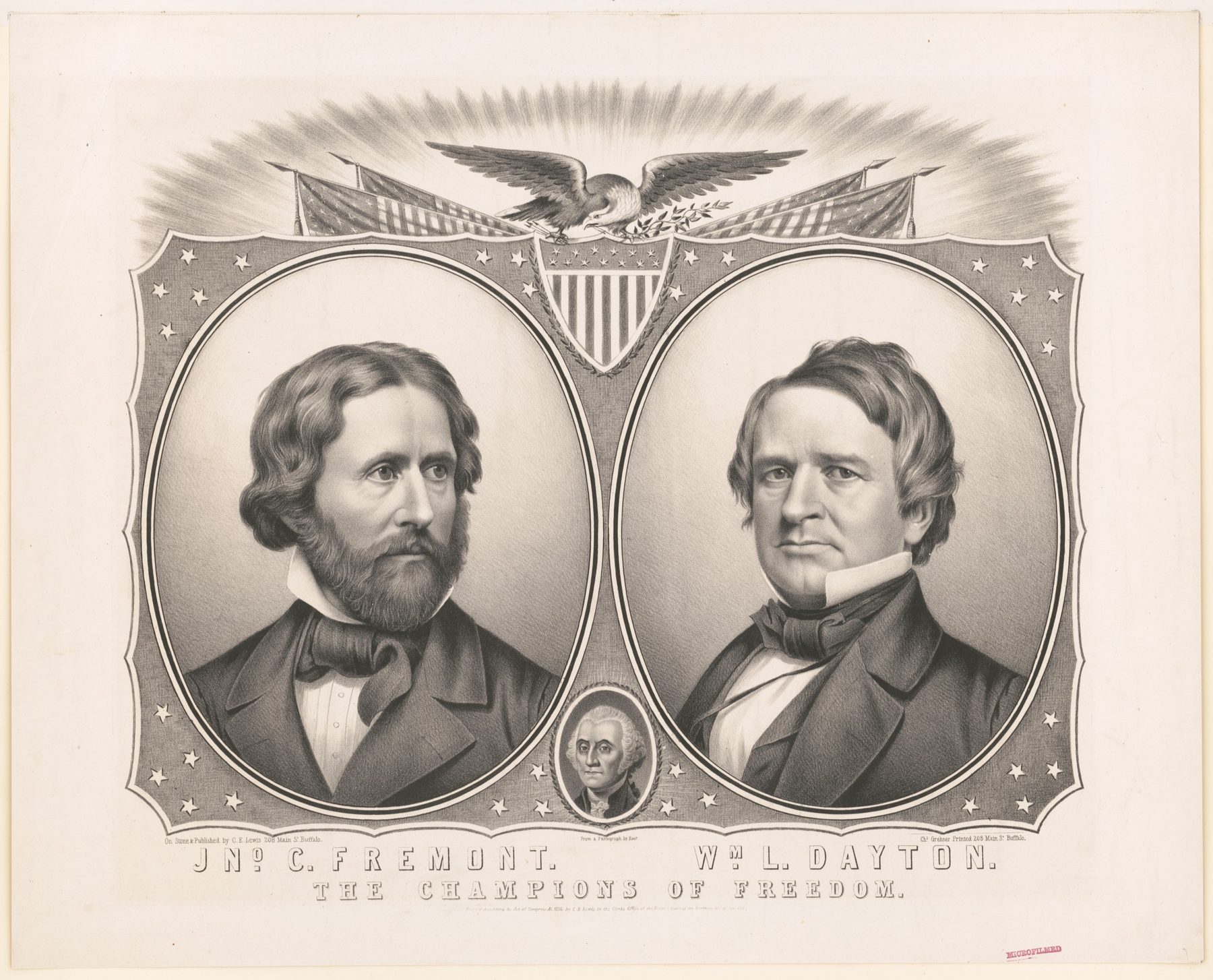
Read the chapter: The first parties to the Civil War, 1790s to 1865.
1865 to 1932: Reconstruction to the New Deal
The one thing that changed everything: the end of Reconstruction, 1877. After the disputed election of 1876, a commission with a Republican majority gave the contested electoral votes to the Republican, Rutherford B. Hayes. The House historian states that Hayes then effectively ended Reconstruction "by reducing the number of federal troops in the region and doing little to protect the civil and political rights of African Americans" history.house.gov. By 1877, the same source states, the Democratic Party, "led by many of the same officials who had sparked the secession movement and fought for the Confederacy, had regained control of southern state governments," and Democrats then carried out "a coordinated policy of discrimination, intimidation, and violence to block Black political participation and undermine the Republican Party in the South" history.house.gov.
Before that, on June 13, 1866, the House accepted the Senate's version of the Fourteenth Amendment, including its definition of citizenship, 137 to 37. Republicans voted 127 to 0. Democrats voted 0 to 37 voteview.com. Two years later the parties put their positions on Reconstruction into their platforms.
"We regard the reconstruction acts so-called, of Congress, as such an usurpation, and unconstitutional, revolutionary, and void." presidency.ucsb.edu
Democratic Party, national platform, July 4, 1868
"The guaranty by Congress of equal suffrage to all loyal men at the South was demanded by every consideration of public safety, of gratitude, and of justice, and must be maintained." presidency.ucsb.edu
Republican Party, national platform, May 20, 1868
The same decades produced fights over tariffs, Chinese exclusion, prohibition and woman suffrage. On several of them, majorities of both parties voted the same way: the Chinese Exclusion Act of 1882, the prohibition amendment of 1917, the immigration quota law of 1924 voteview.comvoteview.comvoteview.com. By the 72nd Congress, which opened in 1931, the distance between the parties had fallen to 0.616 in the House and 0.595 in the Senate, from 0.739 and 0.717 in 1911 voteview.com.
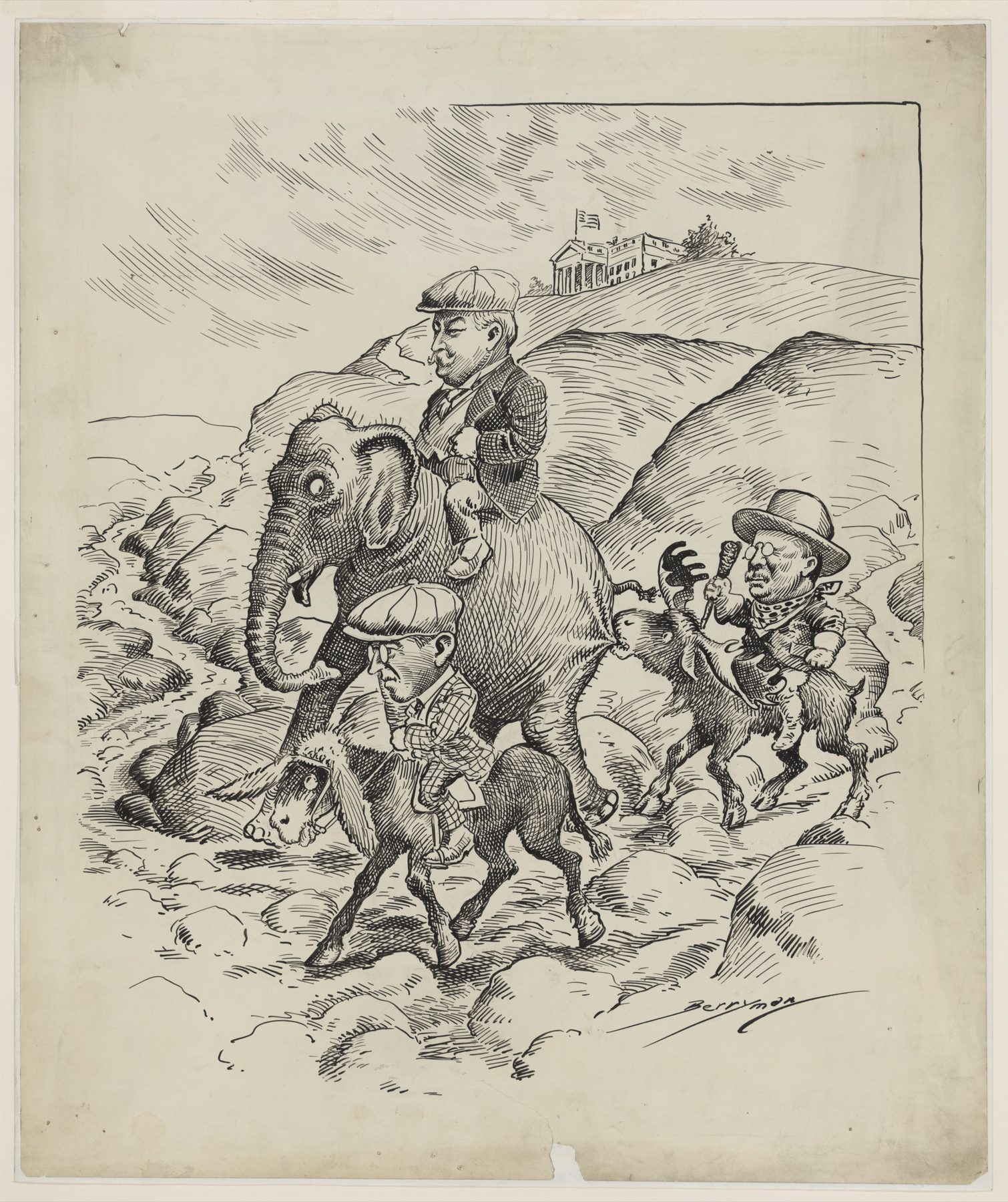
Read the chapter: Reconstruction to the New Deal, 1865 to 1932.
1932 to 1968: the New Deal to civil rights
The one thing that changed everything: the Civil Rights Act of 1964. On February 10, 1964, the House passed it 290 to 130, and Democrats from the eleven former Confederate states voted 7 yes and 86 no voteview.com. On September 16, 1964, Senator Strom Thurmond of South Carolina changed his party to Republican senate.govsenate.gov. The full story is in the New Deal to civil rights.
What came first: the Great Depression and the New Deal. The House historian states that "by the 1930s, the Great Migration and the Great Depression would transform the northern wing of the Democratic Party." Black workers generally benefited from New Deal jobs programs, and Black voters nationwide began leaving the Republican Party. In 1934 Arthur Mitchell, a Chicago Democrat, defeated the Republican Oscar De Priest and became the first Black Democrat elected to Congress. The House historian states that his victory "signaled the beginning of a long-term shift in Black political allegiance to the Democratic Party" history.house.gov.
In 1936, after three years of the New Deal, the parties wrote opposite verdicts on it.
"On the foundation of the Social Security Act we are determined to erect a structure of economic security for all our people." presidency.ucsb.edu
Democratic Party, national platform, June 23, 1936
"America is in peril. The welfare of American men and women and the future of our youth are at stake." presidency.ucsb.edu
Republican Party, national platform, June 9, 1936
In Congress the lines were less clean. The Social Security bill had passed the House in 1935 with 77 Republican votes for it and 18 against voteview.com. The House historian dates consistent Black Democratic voting to the late 1940s history.house.gov. This era holds the lowest party distances in the whole record: the Senate in 1941 and the House in 1947 voteview.com.
Civil rights divided the Democrats by region. On February 10, 1964, the House passed the Civil Rights Act 290 to 130. Democrats voted 152 to 96 and Republicans 138 to 34. Democrats from the eleven former Confederate states voted 7 yes and 86 no voteview.com. In the Senate, a coalition of 27 Republicans and 44 Democrats ended the filibuster on June 10, and the bill passed June 19 senate.govvoteview.com. President Johnson signed it on July 2 senate.gov.
"We have talked long enough in this country about equal rights. We have talked for one hundred years or more. It is time now to write the next chapter, and to write it in the books of law." presidency.ucsb.edu
Lyndon B. Johnson, Democrat, president, address to a joint session of Congress, November 27, 1963
"Stronger than all the armies is an idea whose time has come." senate.gov
Everett Dirksen, Republican, Senate minority leader, quoting Victor Hugo in the cloture debate, June 10, 1964
On September 16, 1964, Senator Strom Thurmond of South Carolina, who had run for president in 1948 as the States' Rights Democratic candidate, changed his party to Republican senate.govsenate.gov.
Read the chapter: The New Deal to civil rights, 1932 to 1968.
1968 to 2000: the great sort
The one thing that changed everything: Roe v. Wade, January 22, 1973. The Supreme Court held that the right of personal privacy "is broad enough to encompass a woman's decision whether or not to terminate her pregnancy" law.cornell.edu. No Democratic or Republican platform had used the word abortion before 1976; from 1980 on, the two platforms took opposite sides presidency.ucsb.edupresidency.ucsb.edupresidency.ucsb.edupresidency.ucsb.edu. When the Court overruled Roe in 2022, its majority wrote that "far from bringing about a national settlement of the abortion issue, Roe and Casey have enflamed debate and deepened division" supremecourt.gov.
In the 87th Congress, which opened in 1961, Voteview's records list 105 Democrats and 8 Republicans who served in the House from the eleven former Confederate states, and 22 Democrats and 1 Republican in the Senate. In the 119th Congress, which opened in 2025, the same states have sent 46 Democrats and 102 Republicans to the House and 4 Democrats and 20 Republicans to the Senate voteview.com.
In 1976 the Republican platform described a party divided on abortion presidency.ucsb.edu. By 1980 both platforms had taken a side.
"The Democratic Party supports the 1973 Supreme Court decision on abortion rights as the law of the land and opposes any constitutional amendment to restrict or overturn that decision." presidency.ucsb.edu
Democratic Party, national platform, August 11, 1980
"we affirm our support of a constitutional amendment to restore protection of the right to life for unborn children." presidency.ucsb.edu
Republican Party, national platform, July 15, 1980
The 1980 Republican platform also dropped the party's endorsement of the Equal Rights Amendment, which it had been the first party to endorse, in 1940 presidency.ucsb.edupresidency.ucsb.edupresidency.ucsb.edu. In the House the party distance rose in every Congress from 1977 to 1995, from 0.573 to 0.758 voteview.com.
Read the chapter: The great sort, 1968 to 2000.
2000 to now: today
The one thing that changed everything: September 11, 2001. Three days after the attacks, the House voted 420 to 1 to authorize force "against those responsible for the recent attacks launched against the United States": Republicans 214 to 0 and Democrats 204 to 1 clerk.house.gov. Congress created the Department of Homeland Security, which opened on March 1, 2003 dhs.gov. On October 10, 2002, the House authorized force against Iraq 296 to 133, with Republicans 215 to 6 and Democrats 81 to 126 clerk.house.gov.
On March 21, 2010, the House passed the Affordable Care Act 219 to 212. All 219 yes votes were Democratic; 34 Democrats and all 178 Republicans voted no clerk.house.gov. In 2011 the House distance passed its highest level from the 1890s, and in 2017 the Senate did the same voteview.com. The 2024 platforms took opposite positions on people living in the country without legal status.
"Congress must pass legislation to provide a pathway to citizenship for Dreamers, farmworkers, careworkers, and other long-term undocumented individuals who contribute to this country, by paying taxes and contributing to their local economies." presidency.ucsb.edu
Democratic Party, national platform, August 19, 2024
"President Trump and Republicans will reverse the Democrats' destructive Open Borders Policies that have allowed criminal gangs and Illegal Aliens from around the World to roam the United States without consequences." presidency.ucsb.edu
Republican Party, national platform, July 8, 2024
Read the chapter: Today, 2000 to now.
Religion across the eras
Religion runs through every era of this record, and it has its own chapter: Religion and the parties. The chapters cover Protestant, Catholic, Latter-day Saint, Jewish, Muslim, Hindu, Buddhist and Sikh Americans, and Native American religions. Three rows of the chart touch religion directly: the 1856 Republican platform's pairing of "Polygamy, and Slavery," the 1876 fight over public money for sectarian schools, and school prayer after 1962 presidency.ucsb.edupresidency.ucsb.edupresidency.ucsb.edulaw.cornell.edu.
In Pew Research Center data for 2023, 59% of Protestant voters and 52% of Catholic voters identified with or leaned toward the Republican Party, as did three-quarters of Latter-day Saint voters and 85% of White evangelical Protestant voters. Sixty-nine percent of Jewish voters and 66% of Muslim voters identified with or leaned toward the Democratic Party. Pew reports a 20-point rise over three decades in the share of White evangelical voters aligned with the Republicans pewresearch.org.
Issue by issue
Each row of the chart, in brief.
Slavery. In 1848 the Free Soil Party ran under the banner "Free Soil, Free Speech, Free Labor, and Free Men" presidency.ucsb.edu. In 1852 the Whigs accepted the Compromise acts, "the act for the recovery of fugitive slaves from labor included," as "a final settlement" presidency.ucsb.edu. Republicans declared in 1860 that "the normal condition of all the territory of the United States is that of freedom" and in 1864 called for an amendment to "terminate and forever prohibit the existence of Slavery" presidency.ucsb.edupresidency.ucsb.edu. Democrats in 1864 called the war "four years of failure to restore the Union by the experiment of war" presidency.ucsb.edu. The Senate passed the Thirteenth Amendment on April 8, 1864, 38 to 6; all 31 Republicans who voted said yes, and Democrats voted 2 yes and 5 no voteview.com.
National bank and tariffs. Vetoing the bank's recharter in 1832, Andrew Jackson wrote: "It is to be regretted that the rich and powerful too often bend the acts of government to their selfish purposes" avalon.law.yale.edu. The 1840 Democratic platform said "congress has no power to charter a national bank" presidency.ucsb.edu. The 1844 Whig platform called for "a well-regulated currency" and a tariff with "protection of the domestic labor of the country" presidency.ucsb.edu. Republicans backed protective tariffs from 1860 and called protection "the bulwark of American industrial independence" in 1896 presidency.ucsb.edupresidency.ucsb.edu. In 1892 Democrats called it "a fraud, a robbery of the great majority of the American people for the benefit of the few" presidency.ucsb.edu. In 1993 House Republicans voted 132 to 43 for NAFTA and House Democrats 102 to 156 against clerk.house.gov. In 2024 the Republican platform called for "baseline Tariffs on Foreign-made goods," and the Democratic platform opposed "extreme import tariffs" while citing "strategically increasing tariffs" on products from China presidency.ucsb.edupresidency.ucsb.edu.
Reconstruction and civil rights. In 1892 Democrats pledged "the defeat of the Force Bill," a federal elections bill, while Republicans demanded that every citizen, "white or black," be allowed "one free and unrestricted ballot" presidency.ucsb.edupresidency.ucsb.edu. In 1948 the Democratic platform said minorities "must have the right to live, the right to work, the right to vote, the full and equal protection of the laws" presidency.ucsb.edu. The States' Rights Democrats answered: "We stand for the segregation of the races and the racial integrity of each race" presidency.ucsb.edu. In 1964 both platforms pledged to enforce the new Civil Rights Act presidency.ucsb.edupresidency.ucsb.edu. In the Senate vote, Democrats split 46 to 21 and Republicans 27 to 6; Senator Barry Goldwater of Arizona voted no voteview.com.
Immigration and nativism. The American Party of 1856, the Know Nothings, declared that "Americans must rule America" presidency.ucsb.edu. In 1876 the Democratic platform called for legislation to "prevent further importation or immigration of the Mongolian race," and in 1880 both parties called for restricting Chinese immigration presidency.ucsb.edupresidency.ucsb.edupresidency.ucsb.edu. The 1882 law suspended the immigration of Chinese laborers for 10 years and was not repealed until 1943 history.state.gov. House Democrats voted for it 102 to 3 and Republicans 88 to 34 voteview.com. The 1924 quota law, which gave visas to two percent of each nationality counted in the 1890 census and excluded immigrants from Asia, passed the House with Democrats 158 to 37 and Republicans 163 to 33 history.state.govvoteview.com. The 1965 Immigration and Nationality Act conference report passed with Democrats 202 to 60 and Republicans 118 to 10 voteview.com. The 2024 Republican platform promised the "LARGEST DEPORTATION OPERATION IN AMERICAN HISTORY" presidency.ucsb.edu.
Alcohol and prohibition. Both parties supplied majorities for the prohibition amendment: in the House, Democrats 140 to 64 and Republicans 138 to 62; in the Senate, Democrats 36 to 12 and Republicans 29 to 8 voteview.comvoteview.com. In 1932 the Democratic platform said "We advocate the repeal of the Eighteenth Amendment" presidency.ucsb.edu. The Republican platform said prohibition "was supported and opposed by members of both great political parties" and proposed an amendment letting states decide presidency.ucsb.edu. On February 20, 1933, House Democrats voted 179 to 32 to send repeal to the states and Republicans 109 to 89 voteview.com.
Women's suffrage and equal rights. The Progressive Party pledged in 1912 "to the task of securing equal suffrage to men and women alike" presidency.ucsb.edu. In 1916 both major parties endorsed suffrage but left it to the states presidency.ucsb.edupresidency.ucsb.edu. The Nineteenth Amendment passed the House on May 21, 1919, with Republicans 200 to 19 and Democrats 102 to 70, and the Senate on June 4, with Republicans 36 to 8 and Democrats 20 to 17 voteview.comvoteview.com. It was ratified August 18, 1920 archives.gov. Republicans endorsed an equal rights amendment in 1940 and Democrats in 1944 presidency.ucsb.edupresidency.ucsb.edu. In 1980 the Republican platform said "We acknowledge the legitimate efforts of those who support or oppose ratification of the Equal Rights Amendment" presidency.ucsb.edu.
Labor and the New Deal. The 1932 Democratic platform advocated "unemployment and old-age insurance under state laws" presidency.ucsb.edu. The Social Security Act passed the Senate in 1935 with Democrats 60 to 1 and Republicans 15 to 5 voteview.com. In 1947 Congress passed the Taft-Hartley labor law over President Truman's veto: in the House, Republicans 225 to 11 and Democrats 106 to 71; in the Senate, Republicans 48 to 3 and Democrats 20 to 22 voteview.comvoteview.com. The 1948 Democratic platform called for its repeal; the Republican platform listed "a sensible reform of the labor law" among the accomplishments of the Republican Congress presidency.ucsb.edupresidency.ucsb.edu.
Church and state. In 1876 the Republican platform recommended an amendment "forbidding the application of any public funds or property for the benefit of any school or institution under sectarian control." The Democratic platform called the question "the false issue with which they would enkindle sectarian strife in respect to the public schools" presidency.ucsb.edupresidency.ucsb.edu. On June 25, 1962, in Engel v. Vitale, the Supreme Court held that "it is no part of the business of government to compose official prayers for any group of the American people to recite" law.cornell.edu. The 1964 Republican platform backed a constitutional amendment allowing religious exercise in public places, and the 1980 platform backed "voluntary, non-denominational prayer in schools" presidency.ucsb.edupresidency.ucsb.edu. In 2016 the Republican platform urged "the repeal of the Johnson Amendment"; in 2024 the Democratic platform said "we will maintain the separation of church and state" presidency.ucsb.edupresidency.ucsb.edu.
Abortion. No Democratic or Republican platform used the word abortion before 1976 presidency.ucsb.edupresidency.ucsb.edu. The 1976 Republican platform said "There are those in our Party who favor complete support for the Supreme Court decision which permits abortion on demand" and others who sought "a constitutional amendment prohibiting all abortions" presidency.ucsb.edu. The 1976 Democratic platform called it "undesirable to attempt to amend the U.S. Constitution to overturn the Supreme Court decision" presidency.ucsb.edu. On June 24, 2022, in Dobbs v. Jackson Women's Health Organization, the Court held that "Roe and Casey are overruled" and that "the authority to regulate abortion is returned to the people and their elected representatives" supremecourt.gov. In 2024 the Republican platform said "After 51 years, because of us, that power has been given to the States and to a vote of the People," and the Democratic platform said "we will pass national legislation to make Roe the law of the land again" presidency.ucsb.edupresidency.ucsb.edu. In a Pew survey in January 2026, 63% of Republicans and Republican leaners said abortion should be illegal in all or most cases, and 84% of Democrats and Democratic leaners said it should be legal in all or most cases pewresearch.org.
Guns. The 1968 Republican platform called for "legislation to control indiscriminate availability of firearms, safeguarding the right of responsible citizens to collect, own and use firearms for legitimate purposes" presidency.ucsb.edu. The 1968 Democratic platform cited "a new gun control law," and the 1972 platform called for "a ban on sale of hand guns known as Saturday night specials" presidency.ucsb.edupresidency.ucsb.edu. In 1980 the Republican platform said "we oppose federal registration of firearms" presidency.ucsb.edu. The Brady bill passed the House in 1993 with Democrats 184 to 69 and Republicans 54 to 119; the 1994 assault weapons ban passed 216 to 214, with Democrats 177 to 77 and Republicans 38 to 137 voteview.comvoteview.com. On June 26, 2008, in District of Columbia v. Heller, the Court held that "The Second Amendment protects an individual right to possess a firearm unconnected with service in a militia" law.cornell.edu. In 2021, 81% of Democrats and 20% of Republicans told Pew that gun laws should be stricter pewresearch.org. In 2024 the Democratic platform said "We will once again ban assault weapons and high-capacity magazines," and the Republican platform listed "THE RIGHT TO KEEP AND BEAR ARMS" among its promises presidency.ucsb.edupresidency.ucsb.edu.
Police, crime and policing. In 1968 the Republican platform said "Lawlessness is crumbling the foundations of American society," and the Democratic platform pledged "a vigorous and sustained campaign against lawlessness in all its forms" and an "attack on the root causes of crime and disorder" presidency.ucsb.edupresidency.ucsb.edu. The 1994 crime bill conference report passed the House 235 to 195, with Democrats 188 to 64 and Republicans 46 to 131, and the Senate with Democrats 54 to 2 and Republicans 7 to 36 clerk.house.govvoteview.com. On June 25, 2020, the House passed the George Floyd Justice in Policing Act 236 to 181, with Democrats 233 to 0 and Republicans 3 to 180 clerk.house.gov. The day before, a Senate cloture vote on taking up the JUSTICE Act (S. 3985) failed 55 to 45, short of the three-fifths required, with Republicans 52 to 1 and Democrats 2 to 43 voteview.com. The 2020 Democratic platform called for "banning the use of chokeholds and carotid holds" and "reining in the doctrine of qualified immunity" presidency.ucsb.edu. The 2024 Republican platform pledged to "restore Law and Order" presidency.ucsb.edu.
Same-sex marriage. The Defense of Marriage Act passed the House on July 12, 1996, 342 to 67, with Republicans 224 to 1 and Democrats 118 to 65 clerk.house.gov. The 2004 Republican platform said "anything less than a Constitutional amendment, passed by the Congress and ratified by the states, is vulnerable to being overturned by activist judges" presidency.ucsb.edu. The 2012 Democratic platform said "We support marriage equality" presidency.ucsb.edu. On June 26, 2015, in Obergefell v. Hodges, the Court held that "Same-sex couples may exercise the fundamental right to marry" law.cornell.edu. The 2016 Republican platform condemned "the Supreme Court's lawless ruling in Obergefell v. Hodges" presidency.ucsb.edu. The Respect for Marriage Act passed the Senate with Democrats 47 to 0 and Republicans 12 to 36, and the House with Democrats 219 to 0 and Republicans 39 to 169 voteview.comclerk.house.gov. In May 2025 Gallup measured support at 88% among Democrats and 41% among Republicans, a 47-point gap it called the largest since it began asking 29 years earlier news.gallup.com.
Climate and environment. On September 22, 1970, the Senate passed the air quality standards bill, H.R. 17255, 73 to 0, with 43 Democrats and 30 Republicans voting yes voteview.com. In July 1970 President Nixon signed Reorganization Plan No. 3, which called for an Environmental Protection Agency, and on December 2, 1970, the Senate confirmed William Ruckelshaus as its first administrator epa.gov. The 1972 Republican platform listed the agency among the administration's new organizations presidency.ucsb.edu. The Clean Air Act Amendments of 1990 passed the House 400 to 25 and the Senate 89 to 10, with majorities of both parties voteview.comvoteview.com. The 2008 Republican platform said "common sense dictates that the United States should take measured and reasonable steps today to reduce any impact on the environment" presidency.ucsb.edu. The 2009 House climate bill passed 219 to 212, with Democrats 211 to 44 and Republicans 8 to 168 clerk.house.gov. The 2016 Republican platform said "Climate change is far from this nation's most pressing national security issue," and the 2024 platform said "We will DRILL, BABY, DRILL" presidency.ucsb.edupresidency.ucsb.edu. The 2024 Democratic platform pledged "To tackle the climate crisis" presidency.ucsb.edu. In 2023 Pew reported that 78% of Democrats and 23% of Republicans called climate change a major threat, and that the Republican figure was almost the same as ten years earlier pewresearch.org.
Health care. The 1948 Democratic platform favored "a national health program for expanded medical research, medical education, and hospitals and clinics" presidency.ucsb.edu. The 1964 Republican platform accused the administration of using federal authority "to force a compulsory hospital program upon the people and the Congress" presidency.ucsb.edu. The 1965 hospital insurance program for the aged, part of the Social Security Amendments of 1965, passed its final House vote with Democrats 237 to 48 and Republicans 70 to 68, and its final Senate vote with Democrats 57 to 7 and Republicans 13 to 17 voteview.comvoteview.com. The 2008 Democratic platform said every American should "be guaranteed affordable, comprehensive healthcare" presidency.ucsb.edu. The Affordable Care Act passed the Senate on December 24, 2009, 60 to 39, with 59 Democrats and one independent voting yes and 39 Republicans voting no voteview.com. The 2012 Republican platform called it "the fiscal nightmare of Obamacare" presidency.ucsb.edu. On January 19, 2011, the House voted to repeal it 245 to 189, with Republicans 242 to 0 and Democrats 3 to 189 clerk.house.gov.
Issues that changed sides
- Tariffs. Republican platforms backed protective tariffs from 1860 and Democrats opposed them in 1892. In 1993 most House Republicans voted for NAFTA and most House Democrats voted against it. In 2024 the Republican platform called for baseline tariffs presidency.ucsb.edupresidency.ucsb.educlerk.house.govpresidency.ucsb.edu.
- Civil rights for Black Americans. Republicans voted unanimously for the Thirteenth and Fourteenth Amendments in the House and Democrats mostly or entirely against voteview.comvoteview.com. In 1948 the Democratic platform adopted a civil rights plank and the States' Rights Democrats left over it presidency.ucsb.edupresidency.ucsb.edu. In 1964 both parties gave majorities to the Civil Rights Act, and most of the no votes were Southern Democrats voteview.comvoteview.com. The South's members of Congress went from mostly Democratic in 1961 to mostly Republican in 2025 voteview.com.
- The Equal Rights Amendment. Republicans endorsed it first, in 1940, and dropped the endorsement in 1980 presidency.ucsb.edupresidency.ucsb.edu.
- The environment. The Senate passed the 1970 air bill with no votes against, and the 1990 Clean Air Act Amendments drew majorities of both parties. The 2009 House climate bill drew 8 Republican votes voteview.comvoteview.comclerk.house.gov.
- Gun legislation. The 1968 Republican platform called for legislation on the availability of firearms; the 1980 platform opposed federal registration presidency.ucsb.edupresidency.ucsb.edu.
- Abortion. No Democratic or Republican platform used the word before 1976. In 1976 the Republican platform described both views inside the party. From 1980 the platforms took opposite sides presidency.ucsb.edupresidency.ucsb.edupresidency.ucsb.edupresidency.ucsb.edu.
- Issues once shared. Chinese exclusion, prohibition, the 1924 quotas, the 1965 immigration law, the Social Security Act and the Defense of Marriage Act each passed with majorities of both parties voting yes voteview.comvoteview.comvoteview.comvoteview.comvoteview.comclerk.house.gov.
Evidence
The polarization series uses Voteview's Congressional Parties file, which gives the mean first-dimension DW-NOMINATE score of each party's members in each chamber in each Congress voteview.comvoteview.com. Democrats are party code 100 and Republicans party code 200, the same codes Voteview's own polarization article uses voteview.com. The series starts with the 46th Congress (1879 to 1881) and ends with the 119th (2025 to 2027), which was still in session when the file was downloaded on October 30, 2026.
- House: 0.786 in 1879; 0.739 in 1911; 0.523 in 1947, the lowest; 0.565 in 1971; 0.758 in 1995; 0.860 in 2011; 0.910 in 2025, the highest voteview.com.
- Senate: 0.748 in 1879; 0.717 in 1911; 0.472 in 1941, the lowest; 0.520 in 1971; 0.653 in 1995; 0.744 in 2011; 0.923 in 2025, the highest voteview.com.
- Highest values before 1913: 0.838 for the House (1895) and 0.815 for the Senate (1899). The House passed that level in 2011 and the Senate in 2017 voteview.com.
Party vote counts by member come from Voteview's roll-call records and from the House Clerk's votes-by-party tables. Paired and absent members are not counted as yes or no. The Southern counts cover members who served at any point in the Congress from Alabama, Arkansas, Florida, Georgia, Louisiana, Mississippi, North Carolina, South Carolina, Tennessee, Texas and Virginia, including replacements, so they can exceed the number of seats voteview.com.
What the evidence does not show
DW-NOMINATE measures how members of Congress vote. It does not measure what voters believe, and a distance on the scale is not a count of issues. The opinion figures come from surveys of the public and are reported here for the years each survey was taken.
A platform states what a convention adopted. It does not show how many of the party's members agreed, and it does not bind how they vote. The vote tables show how members voted on one roll call each; other roll calls on the same bills sometimes split differently.
The record lists what each party said and how its members voted. It does not establish why any member or voter changed parties. Where a source states a cause, the text says so and cites it.
Sources
- Voteview, Congressional Parties data (HSall_parties.csv). voteview.com (locator: columns congress, chamber, party_code 100 and 200, nominate_dim1_mean). Accessed 2026-10-30.
- Jeff Lewis, "Polarization in Congress," Voteview. voteview.com (locator: description of the difference in party means, first dimension). Accessed 2026-10-30.
- Voteview, about page. voteview.com (locator: DW-NOMINATE description). Accessed 2026-10-30.
- Voteview, "Data: Congressional Parties." voteview.com (locator: field descriptions). Accessed 2026-10-30.
- Pew Research Center, "Political Polarization in the American Public," June 12, 2014. pewresearch.org (locator: overview). Accessed 2026-10-30.
- National Archives, "Kansas-Nebraska Act (1854)," Milestone Documents. archives.gov (locator: summary). Accessed 2026-10-30.
- Thomas Jefferson, Opinion on the Constitutionality of a National Bank, 1791, Avalon Project, Yale Law School. avalon.law.yale.edu (locator: paragraph quoting the Tenth Amendment). Accessed 2026-10-30.
- Alexander Hamilton, Opinion as to the Constitutionality of the Bank of the United States, 1791, Avalon Project, Yale Law School. avalon.law.yale.edu (locator: opening statement of the general principle). Accessed 2026-10-30.
- Library of Congress, "Formation of Political Parties," Creating the United States exhibition. loc.gov (locator: exhibit text on the national bank and the first parties; caption for Hamilton's draft report, February 23, 1791). Accessed 2026-10-30.
- U.S. Senate, "Parties and Leadership: Overview." senate.gov (locator: sections on the 1790s, 1828, and the 1850s). Accessed 2026-10-30.
- Democratic Party, "Democratic Party Platform of 1856," The American Presidency Project, June 2, 1856. presidency.ucsb.edu (locator: resolution 1 on domestic slavery). Accessed 2026-10-30.
- Republican Party, "Republican Party Platform of 1856," The American Presidency Project, June 18, 1856. presidency.ucsb.edu (locator: resolution on Congress and the territories). Accessed 2026-10-30.
- Voteview, 38th Congress, House roll call 480, January 31, 1865 (S.J. Res. 16, passage). voteview.com (locator: roll call record; member votes tallied by party from Voteview member and vote files). Accessed 2026-10-30.
- U.S. House of Representatives, History, Art and Archives, "The Demise of Reconstruction," Black Americans in Congress. history.house.gov (locator: paragraph on the election of 1876 and Hayes). Accessed 2026-10-30.
- U.S. House of Representatives, History, Art and Archives, "The Fifteenth Amendment in Flesh and Blood: 1870 to 1901," Black Americans in Congress. history.house.gov (locator: introduction, paragraph on 1877). Accessed 2026-10-30.
- Voteview, 39th Congress, House roll call 259, June 13, 1866 (H.J. Res. 127, concurrence in Senate amendment). voteview.com (locator: roll call record; member votes tallied by party from Voteview member and vote files). Accessed 2026-10-30.
- Democratic Party, "Democratic Party Platform of 1868," The American Presidency Project, July 4, 1868. presidency.ucsb.edu (locator: resolution on the Reconstruction acts). Accessed 2026-10-30.
- Republican Party, "Republican Party Platform of 1868," The American Presidency Project, May 20, 1868. presidency.ucsb.edu (locator: second resolution). Accessed 2026-10-30.
- Voteview, 47th Congress, House roll call 83, April 17, 1882 (H.R. 5804, Chinese immigration). voteview.com (locator: roll call record; member votes tallied by party from Voteview member and vote files). Accessed 2026-10-30.
- Voteview, 65th Congress, House roll call 61, December 17, 1917 (S.J. Res. 17). voteview.com (locator: roll call record; member votes tallied by party from Voteview member and vote files). Accessed 2026-10-30.
- Voteview, 68th Congress, House roll call 55, April 12, 1924 (H.R. 7995, passage). voteview.com (locator: roll call record; member votes tallied by party from Voteview member and vote files). Accessed 2026-10-30.
- U.S. House of Representatives, History, Art and Archives, "The Fulfillment of White's Prophecy," Black Americans in Congress. history.house.gov (locator: paragraphs on Arthur Mitchell and the New Deal). Accessed 2026-10-30.
- Democratic Party, "Democratic Party Platform of 1936," The American Presidency Project, June 23, 1936. presidency.ucsb.edu (locator: (3) Old Age and Social Security). Accessed 2026-10-30.
- Republican Party, "Republican Party Platform of 1936," The American Presidency Project, June 9, 1936. presidency.ucsb.edu (locator: opening paragraphs). Accessed 2026-10-30.
- Voteview, 74th Congress, House roll call 39, April 19, 1935 (H.R. 7260, Social Security bill). voteview.com (locator: roll call record; member votes tallied by party from Voteview member and vote files). Accessed 2026-10-30.
- Voteview, 88th Congress, House roll call 128, February 10, 1964 (H.R. 7152, passage). voteview.com (locator: roll call record; member votes tallied by party from Voteview member and vote files). Accessed 2026-10-30.
- U.S. Senate, "Classic Senate Speeches: Everett Dirksen on Civil Rights." senate.gov (locator: full page). Accessed 2026-10-30.
- Voteview, 88th Congress, Senate roll call 409, June 19, 1964 (H.R. 7152, passage). voteview.com (locator: roll call record; member votes tallied by party from Voteview member and vote files). Accessed 2026-10-30.
- U.S. Senate, "Landmark Legislation: The Civil Rights Act of 1964." senate.gov (locator: full page). Accessed 2026-10-30.
- Lyndon B. Johnson, Address Before a Joint Session of the Congress, November 27, 1963, The American Presidency Project. presidency.ucsb.edu (locator: paragraph on the civil rights bill). Accessed 2026-10-30.
- U.S. Senate, "Senators Who Changed Parties During Senate Service (Since 1890)." senate.gov (locator: entry for J. Strom Thurmond). Accessed 2026-10-30.
- U.S. Senate, "Strom Thurmond: A Featured Biography." senate.gov (locator: full page). Accessed 2026-10-30.
- Roe v. Wade, 410 U.S. 113 (1973), Legal Information Institute, Cornell Law School. law.cornell.edu (locator: opinion of the Court (Blackmun, J.), section VIII; Rehnquist, J., dissenting). Accessed 2026-10-30.
- Republican Party, "Republican Party Platform of 1976," The American Presidency Project, August 18, 1976. presidency.ucsb.edu (locator: Women; abortion paragraph). Accessed 2026-10-30.
- Democratic Party, "Democratic Party Platform of 1976," The American Presidency Project, July 12, 1976. presidency.ucsb.edu (locator: paragraph on abortion). Accessed 2026-10-30.
- Republican Party, "Republican Party Platform of 1980," The American Presidency Project, July 15, 1980. presidency.ucsb.edu (locator: Women's rights; Education; Crime; abortion paragraph). Accessed 2026-10-30.
- Democratic Party, "Democratic Party Platform of 1980," The American Presidency Project, August 11, 1980. presidency.ucsb.edu (locator: Reproductive Rights). Accessed 2026-10-30.
- Dobbs v. Jackson Women's Health Organization, No. 19-1392 (2022), slip opinion, Supreme Court of the United States. supremecourt.gov (locator: opinion of the Court, Part VI (closing), and syllabus). Accessed 2026-10-30.
- Voteview, member files for the 87th and 119th Congresses (H087, S087, H119, S119). voteview.com (locator: state_abbrev and party_code columns; members who served from the eleven former Confederate states, counted by party; companion files H087_members.csv, S087_members.csv, S119_members.csv). Accessed 2026-10-30.
- Republican Party, "Republican Party Platform of 1940," The American Presidency Project, June 24, 1940. presidency.ucsb.edu (locator: Equal Rights). Accessed 2026-10-30.
- Office of the Clerk, U.S. House, Roll Call 342, September 14, 2001 (H.J. Res. 64, use of force against those responsible for the attacks). clerk.house.gov (locator: votes by party table). Accessed 2026-10-30.
- U.S. Department of Homeland Security, "Creation of the Department of Homeland Security." dhs.gov (locator: Department Creation). Accessed 2026-10-30.
- Office of the Clerk, U.S. House, Roll Call 455, October 10, 2002 (H.J. Res. 114, use of force against Iraq). clerk.house.gov (locator: votes by party table). Accessed 2026-10-30.
- Office of the Clerk, U.S. House, Roll Call 165, March 21, 2010 (H.R. 3590, concur in Senate amendments). clerk.house.gov (locator: votes by party table). Accessed 2026-10-30.
- Democratic Party, "Democratic Party Platform of 2024," The American Presidency Project, August 19, 2024. presidency.ucsb.edu (locator: Reproductive Freedom; Gun Safety; immigration; tariffs; religious freedom). Accessed 2026-10-30.
- Republican Party, "Republican Party Platform of 2024," The American Presidency Project, July 8, 2024. presidency.ucsb.edu (locator: twenty promises; chapters on trade, immigration and Life). Accessed 2026-10-30.
- Republican Party, "Republican Party Platform of 1876," The American Presidency Project, June 14, 1876. presidency.ucsb.edu (locator: plank 7). Accessed 2026-10-30.
- Democratic Party, "Democratic Party Platform of 1876," The American Presidency Project, June 22, 1876. presidency.ucsb.edu (locator: reform section, "First" and passage on Chinese immigration). Accessed 2026-10-30.
- Engel v. Vitale, 370 U.S. 421 (1962), Legal Information Institute, Cornell Law School. law.cornell.edu (locator: opinion of the Court (Black, J.); notes on Justices Frankfurter and White; Stewart, J., dissenting). Accessed 2026-10-30.
- Pew Research Center, "Party identification among religious groups and religiously unaffiliated voters," April 9, 2024. pewresearch.org (locator: opening findings on Protestant, Catholic, Latter-day Saint, Jewish, Muslim and White evangelical voters, 2023). Accessed 2026-10-30.
- Free Soil Party, "Free Soil Party Platform of 1848," The American Presidency Project, August 9, 1848. presidency.ucsb.edu (locator: closing resolution). Accessed 2026-10-30.
- Whig Party, "Whig Party Platform of 1852," The American Presidency Project, June 17, 1852. presidency.ucsb.edu (locator: resolution on the Compromise of 1850). Accessed 2026-10-30.
- Republican Party, "Republican Party Platform of 1860," The American Presidency Project, May 17, 1860. presidency.ucsb.edu (locator: planks 8 and 12). Accessed 2026-10-30.
- Republican Party, "Republican Party Platform of 1864," The American Presidency Project, June 7, 1864. presidency.ucsb.edu (locator: resolution 3). Accessed 2026-10-30.
- Democratic Party, "Democratic Party Platform of 1864," The American Presidency Project, August 29, 1864. presidency.ucsb.edu (locator: second resolution). Accessed 2026-10-30.
- Voteview, 38th Congress, Senate roll call 134, April 8, 1864 (S.J. Res. 16, passage). voteview.com (locator: roll call record; member votes tallied by party from Voteview member and vote files). Accessed 2026-10-30.
- Andrew Jackson, Veto Message Regarding the Bank of the United States, July 10, 1832, Avalon Project, Yale Law School. avalon.law.yale.edu (locator: closing section). Accessed 2026-10-30.
- Democratic Party, "Democratic Party Platform of 1840," The American Presidency Project, May 6, 1840. presidency.ucsb.edu (locator: resolutions 6 and 8). Accessed 2026-10-30.
- Whig Party, "Whig Party Platform of 1844," The American Presidency Project, May 1, 1844. presidency.ucsb.edu (locator: summary resolution of principles). Accessed 2026-10-30.
- Republican Party, "Republican Party Platform of 1896," The American Presidency Project, June 18, 1896. presidency.ucsb.edu (locator: tariff plank). Accessed 2026-10-30.
- Democratic Party, "Democratic Party Platform of 1892," The American Presidency Project, June 21, 1892. presidency.ucsb.edu (locator: planks on the Force Bill and the tariff). Accessed 2026-10-30.
- Office of the Clerk, U.S. House, Roll Call 575, November 17, 1993 (H.R. 3450, NAFTA Implementation Act). clerk.house.gov (locator: votes by party table). Accessed 2026-10-30.
- Republican Party, "Republican Party Platform of 1892," The American Presidency Project, June 9, 1892. presidency.ucsb.edu (locator: plank on the ballot). Accessed 2026-10-30.
- Democratic Party, "Democratic Party Platform of 1948," The American Presidency Project, July 12, 1948. presidency.ucsb.edu (locator: civil rights, health and Taft-Hartley planks). Accessed 2026-10-30.
- States' Rights Democratic Party, "Platform of the States' Rights Democratic Party, 1948," The American Presidency Project, August 14, 1948. presidency.ucsb.edu (locator: plank 4). Accessed 2026-10-30.
- Democratic Party, "Democratic Party Platform of 1964," The American Presidency Project, August 24, 1964. presidency.ucsb.edu (locator: Civil Rights section). Accessed 2026-10-30.
- Republican Party, "Republican Party Platform of 1964," The American Presidency Project, July 13, 1964. presidency.ucsb.edu (locator: pledges list and Section One). Accessed 2026-10-30.
- American Party, "American Party Platform of 1856," The American Presidency Project, February 21, 1856. presidency.ucsb.edu (locator: numbered principles 3 to 5). Accessed 2026-10-30.
- Democratic Party, "Democratic Party Platform of 1880," The American Presidency Project, June 22, 1880. presidency.ucsb.edu (locator: plank 11). Accessed 2026-10-30.
- Republican Party, "Republican Party Platform of 1880," The American Presidency Project, June 2, 1880. presidency.ucsb.edu (locator: plank on Chinese immigration). Accessed 2026-10-30.
- Office of the Historian, U.S. Department of State, "Chinese Immigration and the Chinese Exclusion Acts." history.state.gov (locator: paragraphs on 1882 and 1943). Accessed 2026-10-30.
- Office of the Historian, U.S. Department of State, "The Immigration Act of 1924 (The Johnson-Reed Act)." history.state.gov (locator: introduction). Accessed 2026-10-30.
- Voteview, 89th Congress, House roll call 177, September 30, 1965 (H.R. 2580, conference report). voteview.com (locator: roll call record; member votes tallied by party from Voteview member and vote files). Accessed 2026-10-30.
- Voteview, 65th Congress, Senate roll call 121, August 1, 1917 (S.J. Res. 17). voteview.com (locator: roll call record; member votes tallied by party from Voteview member and vote files). Accessed 2026-10-30.
- Democratic Party, "Democratic Party Platform of 1932," The American Presidency Project, June 27, 1932. presidency.ucsb.edu (locator: planks on repeal of the Eighteenth Amendment and on unemployment and old-age insurance). Accessed 2026-10-30.
- Republican Party, "Republican Party Platform of 1932," The American Presidency Project, June 14, 1932. presidency.ucsb.edu (locator: The Eighteenth Amendment). Accessed 2026-10-30.
- Voteview, 72nd Congress, House roll call 112, February 20, 1933 (S.J. Res. 211). voteview.com (locator: roll call record; member votes tallied by party from Voteview member and vote files). Accessed 2026-10-30.
- Progressive Party, "Progressive Party Platform of 1912," The American Presidency Project, November 5, 1912. presidency.ucsb.edu (locator: Equal Suffrage). Accessed 2026-10-30.
- Republican Party, "Republican Party Platform of 1916," The American Presidency Project, June 7, 1916. presidency.ucsb.edu (locator: Suffrage). Accessed 2026-10-30.
- Democratic Party, "Democratic Party Platform of 1916," The American Presidency Project, June 14, 1916. presidency.ucsb.edu (locator: XX. Woman Suffrage). Accessed 2026-10-30.
- Voteview, 66th Congress, House roll call 2, May 21, 1919 (H.J. Res. 1). voteview.com (locator: roll call record; member votes tallied by party from Voteview member and vote files). Accessed 2026-10-30.
- Voteview, 66th Congress, Senate roll call 13, June 4, 1919 (H.J. Res. 1). voteview.com (locator: roll call record; member votes tallied by party from Voteview member and vote files). Accessed 2026-10-30.
- National Archives, "19th Amendment to the U.S. Constitution: Women's Right to Vote (1920)," Milestone Documents. archives.gov (locator: summary). Accessed 2026-10-30.
- Democratic Party, "Democratic Party Platform of 1944," The American Presidency Project, July 19, 1944. presidency.ucsb.edu (locator: paragraph on equal pay and equal rights for women). Accessed 2026-10-30.
- Voteview, 74th Congress, Senate roll call 82, June 19, 1935 (H.R. 7260). voteview.com (locator: roll call record; member votes tallied by party from Voteview member and vote files). Accessed 2026-10-30.
- Voteview, 80th Congress, House roll call 49, June 20, 1947 (labor-management bill over the veto). voteview.com (locator: roll call record; member votes tallied by party from Voteview member and vote files). Accessed 2026-10-30.
- Voteview, 80th Congress, Senate roll call 86, June 23, 1947 (H.R. 3020 over the veto). voteview.com (locator: roll call record; member votes tallied by party from Voteview member and vote files). Accessed 2026-10-30.
- Republican Party, "Republican Party Platform of 1948," The American Presidency Project, June 21, 1948. presidency.ucsb.edu (locator: record of the 80th Congress). Accessed 2026-10-30.
- Republican Party, "Republican Party Platform of 2016," The American Presidency Project, July 18, 2016. presidency.ucsb.edu (locator: sections on marriage, religious liberty and energy). Accessed 2026-10-30.
- Dobbs v. Jackson Women's Health Organization, No. 19-1392 (2022), slip opinion, Supreme Court of the United States. supremecourt.gov (locator: syllabus, holding and lineup). Accessed 2026-10-30.
- Pew Research Center, "Public Opinion on Abortion," fact sheet, March 12, 2026. pewresearch.org (locator: Views on abortion by party identification, 2026). Accessed 2026-10-30.
- Republican Party, "Republican Party Platform of 1968," The American Presidency Project, August 5, 1968. presidency.ucsb.edu (locator: Crime). Accessed 2026-10-30.
- Democratic Party, "Democratic Party Platform of 1968," The American Presidency Project, August 26, 1968. presidency.ucsb.edu (locator: Justice and Law; record on gun control). Accessed 2026-10-30.
- Democratic Party, "Democratic Party Platform of 1972," The American Presidency Project, July 11, 1972. presidency.ucsb.edu (locator: crime and handgun planks). Accessed 2026-10-30.
- Voteview, 103rd Congress, House roll call 548, November 10, 1993 (H.R. 1025, passage). voteview.com (locator: roll call record; member votes tallied by party from Voteview member and vote files). Accessed 2026-10-30.
- Voteview, 103rd Congress, House roll call 750, May 5, 1994 (H.R. 4296, passage). voteview.com (locator: roll call record; member votes tallied by party from Voteview member and vote files). Accessed 2026-10-30.
- District of Columbia v. Heller, No. 07-290 (2008), syllabus, Legal Information Institute, Cornell Law School. law.cornell.edu (locator: syllabus, Held 1, and lineup). Accessed 2026-10-30.
- Pew Research Center, "Amid a Series of Mass Shootings in the U.S., Gun Policy Remains Deeply Divisive," April 20, 2021. pewresearch.org (locator: overview paragraphs). Accessed 2026-10-30.
- Office of the Clerk, U.S. House, Roll Call 416, August 21, 1994 (H.R. 3355, conference report). clerk.house.gov (locator: votes by party table). Accessed 2026-10-30.
- Voteview, 103rd Congress, Senate roll call 690, August 25, 1994 (H.R. 3355, conference report). voteview.com (locator: roll call record; member votes tallied by party from Voteview member and vote files). Accessed 2026-10-30.
- Office of the Clerk, U.S. House, Roll Call 119, June 25, 2020 (H.R. 7120, George Floyd Justice in Policing Act). clerk.house.gov (locator: votes by party table). Accessed 2026-10-30.
- Voteview, 116th Congress, Senate roll call 554, June 24, 2020 (S. 3985, cloture on the motion to proceed). voteview.com (locator: roll call record; member votes tallied by party from Voteview member and vote files). Accessed 2026-10-30.
- Democratic Party, "Democratic Party Platform of 2020," The American Presidency Project, August 17, 2020. presidency.ucsb.edu (locator: policing section). Accessed 2026-10-30.
- Office of the Clerk, U.S. House, Roll Call 316, July 12, 1996 (H.R. 3396, Defense of Marriage Act). clerk.house.gov (locator: votes by party table). Accessed 2026-10-30.
- Republican Party, "Republican Party Platform of 2004," The American Presidency Project, August 30, 2004. presidency.ucsb.edu (locator: Protecting Marriage). Accessed 2026-10-30.
- Democratic Party, "Democratic Party Platform of 2012," The American Presidency Project, September 3, 2012. presidency.ucsb.edu (locator: Freedom to Marry). Accessed 2026-10-30.
- Obergefell v. Hodges, No. 14-556 (2015), Legal Information Institute, Cornell Law School. law.cornell.edu (locator: syllabus, holding (4), and lineup). Accessed 2026-10-30.
- Voteview, 117th Congress, Senate roll call 890, November 29, 2022 (H.R. 8404, passage). voteview.com (locator: roll call record; member votes tallied by party from Voteview member and vote files). Accessed 2026-10-30.
- Office of the Clerk, U.S. House, Roll Call 513, December 8, 2022 (H.R. 8404, Respect for Marriage Act). clerk.house.gov (locator: votes by party table). Accessed 2026-10-30.
- Gallup, "Record Party Divide 10 Years After Same-Sex Marriage Ruling," May 29, 2025. news.gallup.com (locator: opening section and trend paragraph). Accessed 2026-10-30.
- Voteview, 91st Congress, Senate roll call 543, September 22, 1970 (H.R. 17255, passage). voteview.com (locator: roll call record; member votes tallied by party from Voteview member and vote files). Accessed 2026-10-30.
- U.S. Environmental Protection Agency, "The Origins of EPA." epa.gov (locator: answer to the question on December 2, 1970 (Senate confirmation of Ruckelshaus; Reorganization Plan No. 3 signed in July 1970)). Accessed 2026-10-30.
- Republican Party, "Republican Party Platform of 1972," The American Presidency Project, August 21, 1972. presidency.ucsb.edu (locator: Environment). Accessed 2026-10-30.
- Voteview, 101st Congress, House roll call 868, October 26, 1990 (S. 1630, conference report). voteview.com (locator: roll call record; member votes tallied by party from Voteview member and vote files). Accessed 2026-10-30.
- Voteview, 101st Congress, Senate roll call 636, October 27, 1990 (S. 1630, conference report). voteview.com (locator: roll call record; member votes tallied by party from Voteview member and vote files). Accessed 2026-10-30.
- Republican Party, "Republican Party Platform of 2008," The American Presidency Project, September 1, 2008. presidency.ucsb.edu (locator: Addressing Climate Change Responsibly). Accessed 2026-10-30.
- Office of the Clerk, U.S. House, Roll Call 477, June 26, 2009 (H.R. 2454, American Clean Energy and Security Act). clerk.house.gov (locator: votes by party table). Accessed 2026-10-30.
- Pew Research Center, "What the data says about Americans' views of climate change," August 9, 2023. pewresearch.org (locator: section on climate change as a major threat). Accessed 2026-10-30.
- Voteview, 89th Congress, House roll call 97, July 27, 1965 (H.R. 6675, conference report). voteview.com (locator: roll call record; member votes tallied by party from Voteview member and vote files). Accessed 2026-10-30.
- Voteview, 89th Congress, Senate roll call 174, July 28, 1965 (H.R. 6675, conference report). voteview.com (locator: roll call record; member votes tallied by party from Voteview member and vote files). Accessed 2026-10-30.
- Democratic Party, "Democratic Party Platform of 2008," The American Presidency Project, August 25, 2008. presidency.ucsb.edu (locator: Health Care Coverage for All Americans). Accessed 2026-10-30.
- Voteview, 111th Congress, Senate roll call 396, December 24, 2009 (H.R. 3590, passage). voteview.com (locator: roll call record; member votes tallied by party from Voteview member and vote files). Accessed 2026-10-30.
- Republican Party, "Republican Party Platform of 2012," The American Presidency Project, August 27, 2012. presidency.ucsb.edu (locator: budget section on Obamacare). Accessed 2026-10-30.
- Office of the Clerk, U.S. House, Roll Call 14, January 19, 2011 (H.R. 2, repeal of the health care law). clerk.house.gov (locator: votes by party table). Accessed 2026-10-30.
Last checked against its sources on October 30, 2026. Report a correction.