
How we got here
From Reconstruction to the New Deal, 1865 to 1932
The short answer
Congress, led by Republicans, passed the Civil Rights Act of 1866 after President Andrew Johnson vetoed it, sent the 14th and 15th Amendments to the states, and seated the first Black senator in 1870. After President Hayes withdrew federal troops from the South in 1877, Southern states disfranchised Black voters, and no Black member sat in Congress from 1901 to 1929. The parties then fought over tariffs, gold and silver, immigration, women's votes and Prohibition, and in 1932 Franklin Roosevelt won 472 electoral votes to 59 for Herbert Hoover.
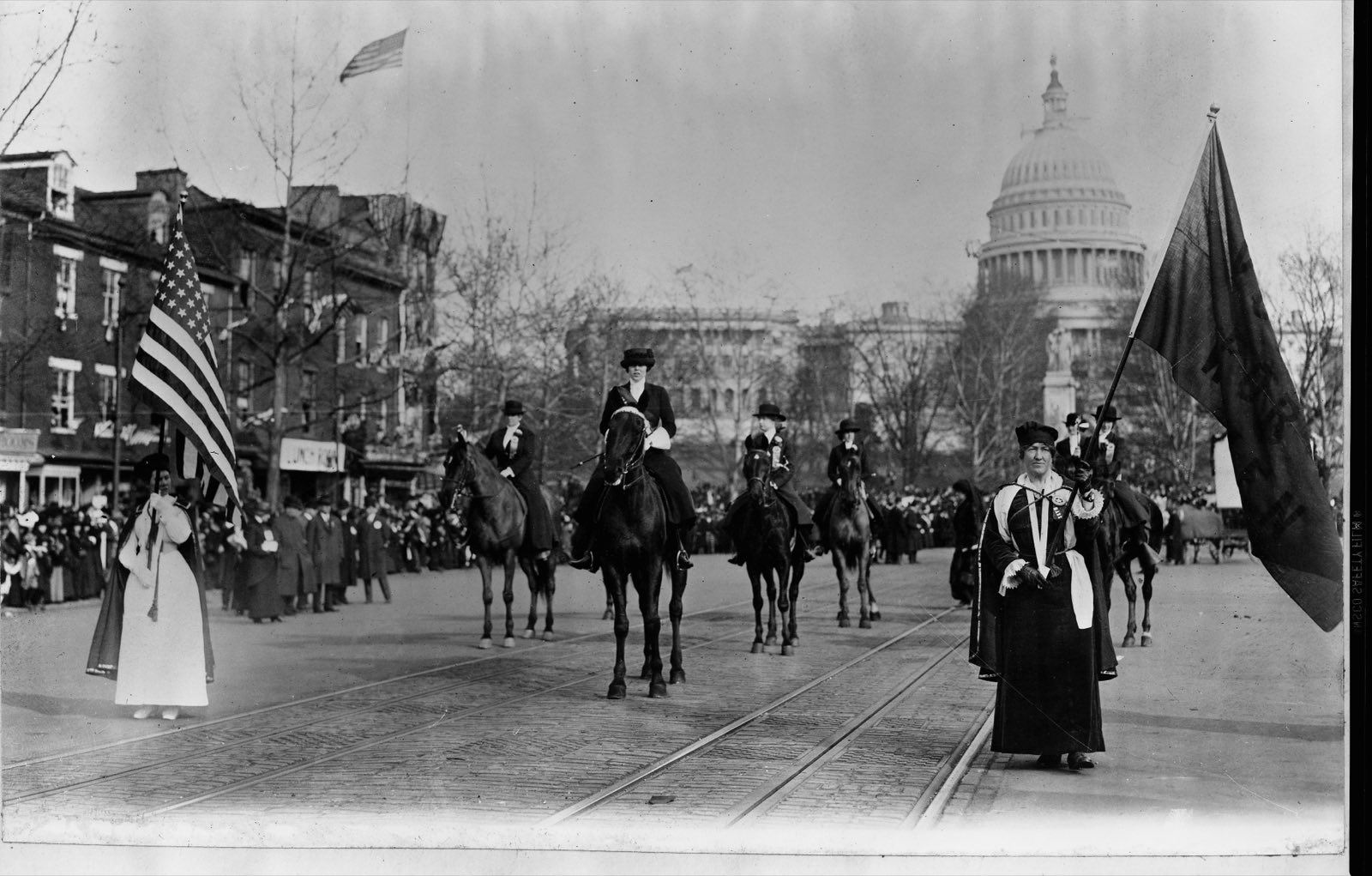
Together and Dug in, in this era
Together: a law passed with a majority of both major parties voting yes in both chambers, or a documented agreement across parties, shown with the vote. Dug in: a documented failure to settle by vote, or a break in the system, shown with what followed.
Together (2)
Together · 1890
Sherman Antitrust Act
Congress made contracts, combinations and conspiracies in restraint of trade unlawful.
- House, June 20, 1890: 242 to 0 (Democrats 115 yes, 0 no; Republicans 127 yes, 0 no; total 242 yes, 0 no) voteview.com
- Senate, April 8, 1890: 51 to 1 (Democrats 24 yes, 1 no; Republicans 27 yes, 0 no; total 51 yes, 1 no) voteview.com
Where it landed: Enacted as 26 Stat. 209, approved July 2, 1890, per the Voteview roll call description; the House vote is on the conference report.
Voteview, House roll call 215, 51st Congress voteview.com Voteview, Senate roll call 81, 51st Congress voteview.com
Together · 1919
19th Amendment, women's right to vote
Congress passed a constitutional amendment barring denial of the vote on account of sex and sent it to the states.
- House, May 21, 1919: 304 to 89 (Democrats 102 yes, 70 no; Republicans 200 yes, 19 no; total 304 yes, 89 no; Prohibitionist 1 yes, 0 no; Union Labor 1 yes, 0 no) voteview.com
- Senate, June 4, 1919: 56 to 25 (Democrats 20 yes, 17 no; Republicans 36 yes, 8 no; total 56 yes, 25 no) voteview.com
Where it landed: Ratified August 18, 1920, when Tennessee became the 36th state to ratify, and certified August 26, 1920.
Voteview, House roll call 2, 66th Congress voteview.com Voteview, Senate roll call 13, 66th Congress voteview.com National Archives, 19th Amendment milestone document archives.gov
Dug in (1)
Dug in · 1919
Senate rejects the Treaty of Versailles and the League of Nations
The Senate voted down the Treaty of Versailles, with and without reservations, in November 1919 and again in March 1920.
- Senate with reservations, November 19, 1919: 41 to 51 (Democrats 7 yes, 38 no; Republicans 34 yes, 13 no; total 41 yes, 51 no) voteview.com
- Senate unconditional, November 19, 1919: 38 to 53 (Democrats 37 yes, 7 no; Republicans 1 yes, 46 no; total 38 yes, 53 no) voteview.com
- Senate march 1920, March 19, 1920: 49 to 35 (Democrats 21 yes, 23 no; Republicans 28 yes, 12 no; total 49 yes, 35 no) voteview.com
What followed: On November 19, 1919 the Senate rejected a peace treaty for the first time in its history. The March 19, 1920 vote of 49 to 35 fell short of the two-thirds needed, and the United States never joined the League of Nations.
Voteview, Senate roll call 138, 66th Congress voteview.com Voteview, Senate roll call 139, 66th Congress voteview.com Voteview, Senate roll call 263, 66th Congress voteview.com U.S. Senate, Senate Rejects Treaty of Versailles senate.gov U.S. Department of State, Office of the Historian, The League of Nations, 1920 history.state.gov
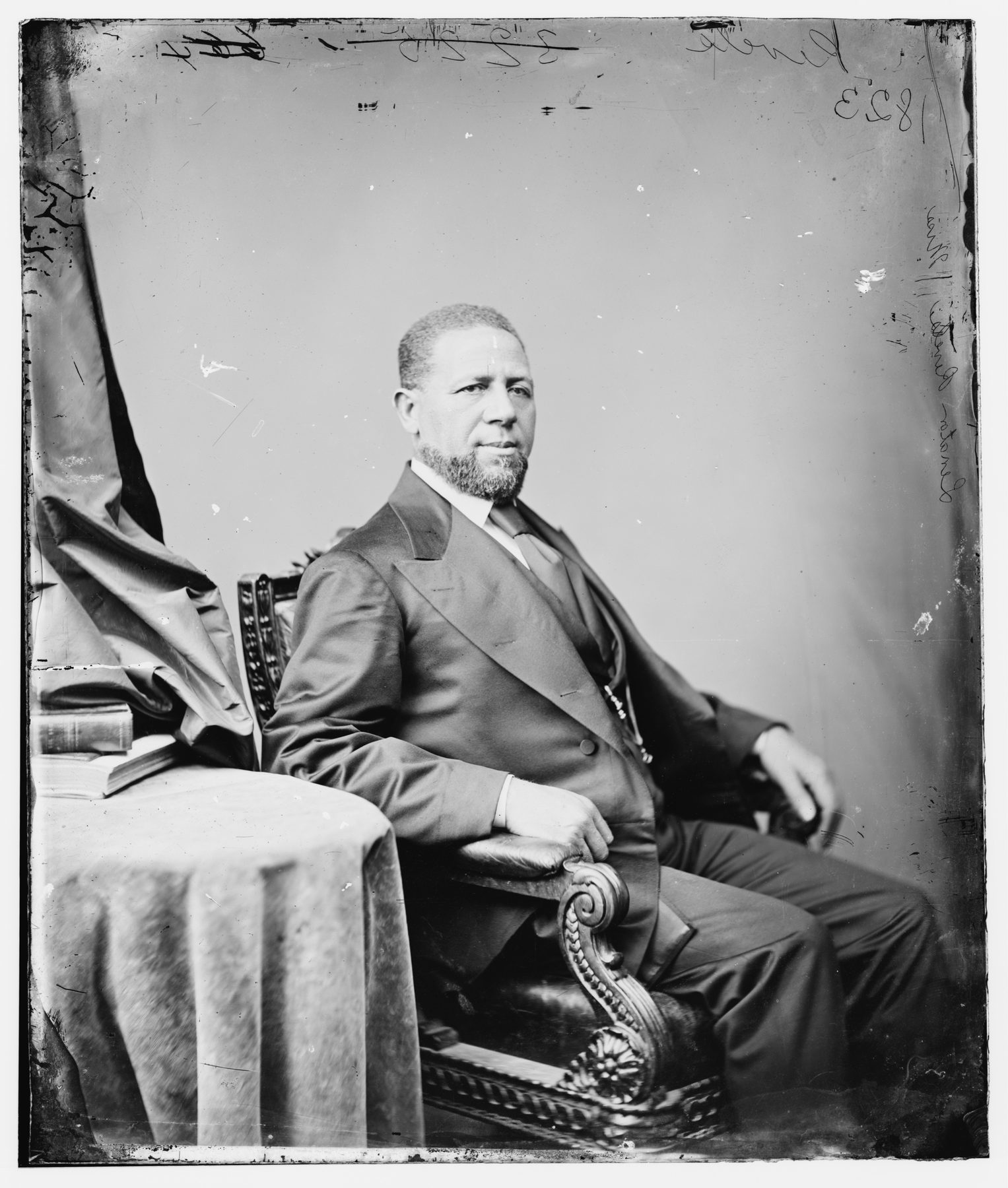
February 25, 1870: the Senate galleries
The galleries were full. Visitors applauded as Hiram Revels, a Republican from Mississippi, walked into the Senate chamber to take the oath of office senate.gov. Revels had been born free in Fayetteville, North Carolina, in 1827. He was a minister of the African Methodist Episcopal Church, had recruited Black regiments and served as a Union Army chaplain during the war, and in 1869 was one of 35 African Americans elected to the Mississippi legislature senate.gov.
Three senators objected that he had not been a citizen for the nine years the Constitution requires. They cited the Dred Scott decision of 1857. Charles Sumner of Massachusetts ended the debate: "All men are created equal, says the great Declaration, and now a great act attests to this verity. Today we make the Declaration a reality." The Senate voted 48 to 8 to seat him senate.gov. Twenty-two days earlier, the 15th Amendment had been ratified senate.gov.
The chapter before this one ends with the 13th Amendment: From the first parties to the Civil War.
The one thing that changed everything
The withdrawal of federal troops from the South in 1877.
The presidential election of 1876 ended with Rutherford B. Hayes, a Republican, at 185 electoral votes and Samuel J. Tilden, a Democrat, at 184. The votes of Florida, Louisiana, Oregon and South Carolina were disputed, and Congress created an Electoral Commission that gave the decision to Hayes archives.gov. On April 10, 1877, federal troops left the South Carolina statehouse, and Wade Hampton became governor. On April 24, Hayes withdrew the troops from Louisiana. The Republican governor there, Packard, said: "One by one, the Republican state governments of the South have been forced to succumb to force, fraud or policy." The Miller Center writes that Hayes's withdrawal of troops marks the end of Reconstruction millercenter.org.
The Senate Historical Office states the consequence: the end of formal Reconstruction in 1877 "allowed for a return of largescale disenfranchisement of African Americans" senate.gov. In numbers: 22 Black men served Southern states in Congress from 1870 to 1901. After George White of North Carolina left the House on March 3, 1901, no African American served in Congress for 28 years history.house.gov.
What would freedom mean? Reconstruction in Congress, 1865 to 1870
The war ended slavery. What freedom would mean was decided in Congress, and the two parties disagreed.
Andrew Johnson had been a Democrat. Lincoln chose him as his 1864 running mate to win the support of "Union Democrats," and he became president 42 days after taking office as vice president senate.gov. In 1866, Congress extended the Freedmen's Bureau, which gave food, shelter, schools and land to freed people and other displaced Southerners. The Senate passed the extension 37 to 10, and Johnson vetoed it on February 19 senate.gov.
Southern states passed Black Codes limiting the rights of African Americans, and the House History Office records that white Southerners "threatened, terrorized, and murdered freed people" history.house.gov. Congress passed a civil rights bill extending to "all persons born in the United States" fundamental rights, including owning property and access to the courts history.house.gov. Johnson vetoed it on March 27, 1866, writing that "the distinction of race and color is by the bill made to operate in favor of the colored and against the white race" presidency.ucsb.edu. Republicans in Congress passed the Civil Rights Act in April 1866 history.house.gov.
To protect that law from challenge, they wrote it into the Constitution. The 14th Amendment made everyone "born or naturalized in the United States" a citizen and promised "equal protection of the laws" archives.gov. Thaddeus Stevens, a Pennsylvania Republican who had wanted more, explained why he voted for it anyway: "I answer, because I live among men and not angels." The House passed it on June 13, 1866, 120 to 32, with 32 members not voting history.house.gov. Congress required former Confederate states to ratify it before they could regain representation senate.gov, and it was ratified on July 9, 1868 archives.gov. The 15th Amendment, barring states from denying the vote "on account of race, color, or previous condition of servitude," passed Congress on February 26, 1869, and was ratified on February 3, 1870 archives.gov.
In 1868 the House impeached Johnson. On May 16, 1868, the Senate voted 35 to 19 to convict, one vote short of the two-thirds needed. Seven Republicans voted to acquit senate.gov.
The two parties' platforms that year stated the dispute.
"Instead of restoring the Union, it has, so far as in its power, dissolved it, and subjected ten States, in time of profound peace, to military despotism and negro supremacy... we regard the reconstruction acts so-called, of Congress, as such an usurpation, and unconstitutional, revolutionary, and void." presidency.ucsb.edu
Democratic Party national platform, July 4, 1868
"The guaranty by Congress of equal suffrage to all loyal men at the South was demanded by every consideration of public safety, of gratitude, and of justice, and must be maintained." presidency.ucsb.edu
Republican Party national platform, May 20, 1868
Ulysses S. Grant, the Republican, won 214 electoral votes to Horatio Seymour's 80, counting Georgia archives.gov.
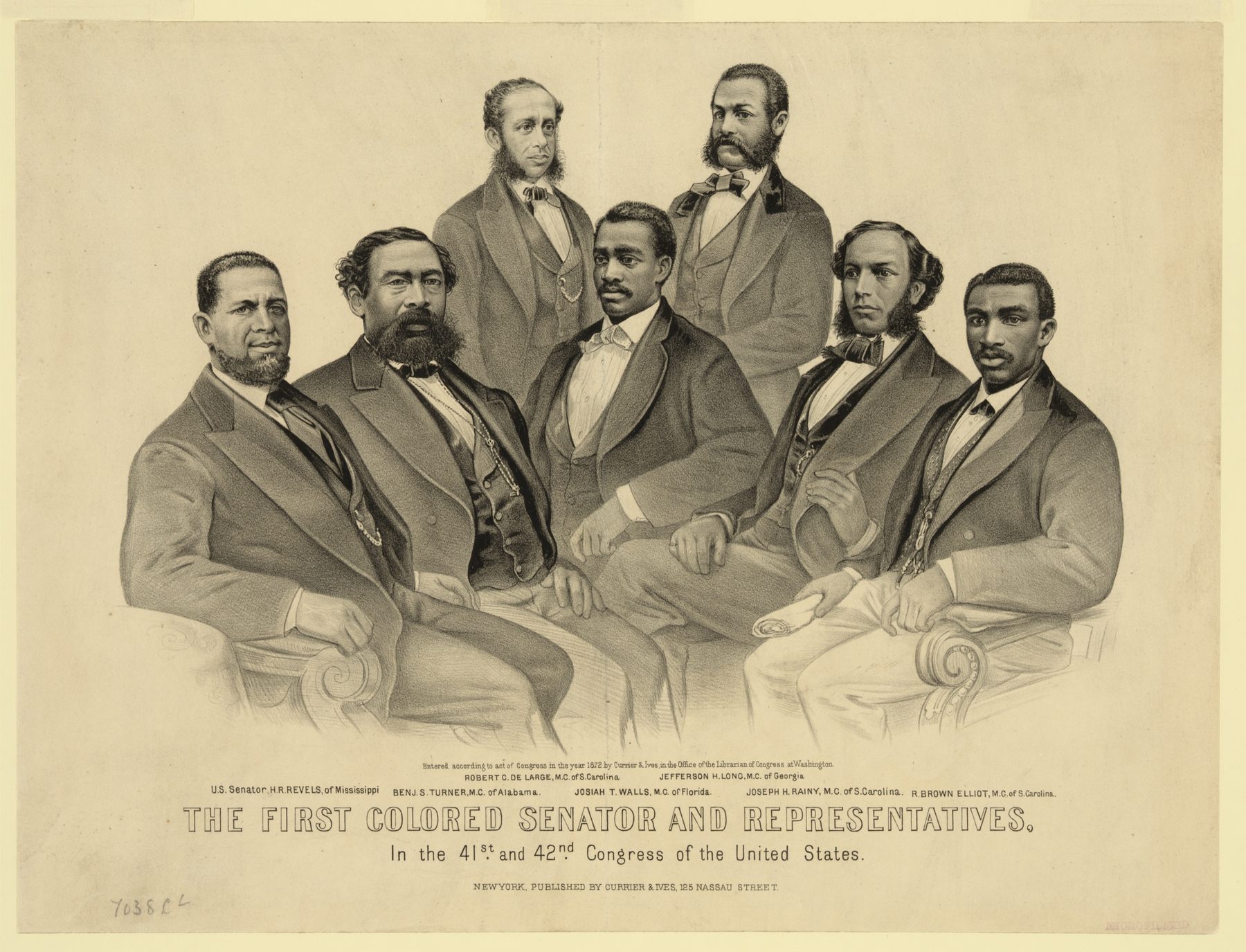
Violence and the end of Reconstruction
Members of the Ku Klux Klan attacked Black citizens for voting, running for office and serving on juries. Congress answered with Enforcement Acts. The act of May 1870 banned groups from going "in disguise upon the public highways" to violate citizens' rights. The act of February 1871 put national elections under federal supervision, and the act of April 1871 let the president use the armed forces against conspiracies to deny equal protection and suspend habeas corpus if necessary senate.gov.
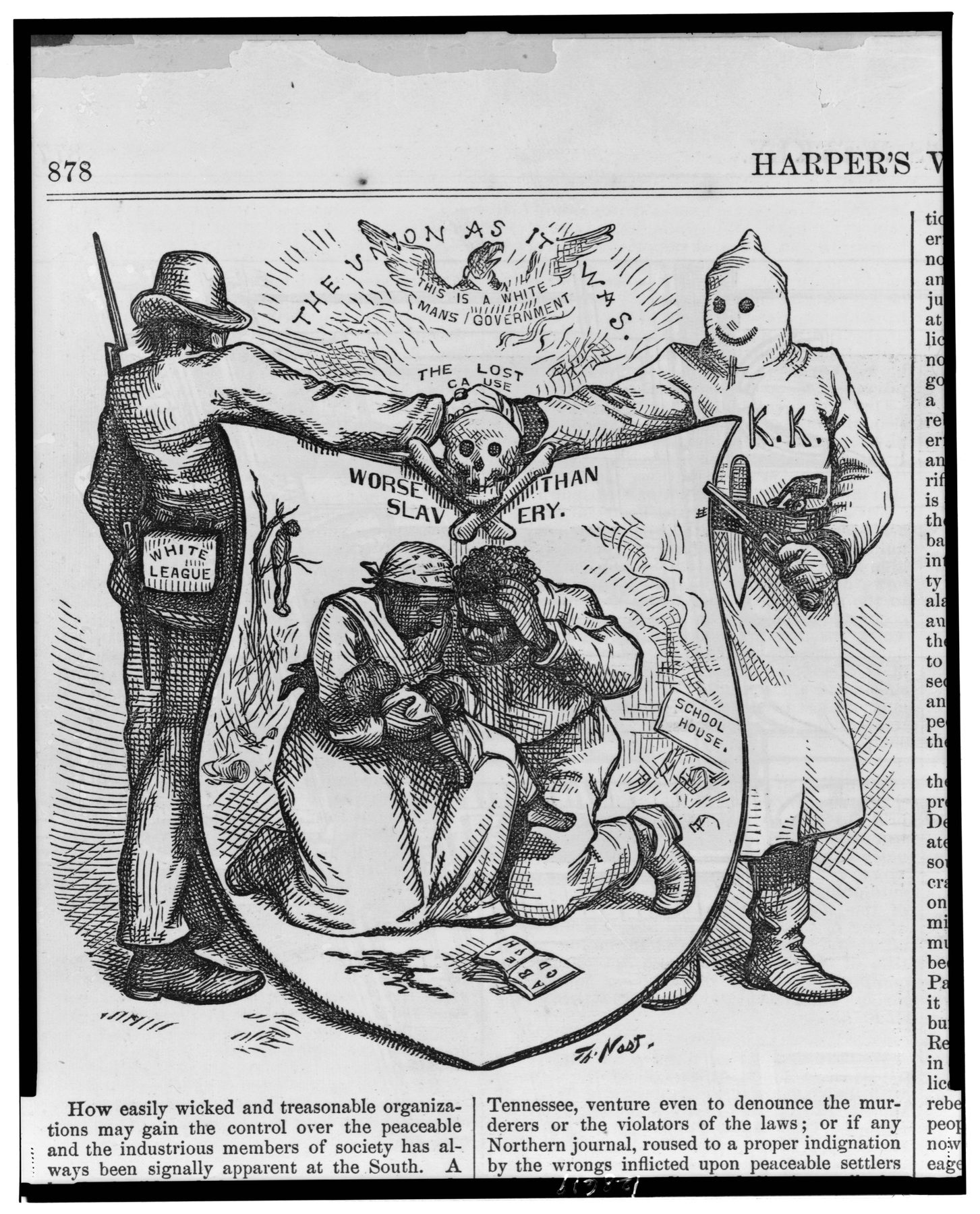
Then came 1876 and the withdrawal of 1877, described above. The National Archives summarizes what followed. Black Americans voted and held office in many Southern states through the 1880s. In the early 1890s, the former Confederate states wrote literacy tests, "grandfather clauses" and other devices into their laws to disfranchise them archives.gov. The Senate Historical Office notes that the 15th Amendment let states set qualifications that applied equally to all races, and that many former Confederate states used that opening for poll taxes and literacy tests senate.gov.
On May 18, 1896, in Plessy v. Ferguson, the Supreme Court upheld a Louisiana law requiring "equal but separate accommodations for the white and colored races." The Court had already struck down the Civil Rights Act of 1875 in 1883 archives.gov.
The parties argued about federal power over elections in 1892.
"We warn the people of our common country, jealous for the preservation of their free institutions, that the policy of Federal control of elections, to which the Republican party has committed itself, is fraught with the gravest dangers, scarcely less momentous than would result from a revolution practically establishing monarchy on the ruins of the Republic." presidency.ucsb.edu
Democratic Party national platform, June 21, 1892
"We demand that every citizen of the United States shall be allowed to cast one free and unrestricted ballot in all public elections, and that such ballot shall be counted and returned as cast." presidency.ucsb.edu
Republican Party national platform, June 9, 1892
George Henry White, born a slave in North Carolina in 1852, was the only African American in the 56th Congress. He introduced the first bill against lynching. The House History Office writes that it failed "in the face of growing GOP apathy towards racial legislation and the increased power of southern Democrats in Congress," and that after the further disfranchisement of Black North Carolinians he declined to run again in 1900 history.house.gov. On January 29, 1901, he gave his last speech on the House floor history.house.gov:
"This, Mr. Chairman, is perhaps the negroes' temporary farewell to the American Congress; but let me say, Phoenix-like he will rise up someday and come again." history.house.gov
George Henry White, representative from North Carolina (Republican), January 29, 1901
Chinese exclusion
In 1880 both parties' platforms called for limits on Chinese immigration.
"No more Chinese immigration, except for travel, education, and foreign commerce, and that even carefully guarded." presidency.ucsb.edu
Democratic Party national platform, June 22, 1880
"The Republican party, regarding the unrestricted immigration of the Chinese as a matter of grave concernment under the exercise of both these powers, would limit and restrict that immigration by the enactment of such just, humane and reasonable laws and treaties as will produce that result." presidency.ucsb.edu
Republican Party national platform, June 2, 1880
Congress passed the Chinese Exclusion Act and President Chester A. Arthur signed it; it was approved on May 6, 1882. It banned Chinese laborers for 10 years and barred courts from granting Chinese residents citizenship. It was extended in 1892 and made permanent in 1902 archives.gov.
The Gilded Age: the tariff
The tariff divided the parties. Grover Cleveland, a Democrat, attacked it in his annual message of December 1887, and the Republicans answered in their platform the next summer.
"Our present tariff laws, the vicious, inequitable, and illogical source of unnecessary taxation, ought to be at once revised and amended. These laws, as their primary and plain effect, raise the price to consumers of all articles imported and subject to duty by precisely the sum paid for such duties." presidency.ucsb.edu
Grover Cleveland, president (Democrat), annual message, December 6, 1887
"We are uncompromisingly in favor of the American system of protection; we protest against its destruction as proposed by the President and his party. They serve the interests of Europe; we will support the interests of America." presidency.ucsb.edu
Republican Party national platform, June 19, 1888
Populists, silver and 1896
A new party organized. The People's Party platform of July 4, 1892, opened: "Corruption dominates the ballot-box, the Legislatures, the Congress, and touches even the ermine of the bench... homes covered with mortgages, labor impoverished, and the land concentrating in the hands of capitalists" presidency.ucsb.edu. In 1896 the Democratic platform demanded "the free and unlimited coinage of both silver and gold at the present legal ratio of 16 to 1," and the convention nominated William Jennings Bryan presidency.ucsb.eduarchive.org. The Republicans declared themselves "unreservedly for sound money" presidency.ucsb.edu.
"There are two ideas of government. There are those who believe that if you just legislate to make the well-to-do prosperous that their prosperity will leak through on those below. The Democratic idea has been that if you legislate to make the masses prosperous their prosperity will find its way up and through every class that rests upon it... You shall not press down upon the brow of labor this crown of thorns. You shall not crucify mankind upon a cross of gold." archive.org
William Jennings Bryan, Democratic National Convention, Chicago, July 9, 1896
"Debasement of the currency means destruction of values. No one suffers so much from cheap money as the farmers and laborers. They are the first to feel its bad effects and the last to recover from them." presidency.ucsb.edu
William McKinley, Republican nominee, letter accepting the nomination, Canton, Ohio, August 26, 1896
McKinley won 271 electoral votes to 176 for Bryan, who ran as the Democratic and People's Party nominee archives.gov.
Votes for women
The woman suffrage amendment was first introduced in Congress in 1878 archives.gov. On January 10, 1918, the House passed it 274 to 136 history.house.gov. Jeannette Rankin of Montana, a Republican and the first woman to serve in Congress, spoke for it history.house.govhistory.house.gov. The Democratic president, Woodrow Wilson, went to the Senate on September 30, 1918, to ask for it.
"We have made partners of the women in this war; shall we admit them only to a partnership of suffering and sacrifice and toil and not to a partnership of privilege and right?" presidency.ucsb.edu
Woodrow Wilson, president (Democrat), address to the Senate, September 30, 1918
"How shall we answer their challenge, gentlemen: how shall we explain to them the meaning of democracy if the same Congress that voted for war to make the world safe for democracy refuses to give this small measure of democracy to the women of our country?" history.house.gov
Jeannette Rankin, representative from Montana (Republican), House debate on the amendment, January 10, 1918
The Senate voted on October 1, 1918, and the amendment failed. The House History Office records that Mississippi Senator John Sharp Williams first offered a change to limit the vote to white women, which the Senate rejected, and that senators from the South and Northeast in particular opposed the amendment history.house.gov. Suffrage lost in a Congress controlled by Democrats, and in the 1918 midterms Republicans won a clear House majority and took the Senate history.house.gov. On May 21, 1919, the House passed the amendment 304 to 89; on June 4, 1919, the Senate passed it 56 to 25 history.house.gov. In the House debate, the opposition was managed by Frank Clark, who argued that the vote for Black women in the South would produce racial turmoil history.house.gov. Tennessee became the 36th state to ratify on August 18, 1920 history.house.gov.
Prohibition
In 1917 Congress sent the 18th Amendment to the states, and within 13 months they ratified it senate.gov. It was certified on January 16, 1919, ratified by 46 states guides.loc.gov. The Volstead Act defined an intoxicating drink as anything over one half of one percent alcohol. On October 28, 1919, the Senate voted 65 to 20 to override Wilson's veto of it; the House had also voted to override senate.gov. Enforcement began on January 17, 1920 guides.loc.gov.
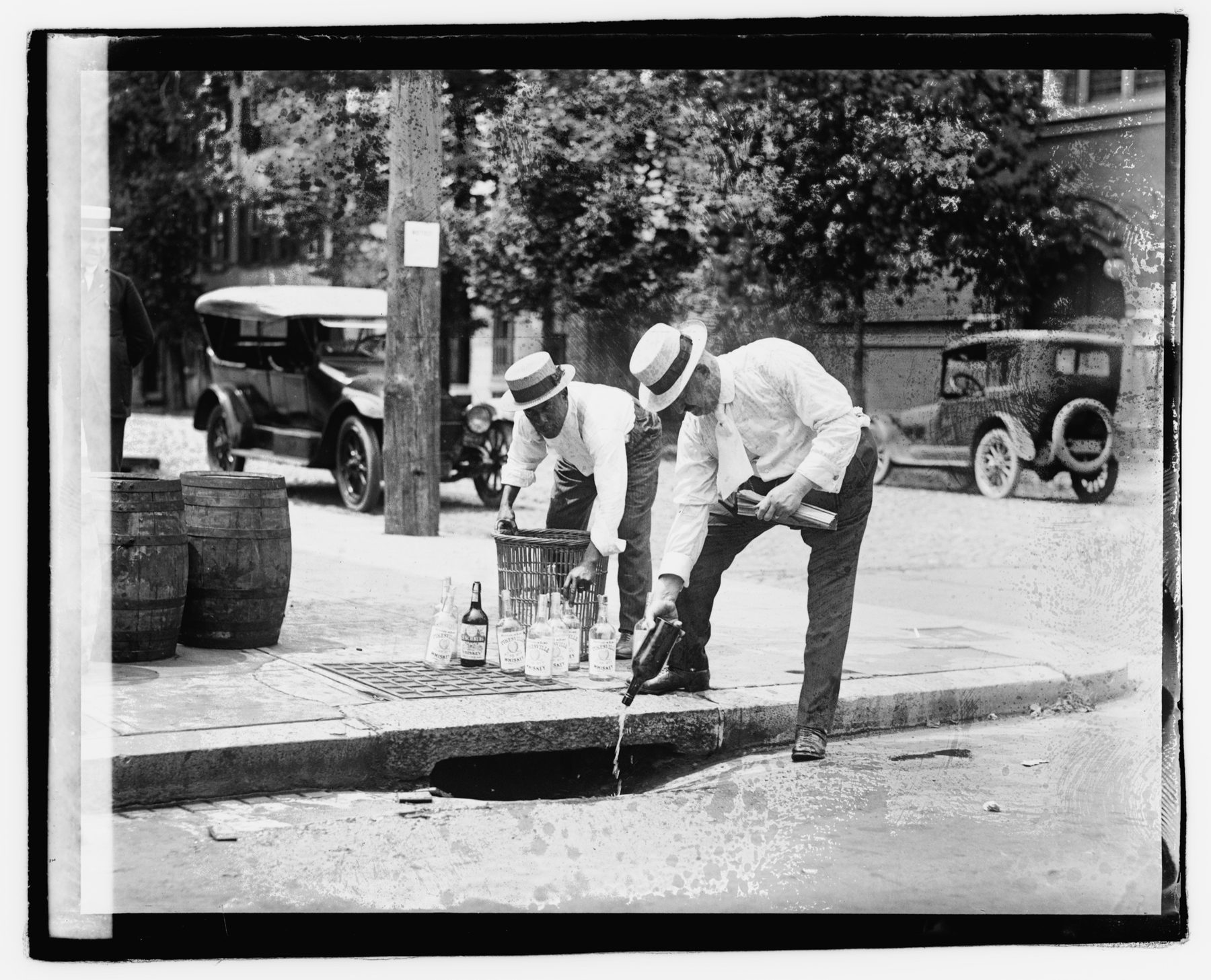
The Republican platform of 1932 said that national prohibition "was supported and opposed by members of both great political parties" presidency.ucsb.edu. In 1928 the parties' nominees took different sides.
"I believe in temperance. We have not achieved temperance under the present system... I believe in reverence for law. Today disregard of the prohibition laws is insidiously sapping respect for all law." presidency.ucsb.edu
Alfred E. Smith, Democratic nominee, address accepting the nomination, Albany, New York, August 22, 1928
"Our country has deliberately undertaken a great social and economic experiment, noble in motive and far-reaching in purpose. It must be worked out constructively." presidency.ucsb.edu
Herbert Hoover, Republican nominee, address accepting the nomination, Stanford, California, August 11, 1928
In the same speech Hoover said: "We in America today are nearer to the final triumph over poverty than ever before in the history of any land" presidency.ucsb.edu. He won 444 electoral votes to 87 for Smith archives.gov. In 1932 the Democratic platform said: "We advocate the repeal of the Eighteenth Amendment" presidency.ucsb.edu.
Closing the door: 1924
Congress passed the first broadly restrictive immigration law in 1917, with a literacy test and an "Asiatic Barred Zone." The Republican senator William P. Dillingham then proposed quotas by nationality. Wilson, a Democrat, opposed it and used a pocket veto; the Republican president Warren Harding called Congress back in 1921 to pass it history.state.gov. The Immigration Act of 1924, signed by President Calvin Coolidge, cut each nationality's quota to two percent of its number in the 1890 census. That favored the British Isles and Western Europe and limited immigration from Southern and Eastern Europe, and its bar on anyone ineligible for citizenship shut out Japanese immigrants history.state.gov.
The Depression and 1932
The Great Depression began in August 1929. The Federal Reserve's history lists the stock market crash of 1929, banking panics in 1930 and 1931, and national and international financial crises from 1931 through 1933. From the fall of 1930 through the winter of 1933, the money supply fell by nearly 30 percent. The bottom came in March 1933, when the commercial banking system collapsed federalreservehistory.org.
"I pledge you, I pledge myself, to a new deal for the American people. Let us all here assembled constitute ourselves prophets of a new order of competence and of courage." presidency.ucsb.edu
Franklin D. Roosevelt, Democratic nominee, address accepting the nomination, Chicago, July 2, 1932
"This campaign is more than a contest between two men. It is more than a contest between two parties. It is a contest between two philosophies of government. We are told by the opposition that we must have a change, that we must have a new deal. It is not the change that comes from normal development of national life to which I object or you object, but the proposal to alter the whole foundations of our national life which have been builded through generations of testing and struggle." presidency.ucsb.edu
Herbert Hoover, president (Republican), Madison Square Garden, New York, October 31, 1932
In his acceptance speech of August 11, 1932, Hoover had said that turning to "a State-controlled or State-directed social or economic system in order to cure our troubles... is not liberalism; that is tyranny" presidency.ucsb.edu.
Roosevelt won 472 electoral votes to 59 for Hoover archives.gov.
The party loyalties of Black voters were beginning to move. In 1930, former Representative John Lynch said Black voters were forced to choose "the least of two evils": Republicans who had become largely indifferent to their needs, or a Democratic Party openly opposed to them. The House History Office writes that in the 1930s the Great Migration and the Depression would transform the northern wing of the Democratic Party history.house.gov.
Religion in this era
Black churches. Hiram Revels, the first Black senator, was a minister and presiding elder of the African Methodist Episcopal Church in Natchez, Mississippi senate.gov.
Native American religion. In the late 1880s, government fear of the Ghost Dance movement led to crackdowns on large Native gatherings guides.loc.gov. On December 15, 1890, Sitting Bull, assumed to be part of the movement, was arrested and killed by Indian police on the Standing Rock Reservation. On December 29, 1890, U.S. troops killed at least 84 Lakota men, 62 women and 16 children on Wounded Knee Creek, South Dakota nps.gov.
Latter-day Saints. Congress made polygamy illegal, and the church officially ended plural marriage in 1890; Utah became a state in 1896 senate.gov. When Utah sent Reed Smoot, a Republican and an apostle of the church, to the Senate in 1903, petitions with thousands of signatures came in from Protestant churches, women's groups and others. The Senate investigated for more than two years. On February 20, 1907, it voted 27 to 43 against expelling him and 28 to 42 against denying him his seat. The Senate Historical Office credits the support of the Republican president, Theodore Roosevelt senate.gov.
Protestants and Prohibition. The Women's Christian Temperance Union and the Anti-Saloon League led the movement for Prohibition, and the head of the Anti-Saloon League drafted the Volstead Act senate.gov. The Miller Center describes the 1928 Democratic ticket as mirroring a split in the party between Southern Protestant supporters of Prohibition and Northern, urban, often Catholic opponents millercenter.org.
Catholics. Al Smith, the Democratic nominee in 1928, was a Catholic, and no Catholic had ever been elected president. Anti-Catholic rumors and rhetoric were aimed at him through the campaign. Literature distributed by the Ku Klux Klan claimed Smith would take orders from the pope. When he spoke in Oklahoma City about religious intolerance, Klan crosses burned around the stadium millercenter.org. Hoover never mentioned Smith by name millercenter.org.
The full account of religion and the parties is in Religion and the parties.
Sources
- U.S. Senate Historical Office, "Hiram Revels: First African American Senator," Senate Stories, February 25, 2020. senate.gov (locator: full post). Accessed 2026-10-30.
- National Archives, Electoral College results, 1876. archives.gov (locator: summary and notes). Accessed 2026-10-30.
- Miller Center, University of Virginia, "Rutherford B. Hayes: Key Events." millercenter.org (locator: April 10 and April 24, 1877). Accessed 2026-10-30.
- U.S. Senate, "The Enforcement Acts of 1870 and 1871." senate.gov (locator: full page). Accessed 2026-10-30.
- U.S. House of Representatives, History, Art and Archives, "Representative George White of North Carolina," January 29, 1901. history.house.gov (locator: full entry). Accessed 2026-10-30.
- U.S. Senate, "The Impeachment of Andrew Johnson (1868)." senate.gov (locator: biography, votes, and chronology). Accessed 2026-10-30.
- U.S. Senate, "Freedmen's Bureau Acts of 1865 and 1866." senate.gov (locator: paragraphs on the 1866 bill). Accessed 2026-10-30.
- U.S. House of Representatives, History, Art and Archives, Historical Highlight on the House passage of the Fourteenth Amendment, June 13, 1866. history.house.gov (locator: full entry). Accessed 2026-10-30.
- Andrew Johnson, Veto Message, March 27, 1866, The American Presidency Project, UC Santa Barbara. presidency.ucsb.edu (locator: paragraph on the "distinction of race and color"). Accessed 2026-10-30.
- National Archives, "14th Amendment to the U.S. Constitution: Civil Rights (1868)," Milestone Documents. archives.gov (locator: summary). Accessed 2026-10-30.
- U.S. Senate, "Landmark Legislation: The Fourteenth Amendment." senate.gov (locator: full page). Accessed 2026-10-30.
- National Archives, "15th Amendment to the U.S. Constitution: Voting Rights (1870)," Milestone Documents. archives.gov (locator: summary). Accessed 2026-10-30.
- Democratic Party Platform of 1868, July 4, 1868, The American Presidency Project, UC Santa Barbara. presidency.ucsb.edu (locator: preamble and resolutions on Reconstruction). Accessed 2026-10-30.
- Republican Party Platform of 1868, May 20, 1868, The American Presidency Project, UC Santa Barbara. presidency.ucsb.edu (locator: second resolution). Accessed 2026-10-30.
- National Archives, Electoral College results, 1868. archives.gov (locator: summary table). Accessed 2026-10-30.
- U.S. Senate, "Landmark Legislation: Fifteenth Amendment." senate.gov (locator: full page). Accessed 2026-10-30.
- National Archives, "Plessy v. Ferguson (1896)," Milestone Documents. archives.gov (locator: summary). Accessed 2026-10-30.
- Democratic Party Platform of 1892, June 21, 1892, The American Presidency Project, UC Santa Barbara. presidency.ucsb.edu (locator: resolution on federal control of elections). Accessed 2026-10-30.
- Republican Party Platform of 1892, June 9, 1892, The American Presidency Project, UC Santa Barbara. presidency.ucsb.edu (locator: resolution on the ballot). Accessed 2026-10-30.
- U.S. House of Representatives, History, Art and Archives, "A 'Rising People, Full of Potential Force'," Black Americans in Congress, "Temporary Farewell" essay, conclusion. history.house.gov (locator: opening quotation). Accessed 2026-10-30.
- Democratic Party Platform of 1880, June 22, 1880, The American Presidency Project, UC Santa Barbara. presidency.ucsb.edu (locator: plank 11). Accessed 2026-10-30.
- Republican Party Platform of 1880, June 2, 1880, The American Presidency Project, UC Santa Barbara. presidency.ucsb.edu (locator: resolution 6). Accessed 2026-10-30.
- National Archives, "Chinese Exclusion Act (1882)," Milestone Documents. archives.gov (locator: summary). Accessed 2026-10-30.
- Grover Cleveland, Third Annual Message (first term), December 6, 1887, The American Presidency Project, UC Santa Barbara. presidency.ucsb.edu (locator: paragraph on "our present tariff laws"). Accessed 2026-10-30.
- Republican Party Platform of 1888, June 19, 1888, The American Presidency Project, UC Santa Barbara. presidency.ucsb.edu (locator: resolution on protection). Accessed 2026-10-30.
- Populist Party Platform of 1892, July 4, 1892, The American Presidency Project, UC Santa Barbara. presidency.ucsb.edu (locator: preamble). Accessed 2026-10-30.
- Democratic Party Platform of 1896, July 7, 1896, The American Presidency Project, UC Santa Barbara. presidency.ucsb.edu (locator: plank on coinage). Accessed 2026-10-30.
- Official Proceedings of the Democratic National Convention Held in Chicago, Ill., July 7th, 8th, 9th, 10th and 11th, 1896 (Logansport, Ind., 1896), digitized by the Internet Archive. archive.org (locator: proceedings of Thursday, July 9, Bryan's speech, pp. 226 to 235). Accessed 2026-10-30.
- Republican Party Platform of 1896, June 18, 1896, The American Presidency Project, UC Santa Barbara. presidency.ucsb.edu (locator: plank on money). Accessed 2026-10-30.
- William McKinley, Letter Accepting the Republican Presidential Nomination, August 26, 1896, The American Presidency Project, UC Santa Barbara. presidency.ucsb.edu (locator: section on the currency). Accessed 2026-10-30.
- National Archives, Electoral College results, 1896. archives.gov (locator: summary table). Accessed 2026-10-30.
- U.S. House of Representatives, History, Art and Archives, "The Nineteenth Amendment, 1919 to 1920," Women in Congress historical essay. history.house.gov (locator: House debate, votes and notes 63 to 65). Accessed 2026-10-30.
- U.S. House of Representatives, History, Art and Archives, "The House's 1918 Passage of a Constitutional Amendment Granting Women the Right to Vote." history.house.gov (locator: full entry). Accessed 2026-10-30.
- Woodrow Wilson, Address to the Senate on the Nineteenth Amendment, September 30, 1918, The American Presidency Project, UC Santa Barbara. presidency.ucsb.edu (locator: middle paragraphs). Accessed 2026-10-30.
- U.S. House of Representatives, History, Art and Archives, "'Why Not Have it Constitutionally?': Race, Gender, and the Nineteenth Amendment," Whereas blog, May 21, 2019. history.house.gov (locator: section on the October 1, 1918, Senate vote). Accessed 2026-10-30.
- U.S. Senate, "The Senate Overrides the President's Veto of the Volstead Act," October 28, 1919. senate.gov (locator: full page). Accessed 2026-10-30.
- Library of Congress, "Prohibition: Topics in Chronicling America." guides.loc.gov (locator: introduction and timeline). Accessed 2026-10-30.
- Republican Party Platform of 1932, The American Presidency Project, UC Santa Barbara. presidency.ucsb.edu (locator: section "The Eighteenth Amendment"). Accessed 2026-10-30.
- Alfred E. Smith, Address of Acceptance at the State Capitol, Albany, New York, August 22, 1928, The American Presidency Project, UC Santa Barbara. presidency.ucsb.edu (locator: section on prohibition). Accessed 2026-10-30.
- Herbert Hoover, Address Accepting the Republican Presidential Nomination in Stanford, California, August 11, 1928, The American Presidency Project, UC Santa Barbara. presidency.ucsb.edu (locator: sections on prohibition and poverty). Accessed 2026-10-30.
- National Archives, Electoral College results, 1928. archives.gov (locator: summary table). Accessed 2026-10-30.
- Democratic Party Platform of 1932, The American Presidency Project, UC Santa Barbara. presidency.ucsb.edu (locator: plank on the Eighteenth Amendment). Accessed 2026-10-30.
- Office of the Historian, U.S. Department of State, "The Immigration Act of 1924 (The Johnson-Reed Act)." history.state.gov (locator: full page). Accessed 2026-10-30.
- Gary Richardson, "The Great Depression," Federal Reserve History, November 22, 2013. federalreservehistory.org (locator: opening section and section on the money supply). Accessed 2026-10-30.
- Franklin D. Roosevelt, Address Accepting the Presidential Nomination at the Democratic National Convention in Chicago, July 2, 1932, The American Presidency Project, UC Santa Barbara. presidency.ucsb.edu (locator: closing paragraph). Accessed 2026-10-30.
- Herbert Hoover, Address at Madison Square Garden in New York City, October 31, 1932, The American Presidency Project, UC Santa Barbara. presidency.ucsb.edu (locator: opening paragraphs). Accessed 2026-10-30.
- Herbert Hoover, Address Accepting the Republican Presidential Nomination, August 11, 1932, The American Presidency Project, UC Santa Barbara. presidency.ucsb.edu (locator: passage on "a State-controlled or State-directed social or economic system"). Accessed 2026-10-30.
- National Archives, Electoral College results, 1932. archives.gov (locator: summary table). Accessed 2026-10-30.
- U.S. House of Representatives, History, Art and Archives, "The 'Fulfillment of White's Prophecy'," Black Americans in Congress, "Temporary Farewell" essay. history.house.gov (locator: section "Black Americans and the Democratic Party"). Accessed 2026-10-30.
- Library of Congress, "Wounded Knee Massacre: Topics in Chronicling America." guides.loc.gov (locator: introduction). Accessed 2026-10-30.
- National Park Service, Little Bighorn Battlefield National Monument, "A Chronology of the Battle of the Little Bighorn." nps.gov (locator: 1890 entries). Accessed 2026-10-30.
- U.S. Senate, "Expulsion Case of Reed Smoot of Utah (1907)." senate.gov (locator: background, statement of the case, response, conclusion). Accessed 2026-10-30.
- Miller Center, University of Virginia, "Herbert Hoover: Campaigns and Elections." millercenter.org (locator: section on the campaign of 1928). Accessed 2026-10-30.
- National Archives, "19th Amendment to the U.S. Constitution: Women's Right to Vote (1920)," Milestone Documents. archives.gov (locator: summary). Accessed 2026-10-30.
- U.S. House of Representatives, History, Art and Archives, "RANKIN, Jeannette." history.house.gov (locator: party and biography). Accessed 2026-10-30.
Last checked against its sources on October 30, 2026. Report a correction.