
How we got here
From the First Parties to the Civil War, 1790s to 1865
The short answer
The first split was over federal power and a national bank in 1791. Democrats and Whigs then fought over the bank, tariffs and Indian removal. Slavery divided churches in 1844 and 1845, broke the Whig Party in the 1850s and produced the Republican Party in 1854. Lincoln won the presidency in 1860 with 180 electoral votes, eleven states formed the Confederacy, and the war ended slavery through the 13th Amendment in 1865.
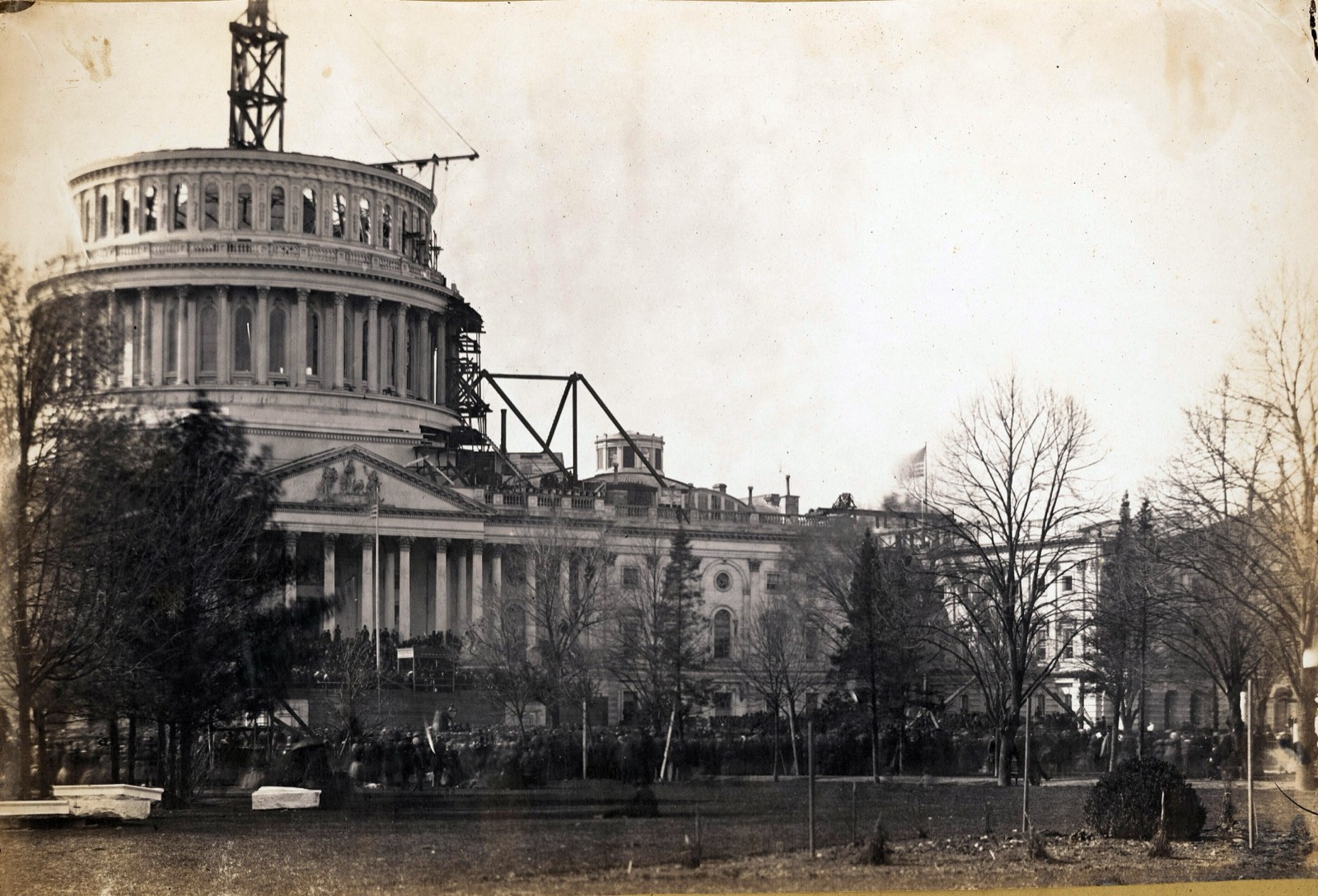
Together and Dug in, in this era
Together: a law passed with a majority of both major parties voting yes in both chambers, or a documented agreement across parties, shown with the vote. Dug in: a documented failure to settle by vote, or a break in the system, shown with what followed.
Together (0)
None in this era met the definition.
Dug in (2)
Dug in · 1836
The gag rule, 1836 to 1844
The House adopted a rule that every petition, memorial or resolution on slavery be tabled automatically with no further action.
- House, May 26, 1836: 117 to 68 (Jacksonians 93 yes, 21 no; Anti-Jacksonians 23 yes, 34 no; total 117 yes, 68 no; Anti Masonic 0 yes, 12 no; Nullifier 1 yes, 1 no) voteview.com
- House repeal, December 3, 1844: 108 to 80 (Democrats 55 yes, 64 no; Whigs 49 yes, 16 no; total 108 yes, 80 no; Ind. Democrat 1 yes, 0 no; Law and Order 2 yes, 0 no; Ind. Whig 1 yes, 0 no) voteview.com
What followed: The House reinstated the rule each Congress until it was repealed on December 3, 1844, by a vote of 108 to 80 (Whigs 49 yes, 16 no; Democrats 55 yes, 64 no). Petitions on slavery went unconsidered for eight years.
Voteview, House roll call 197, 24th Congress voteview.com Voteview, House roll call 423, 28th Congress voteview.com U.S. House History, Art and Archives, The gag rule history.house.gov
Dug in · 1861
Crittenden Compromise fails, secession and the Civil War
The Senate rejected the Crittenden constitutional amendments on slavery, 19 to 20, as Southern states were leaving the Union.
- Senate, March 2, 1861: 19 to 20 (Democrats 17 yes, 0 no; Republicans 0 yes, 20 no; total 19 yes, 20 no; American 2 yes, 0 no) voteview.com
- Senate jan16 substitute, January 16, 1861: 25 to 23 (Democrats 0 yes, 21 no; Republicans 25 yes, 0 no; total 25 yes, 23 no; American 0 yes, 2 no) voteview.com
- House, February 27, 1861: 80 to 113 (Democrats 50 yes, 1 no; Republicans 1 yes, 109 no; total 80 yes, 113 no; Anti-Lecompton Democrat 4 yes, 1 no; American 4 yes, 1 no; Ind. Democrat 6 yes, 0 no; Opposition 15 yes, 1 no) voteview.com
What followed: South Carolina declared secession on December 20, 1860; seven seceded states created the Confederate States of America on February 4, 1861; the war began with the attack on Fort Sumter on April 12, 1861, and eleven states seceded in all. An estimated 620,000 men died and an estimated 1.5 million casualties were reported.
Voteview, Senate roll call 602, 36th Congress (passage of S.J. Res. 54, the Crittenden resolution, failed) voteview.com Voteview, Senate roll call 403, 36th Congress (January 16, 1861 substitute, 25 to 23) voteview.com Voteview, House roll call 404, 36th Congress (Crittenden plan as a referendum amendment, failed 80 to 113) voteview.com National Park Service, Kennesaw Mountain, War Declared nps.gov American Battlefield Trust, Civil War Casualties battlefields.org
May 22, 1856: the Senate chamber
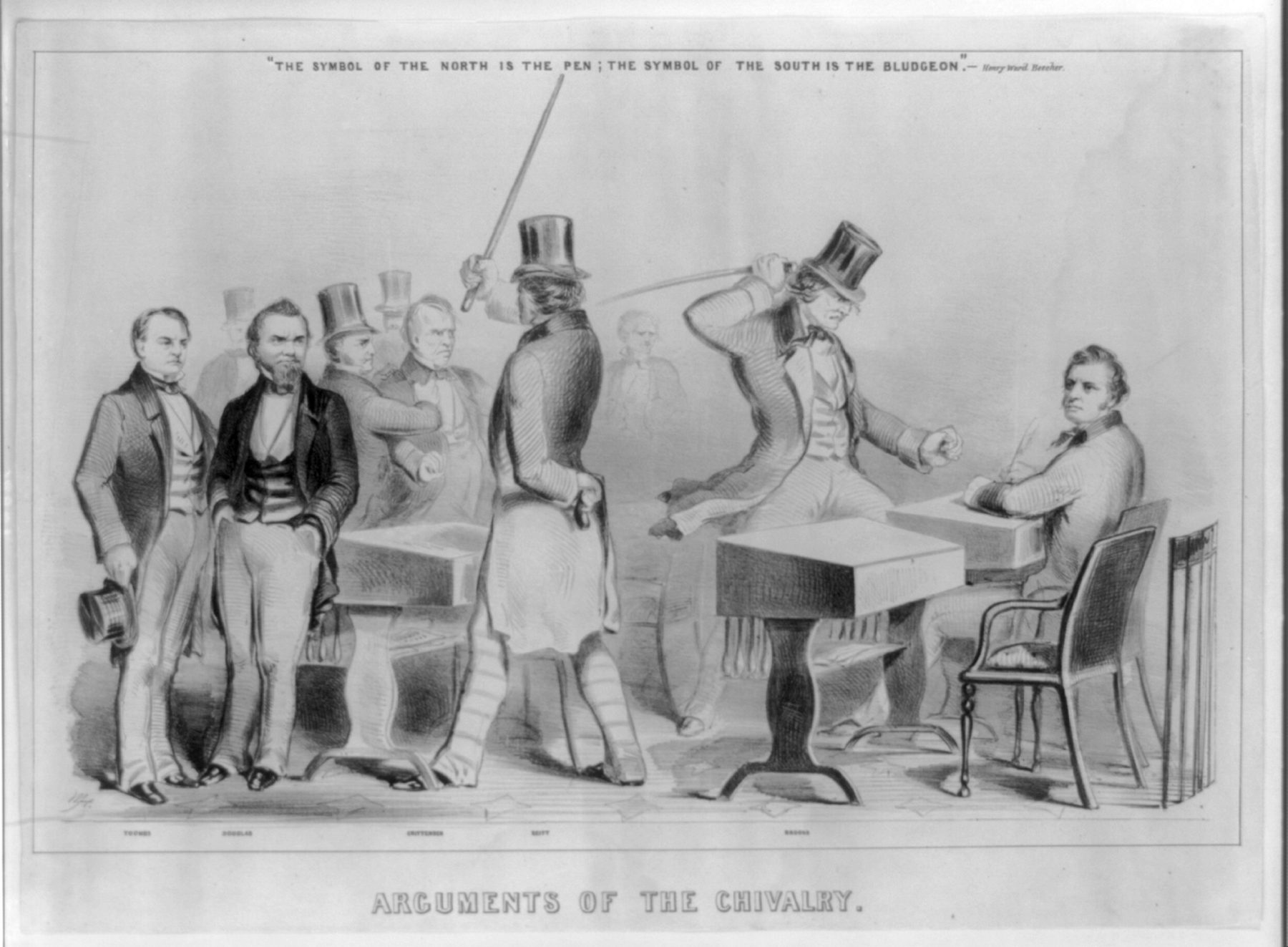
On May 19, 1856, Senator Charles Sumner, a Massachusetts antislavery Republican, gave a speech he called "The Crime Against Kansas." He named two Democratic senators as the men responsible, Stephen Douglas of Illinois and Andrew Butler of South Carolina, and said Butler had taken as his mistress "the harlot, Slavery" senate.gov.
On May 22, after the Senate adjourned, Representative Preston Brooks of South Carolina, a relative of Butler, walked into the chamber. Sumner was at his desk putting his postal frank on copies of the speech. Brooks hit him on the head with a metal-topped cane, again and again, until Sumner was carried out bleeding. Brooks survived a House censure resolution, resigned, was reelected, and died at 37. Sumner recovered slowly and served 18 more years senate.gov.
The Senate Historical Office writes that both men became heroes in their own regions overnight senate.gov. This chapter is how the country got to that room, and what came after it.
The one thing that changed everything
The Kansas-Nebraska Act. In January 1854, Senator Stephen Douglas, a Democrat from Illinois, introduced a bill to organize two territories west of Missouri and let the settlers decide whether slavery would be legal there. The act passed on May 30, 1854. It repealed the Missouri Compromise, which had outlawed slavery in the Louisiana territories above 36 degrees 30 minutes latitude archives.gov.
The roll calls split by party. In the Senate on March 3, 1854, Democrats voted 28 yes and 5 no, and Whigs 9 yes and 7 no; the bill passed 37 to 14 voteview.com. In the House on May 22, 1854, Democrats voted 100 yes and 44 no, and Whigs 13 yes and 51 no; it passed 113 to 100 voteview.com.
The National Archives lists what followed. Proslavery and antislavery settlers rushed into Kansas to win the first election, and the fighting there was called "Bleeding Kansas." Opponents of the act helped found the Republican Party, which opposed the spread of slavery into the territories archives.gov. The Senate Historical Office adds that the Whig Party dissolved over slavery in the 1850s and was replaced by the new Republican Party, and that the Democratic Party also split over slavery senate.gov. Six years after the act, a Republican was elected president.
The first split: how strong should the national government be?
The first American parties grew out of one question in 1791: could Congress charter a national bank when the Constitution does not say "bank"? Secretary of State Thomas Jefferson and Secretary of the Treasury Alexander Hamilton wrote opposite answers. Jefferson led the Republicans (later called Democratic-Republicans) and Hamilton the Federalists. The longer story is in How the Democratic-Republican Party formed.
"To take a single step beyond the boundaries thus specially drawn around the powers of Congress, is to take possession of a boundless field of power, no longer susceptible of any definition." avalon.law.yale.edu
Thomas Jefferson, secretary of state (Democratic-Republican), opinion on the constitutionality of a national bank, 1791
"Every power vested in a government is in its nature sovereign, and includes, by force of the term, a right to employ all the means requisite and fairly applicable to the attainment of the ends of such power, and which are not precluded by restrictions and exceptions specified in the Constitution." avalon.law.yale.edu
Alexander Hamilton, secretary of the treasury (Federalist), opinion on the constitutionality of the Bank of the United States, 1791
Democrats and Whigs: the bank, tariffs and roads
After the four-way election of 1824 (see 1824 and after), the old Republican coalition split. When Andrew Jackson won in 1828, he was backed by a new coalition with a base in states and towns: the Democratic Party. In the Senate, Henry Clay of Kentucky led the anti-Jackson forces, who called themselves Whigs senate.gov.
In the 1830s the two parties began sitting on opposite sides of the Senate chamber, Democrats to the right of the presiding officer and Whigs to the left. They fought over the Bank of the United States, import tariffs, and federal money for roads, canals and bridges senate.gov.
The bank was the biggest fight. Congress voted to renew the charter of the Second Bank of the United States, and on July 10, 1832, Jackson vetoed it avalon.law.yale.edu. The Miller Center records that Attorney General Roger Taney and adviser Amos Kendall wrote most of the message millercenter.org. Daniel Webster of Massachusetts answered it in the Senate the next day gutenberg.org.
"When the laws undertake to add to these natural and just advantages artificial distinctions, to grant titles, gratuities, and exclusive privileges, to make the rich richer and the potent more powerful, the humble members of society-the farmers, mechanics, and laborers-who have neither the time nor the means of securing like favors to themselves, have a right to complain of the injustice of their Government." avalon.law.yale.edu
Andrew Jackson, president (Democrat), veto message on the bank bill, July 10, 1832
"I tell him the attempt is to play off his passions against his interests, and to prevail on him, in the name of liberty, to destroy all the fruits of liberty; in the name of patriotism, to injure and afflict his country; and in the name of his own independence, to destroy that very independence, and make him a beggar and a slave." gutenberg.org
Daniel Webster, senator from Massachusetts (Jackson opponent), Senate speech on the veto, July 11, 1832
That November, Jackson beat the National Republican Henry Clay, 219 electoral votes to 49 archives.gov.
Indian removal
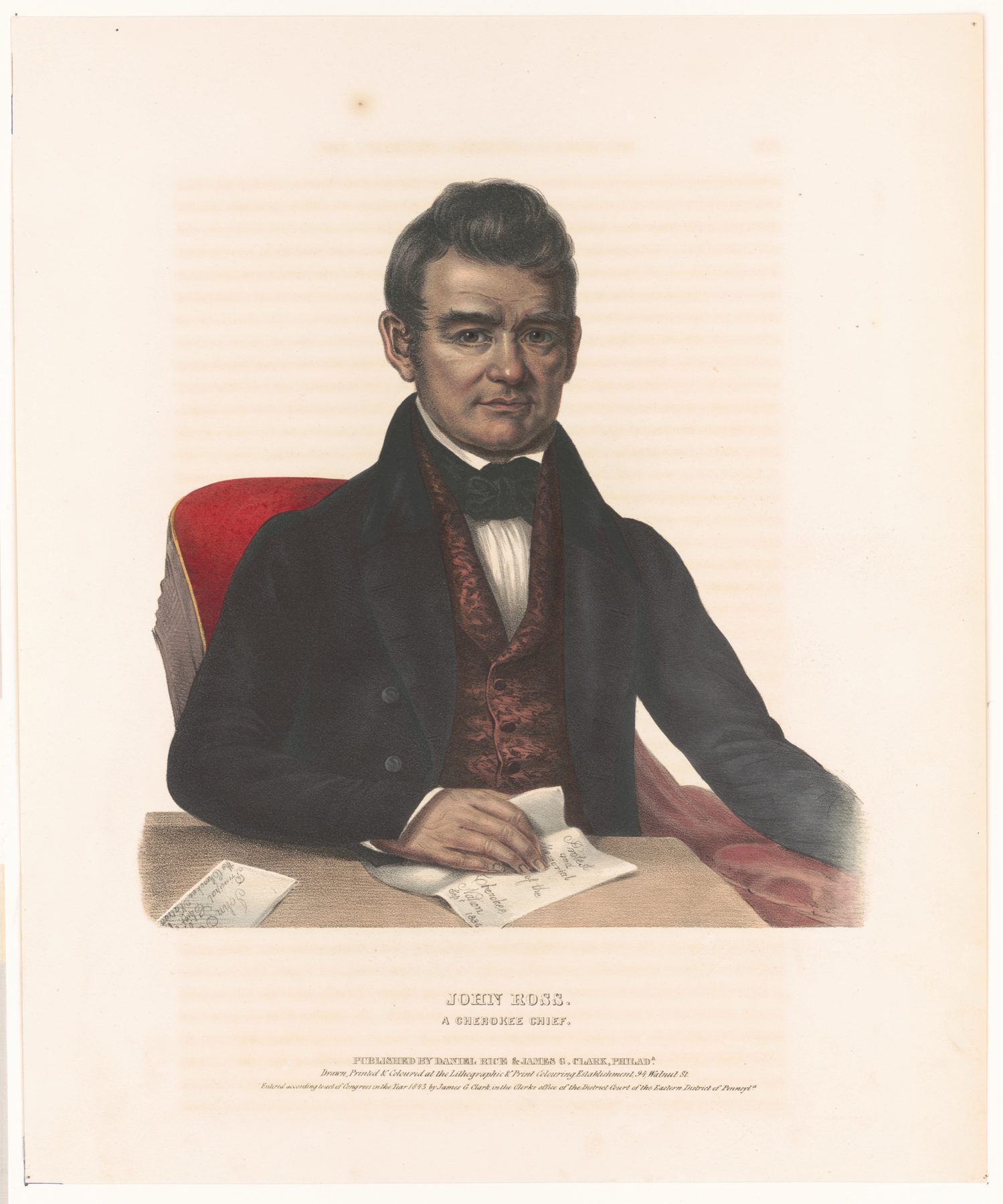
On May 28, 1830, Jackson signed the Indian Removal Act. It let the president trade land west of the Mississippi for Indian lands inside existing states guides.loc.gov. Senator Theodore Frelinghuysen of New Jersey, who would run for vice president on the Whig ticket in 1844 archives.gov, spoke against the bill in the Senate on April 6, 1830 archive.org. Jackson reported on removal to Congress that December.
"What good man would prefer a country covered with forests and ranged by a few thousand savages to our extensive Republic, studded with cities, towns, and prosperous farms embellished with all the improvements which art can devise or industry execute, occupied by more than 12,000,000 happy people, and filled with all the blessings of liberty, civilization and religion?" archives.gov
Andrew Jackson, president (Democrat), annual message to Congress, December 6, 1830
"Do the obligations of justice change with the color of the skin? Is it one of the prerogatives of the white man, that he may disregard the dictates of moral principles, when an Indian shall be concerned?" archive.org
Theodore Frelinghuysen, senator from New Jersey (Whig candidate for vice president in 1844), Senate speech on the removal bill, April 6, 1830
By the end of Jackson's presidency his administration had negotiated almost 70 removal treaties. They moved nearly 50,000 eastern Indians to Indian Territory, later eastern Oklahoma, and opened 25 million acres to white settlement, most of it in the South and open to slavery archives.gov. Many Cherokees opposed the Treaty of New Echota, ratified in 1836. In the fall and winter of 1838 and 1839, the Army forced them west, some walking as far as 1,000 miles over four months. About 4,000 of 16,000 Cherokees died on the way archives.gov.
Slavery comes to the floor
On February 1, 1836, Representative James Henry Hammond of South Carolina moved that antislavery petitions "be not received" by the House. The House History Office calls his speech the first defense of slavery in Congress history.house.gov.
"I believe [slavery] to be the greatest of all the great blessings which a kind Providence has bestowed upon our glorious region." history.house.gov
James Henry Hammond, representative from South Carolina, House floor, February 1, 1836
In May 1836 the House adopted the "gag rule," which barred debate over slavery. It stayed in effect until December 1844 history.house.gov.
The Democratic Party wrote its position into its national platform in 1840 and repeated it, nearly word for word, in 1856: Congress had no power to interfere with "the domestic institutions of the several states," and "all efforts by abolitionists or others, made to induce congress to interfere with questions of slavery" would "lead to the most alarming and dangerous consequences" presidency.ucsb.edupresidency.ucsb.edu.
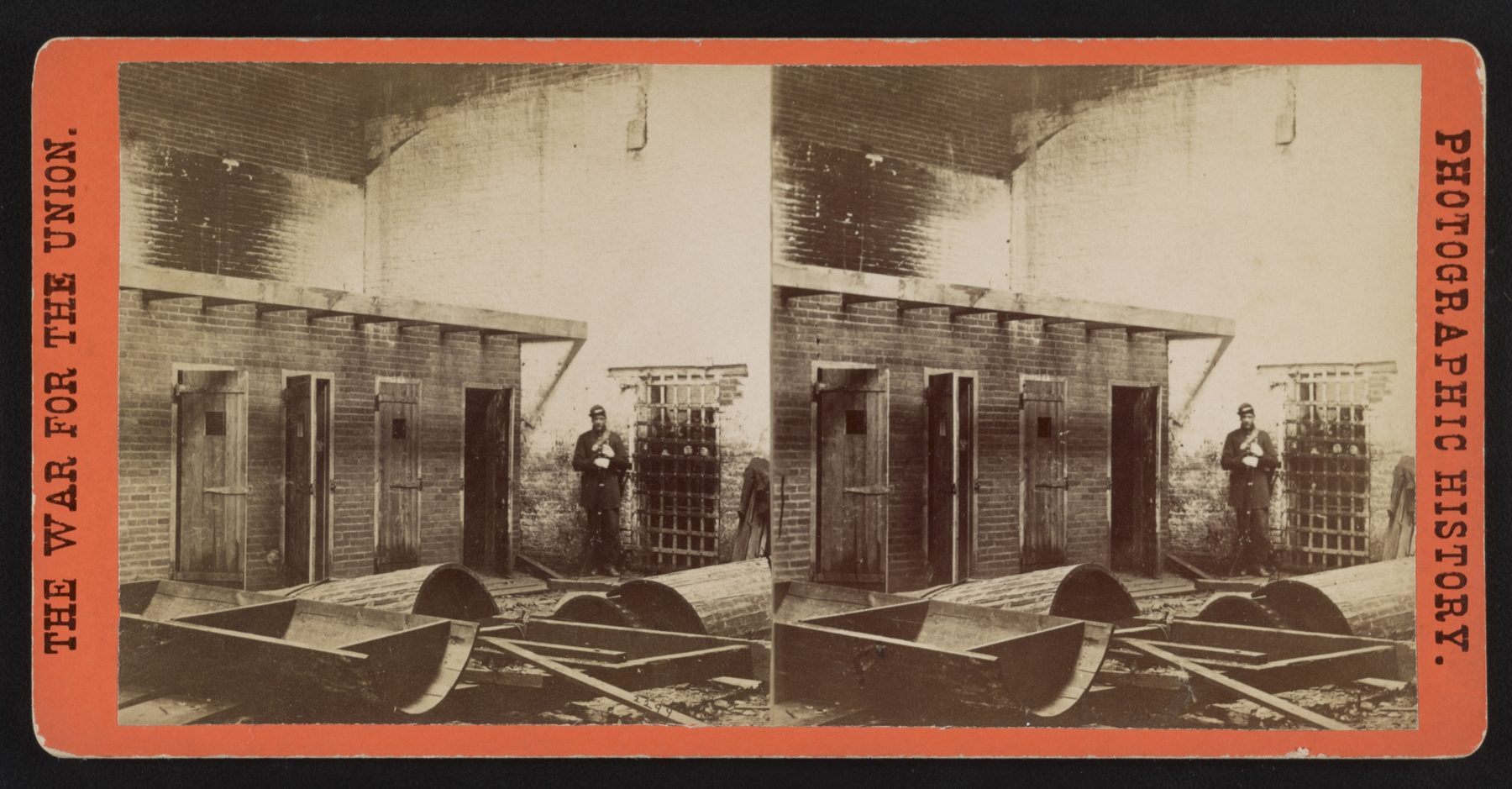
The Whigs held the White House when the next law came. The Compromise of 1850 was five statutes passed in September 1850: California admitted as a free state, territorial governments for Utah and New Mexico, a Texas boundary, an end to the slave trade in Washington, D.C., and a stricter fugitive slave law archives.gov. On September 18, 1850, President Millard Fillmore, a Whig from New York, signed the Fugitive Slave Act millercenter.org. It required law enforcement in every state, free or slave, to arrest people suspected of escaping slavery, and it made anyone who helped them subject to prison and a fine archives.gov.
The parties break, and a new one forms
The Whigs won the presidency in 1848, with Zachary Taylor at 163 electoral votes to 127 for the Democrat Lewis Cass archives.gov. In 1852 the Whig Winfield Scott won 42 electoral votes to 254 for the Democrat Franklin Pierce archives.gov. In 1856 Millard Fillmore ran as the Whig-American candidate and won 8 electoral votes, all from Maryland archives.gov.
The Republican Party started in small rooms. On March 20, 1854, two months before the Kansas-Nebraska Act passed, 54 voters, mostly Whigs, Free Soilers and Democrats, met in a schoolhouse in Ripon, Wisconsin, and agreed that a new party should be formed and called "Republican" wisconsinhistory.org. The name had been used before, by Jefferson's party; the reason the same word means two different parties is explained in Names and symbols.
A second new party grew at the same time. The Know-Nothings, officially the American Party, held secret meetings, "railed against the Catholic faith and sought to restrict Catholic immigration," won several governorships and legislative seats, and in 1856 took more than 20 percent of the presidential vote with Fillmore as their candidate millercenter.org.
The first Republican national platform and the Democratic platform of the same year set the two positions side by side.
"The American Democracy recognize and adopt the principles contained in the organic laws establishing the Territories of Kansas and Nebraska as embodying the only sound and safe solution of the 'slavery question' upon which the great national idea of the people of this whole country can repose in its determined conservatism of the Union." presidency.ucsb.edu
Democratic Party national platform, June 2, 1856
"It is both the right and the imperative duty of Congress to prohibit in the Territories those twin relics of barbarism--Polygamy, and Slavery." presidency.ucsb.edu
Republican Party national platform, June 18, 1856
The Democrat James Buchanan won, 174 electoral votes to 114 for the Republican John C. Frémont archives.gov.
Dred Scott
On March 6, 1857, Chief Justice Roger B. Taney read the Supreme Court's majority opinion in Dred Scott v. Sandford. The Court held that enslaved people were not citizens and could not expect protection from the federal government or the courts, and that Congress had no authority to ban slavery from a federal territory archives.gov. Describing how Black people had been regarded for more than a century before the Constitution, Taney wrote that they had been held "so far inferior, that they had no rights which the white man was bound to respect" archives.gov. The 13th and 14th Amendments later overturned the decision archives.gov.
Douglas and Lincoln
In 1858, Abraham Lincoln challenged Stephen Douglas for his Senate seat. On June 16, accepting the Republican nomination in Springfield, Lincoln said: "A house divided against itself cannot stand. I believe this government cannot endure, permanently half slave and half free" nps.gov. The two men then debated seven times. At the first debate, in Ottawa, Illinois, on August 21, between 10,000 and 12,000 people stood in the dust with no seats nps.gov.
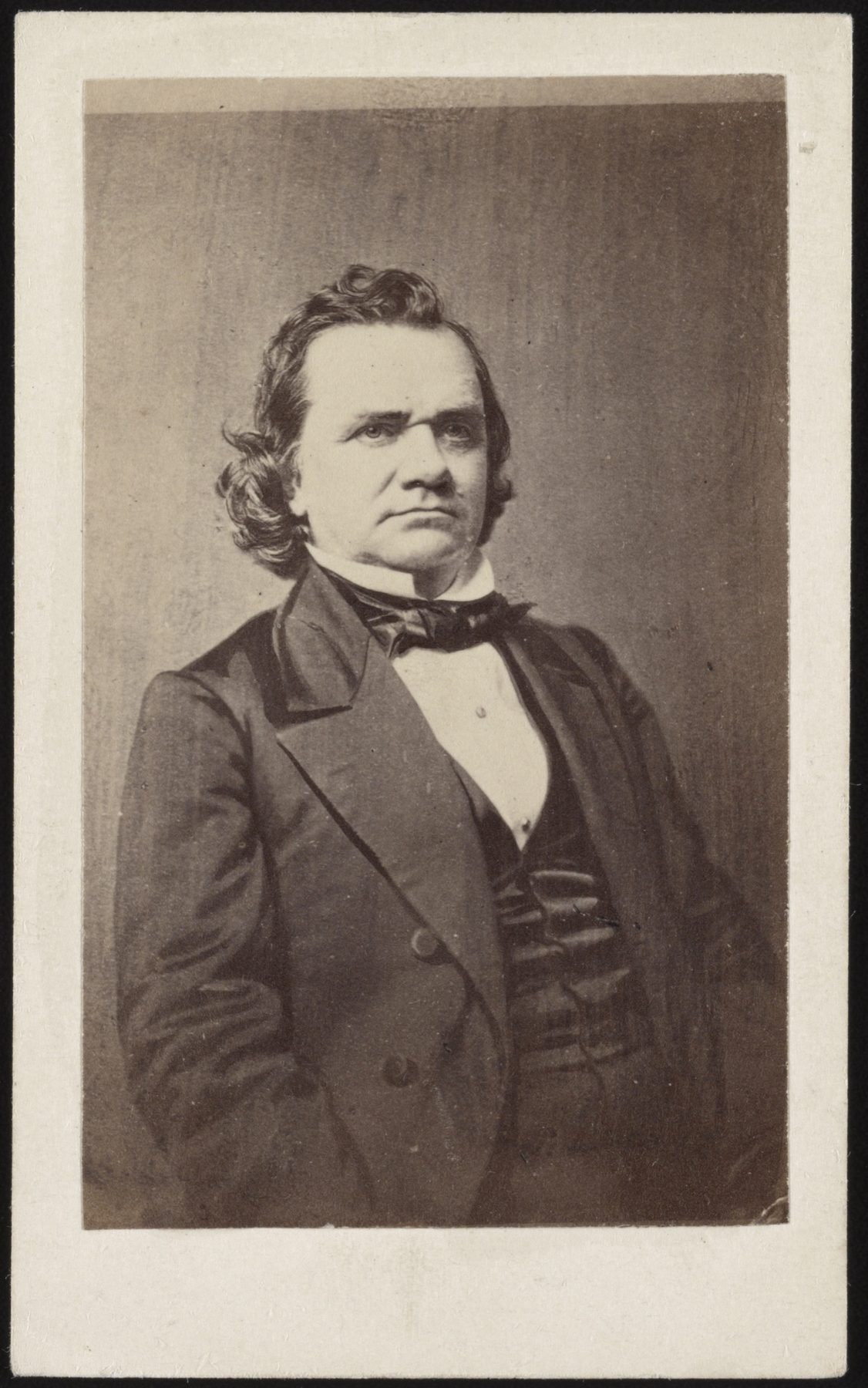
"If we will only act conscientiously and rigidly upon this great principle of popular sovereignty, which guaranties to each State and Territory the right to do as it pleases on all things, local and domestic, instead of Congress interfering, we will continue at peace one with another. Why should Illinois be at war with Missouri, or Kentucky with Ohio, or Virginia with New York, merely because their institutions differ?" nps.gov
Stephen A. Douglas, senator from Illinois (Democrat), first debate, Ottawa, Illinois, August 21, 1858
"In the right to eat the bread, without the leave of anybody else, which his own hand earns, he is my equal and the equal of Judge Douglas, and the equal of every living man." nps.gov
Abraham Lincoln, Republican candidate for the Senate, first debate, Ottawa, Illinois, August 21, 1858
Both men also said things in those debates that are part of the record. At Ottawa, Douglas said: "I believe this Government was made on the white basis... and I am in favor of confining citizenship to white men" nps.gov. At the fourth debate, in Charleston, Illinois, on September 18, Lincoln said: "I am not, nor ever have been, in favor of bringing about in any way the social and political equality of the white and black races," and that he was "in favor of having the superior position assigned to the white race" nps.gov.
Two years later the two men ran against each other for president.
1860
The Republican platform of May 17, 1860, stated "that the normal condition of all the territory of the United States is that of freedom" presidency.ucsb.edu. The Democrats split, and the Senate Historical Office records that Southern Democrats chose to leave the Senate in support of secession senate.gov. Four men won electoral votes in November: the Republican Lincoln 180, John C. Breckinridge 72, John Bell 39 and the Democrat Douglas 12 archives.gov.
Southern states began to leave. On December 24, 1860, South Carolina's convention adopted its declaration of causes avalon.law.yale.edu. Mississippi's convention published its own avalon.law.yale.edu. Lincoln answered in his inaugural address on March 4, 1861 avalon.law.yale.edu.
"A geographical line has been drawn across the Union, and all the States north of that line have united in the election of a man to the high office of President of the United States, whose opinions and purposes are hostile to slavery." avalon.law.yale.edu
South Carolina secession convention, Declaration of the Immediate Causes, December 24, 1860
"Our position is thoroughly identified with the institution of slavery-- the greatest material interest of the world." avalon.law.yale.edu
Mississippi secession convention, declaration of the immediate causes of secession
"In your hands, my dissatisfied fellow-countrymen, and not in mine, is the momentous issue of civil war. The Government will not assail you. You can have no conflict without being yourselves the aggressors... We are not enemies, but friends. We must not be enemies." avalon.law.yale.edu
Abraham Lincoln, president (Republican), first inaugural address, March 4, 1861
In the same address Lincoln repeated: "I have no purpose, directly or indirectly, to interfere with the institution of slavery in the States where it exists" avalon.law.yale.edu.
On March 21, 1861, in Savannah, Georgia, Alexander H. Stephens, vice president of the Confederacy, said of the new Confederate government: "its foundations are laid, its corner-stone rests, upon the great truth that the negro is not equal to the white man" battlefields.org. This was a Confederate government speech, not a party platform.
War
The Union was 18.5 million people. The Confederacy listed 5.5 million free people and 3.5 million enslaved people nps.gov. On January 1, 1863, Lincoln issued the Emancipation Proclamation, declaring free all enslaved people in areas still in rebellion. It did not apply to the loyal border states, and its promise depended on Union victory. It opened the Army and Navy to Black men, and almost 200,000 Black soldiers and sailors fought for the Union by the end of the war archives.gov.
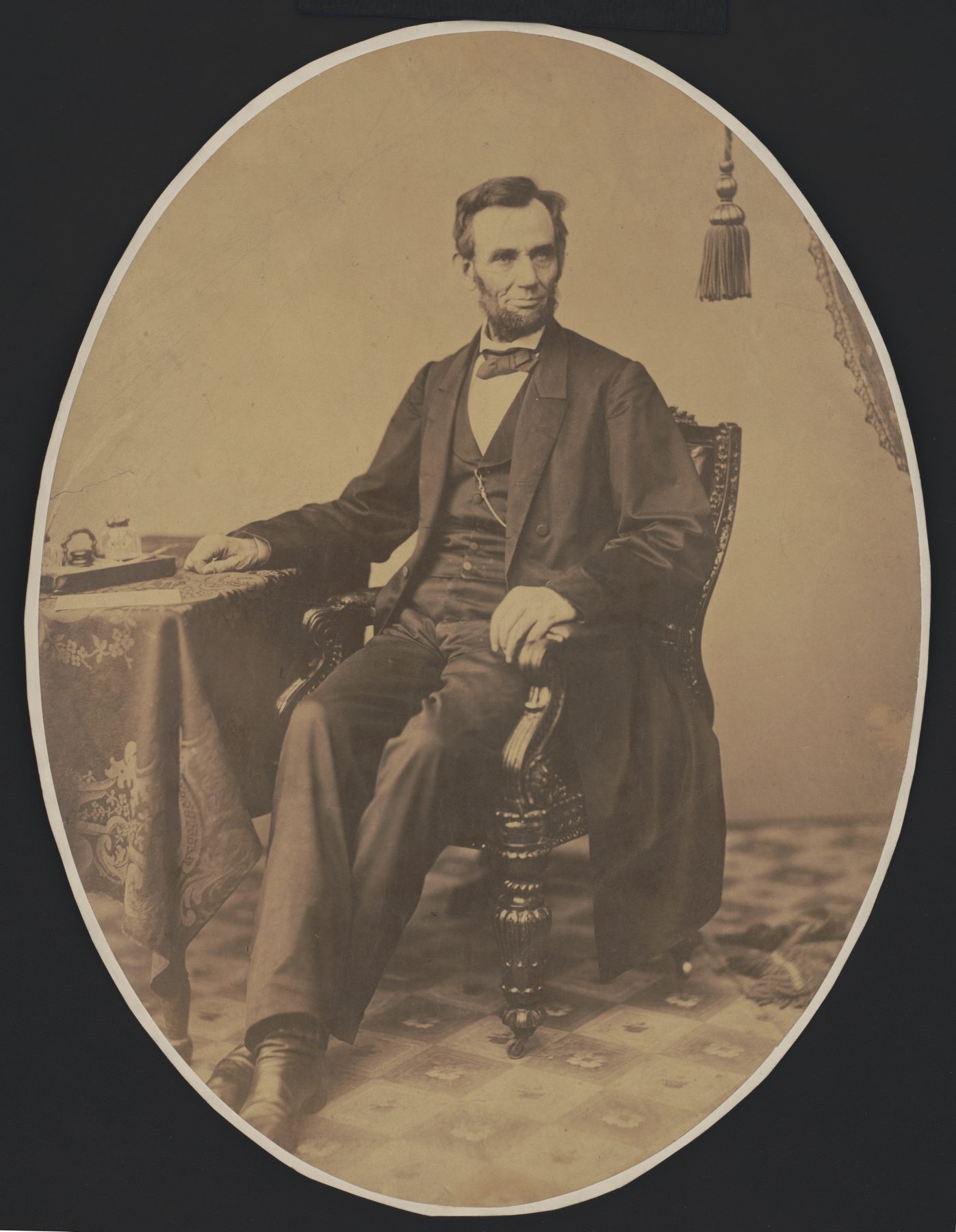
In 1864 the two parties wrote opposite answers about the war itself.
"After four years of failure to restore the Union by the experiment of war, during which, under the pretense of a military necessity of war-power higher than the Constitution, the Constitution itself has been disregarded in every part, and public liberty and private right alike trodden down... justice, humanity, liberty, and the public welfare demand that immediate efforts be made for a cessation of hostilities." presidency.ucsb.edu
Democratic Party national platform, August 29, 1864
"As slavery was the cause, and now constitutes the strength of this Rebellion, and as it must be, always and everywhere, hostile to the principles of Republican Government, justice and the National safety demand its utter and complete extirpation from the soil of the Republic." presidency.ucsb.edu
Republican Party national platform, June 7, 1864
Lincoln won 212 electoral votes to 21 for the Democrat George B. McClellan. The Confederate states did not take part archives.gov.
The amendment
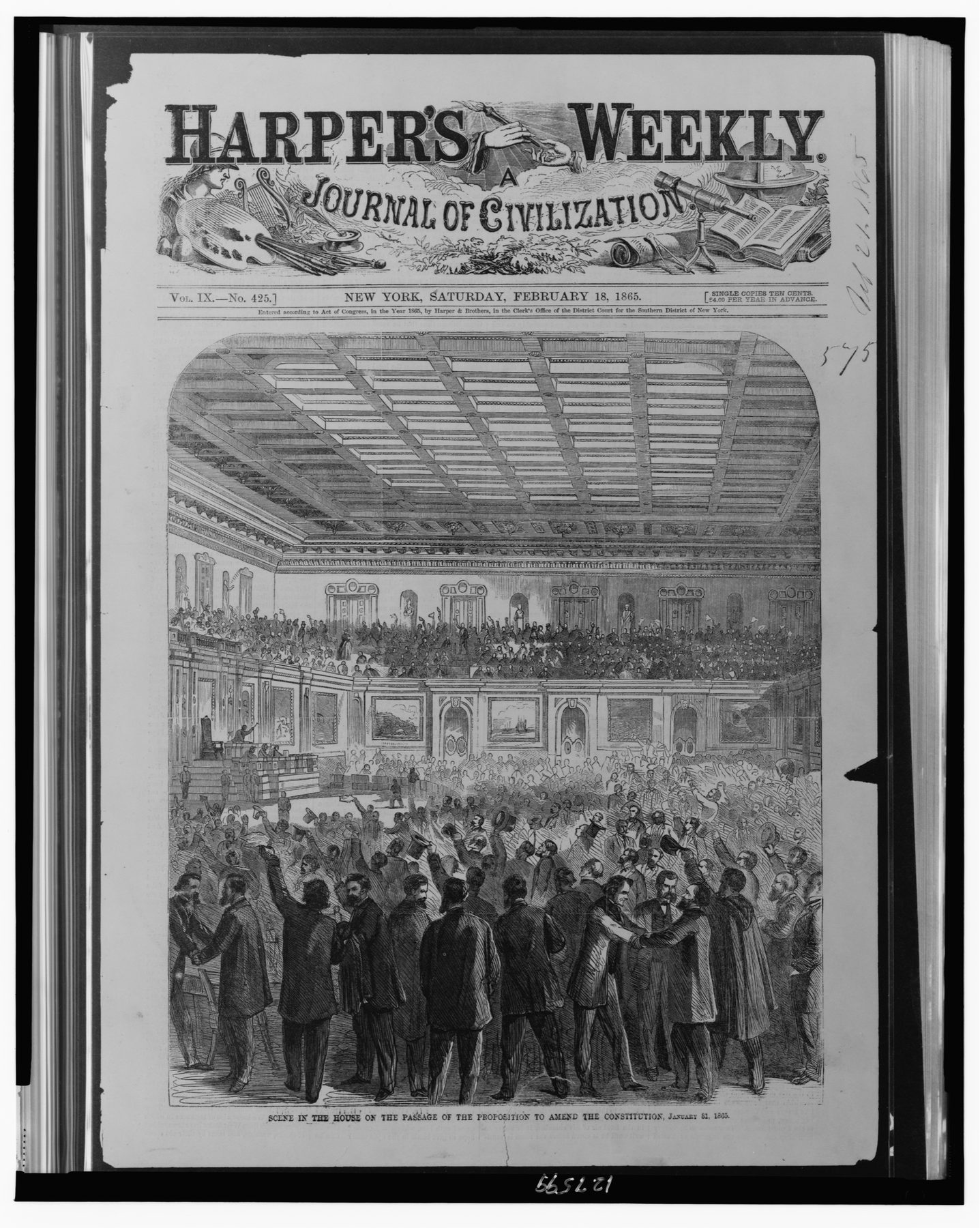
On April 8, 1864, the Senate passed an amendment abolishing slavery, 38 to 6. The yes votes were 30 Republicans, four border-state Democrats and four Union Democrats senate.gov. The House did not pass it that year. Lincoln insisted it be added to the Republican platform, and on January 31, 1865, the House passed it, 119 to 56 archives.gov.
On March 4, 1865, Lincoln gave his second inaugural address.
"With malice toward none, with charity for all, with firmness in the right as God gives us to see the right, let us strive on to finish the work we are in, to bind up the nation's wounds." avalon.law.yale.edu
Abraham Lincoln, president (Republican), second inaugural address, March 4, 1865
He was shot on the night of April 14, 1865, and died the next morning. Vice President Andrew Johnson took the oath on April 15 archives.gov. The National Park Service counts 110,100 Union soldiers killed in battle and 224,580 dead of disease, and 94,000 Confederate soldiers killed in battle and 164,000 dead of disease nps.gov. The 13th Amendment was ratified on December 6, 1865 archives.gov.
Religion in this era
Black churches. In 1787, Richard Allen and his colleagues in Philadelphia broke away from the Methodist Church, and in 1815 they founded the African Methodist Episcopal Church. It began with 8 clergy and 5 churches; by 1846 it had 176 clergy, 296 churches and 17,375 members loc.gov.
Islam. Omar ibn Said, a Muslim scholar from West Africa, was captured in 1807 and brought to Charleston, South Carolina, as a slave. In 1831, still enslaved in North Carolina, he wrote his autobiography in Arabic. The Library of Congress, which acquired it in 2017, says it is the only known one of its kind still in existence blogs.loc.gov.
Methodists split. At the 1844 General Conference of the Methodist Episcopal Church, the dispute centered on Bishop James O. Andrew, who had acquired slaves through marriage. The conference voted to suspend him from his office as long as he could not or would not free them. Southern delegates drafted a Plan of Separation and met in Louisville, Kentucky, in May 1845 to organize the Methodist Episcopal Church, South umc.org.
Baptists split. The Southern Baptist Convention was founded in 1845. In 1995 it resolved that its relationship with African Americans had been hindered "by the role that slavery played in the formation of the Southern Baptist Convention," and that "Many of our Southern Baptist forbears defended the right to own slaves" sbc.net.
Catholics. The Know-Nothings campaigned against the Catholic faith and Catholic immigration millercenter.org. The two major parties answered in different ways. The 1856 Democratic platform condemned a "political crusade" against "Catholic and foreign-born" presidency.ucsb.edu. Lincoln, a Republican, wrote privately on August 24, 1855: "I am not a Know-Nothing... When the know-nothings get control, it will read 'all men are created equal except negroes, and foreigners, and Catholics'" papersofabrahamlincoln.org.
Latter-day Saints. Joseph Smith, the founder of the Church of Jesus Christ of Latter-day Saints, was murdered in 1844, and church members moved to Utah senate.gov. The first Republican platform, in 1856, named polygamy, then practiced by the church, alongside slavery as one of the "twin relics of barbarism" presidency.ucsb.edu.
Jews. On December 17, 1862, Major General Ulysses S. Grant issued General Orders No. 11: "The Jews, as a class, violating every regulation of trade established by the Treasury Department, and also Department orders, are hereby expelled from the Department." At least thirty Jewish families in Paducah, Kentucky, were forced from their homes. Lincoln had General Henry Halleck order Grant to rescind it nps.gov.
The full account of religion and the parties, including the Philadelphia riots of 1844, is in Religion and the parties.
Sources
- U.S. Senate Historical Office, "The Caning of Senator Charles Sumner, May 22, 1856." senate.gov (locator: full page). Accessed 2026-10-30.
- National Archives, "Kansas-Nebraska Act (1854)," Milestone Documents. archives.gov (locator: summary). Accessed 2026-10-30.
- U.S. Senate, "Parties and Leadership: Overview." senate.gov (locator: sections on the 1820s to 1850s and Reconstruction). Accessed 2026-10-30.
- Thomas Jefferson, "Opinion on the Constitutionality of a National Bank," 1791, Avalon Project, Yale Law School. avalon.law.yale.edu (locator: paragraph beginning "I consider the foundation"). Accessed 2026-10-30.
- Alexander Hamilton, "Opinion as to the Constitutionality of the Bank of the United States," 1791, Avalon Project, Yale Law School. avalon.law.yale.edu (locator: opening argument on sovereign powers). Accessed 2026-10-30.
- Andrew Jackson, "Veto Message Regarding the Bank of the United States," July 10, 1832, Avalon Project, Yale Law School. avalon.law.yale.edu (locator: closing section, "It is to be regretted"). Accessed 2026-10-30.
- Miller Center, University of Virginia, "Andrew Jackson: Key Events." millercenter.org (locator: July 10, 1832). Accessed 2026-10-30.
- Daniel Webster, speech in the Senate on the President's veto of the bank bill, July 11, 1832, in The Great Speeches and Orations of Daniel Webster (Project Gutenberg eBook 12606). gutenberg.org (locator: speech of July 11, 1832, passage beginning "I admonish every industrious laborer"). The 1832 pamphlet printing is at FRASER, Federal Reserve Bank of St. Louis, fraser.stlouisfed.org. Accessed 2026-10-30.
- National Archives, Electoral College results, 1832. archives.gov (locator: summary table). Accessed 2026-10-30.
- Library of Congress, "Indian Removal Act: Primary Documents in American History." guides.loc.gov (locator: introduction). Accessed 2026-10-30.
- Theodore Frelinghuysen, Speech of Mr. Frelinghuysen, of New Jersey, Delivered in the Senate of the United States, April 6, 1830, on the Bill for an Exchange of Lands with the Indians (Washington: National Journal, 1830), digitized by the Internet Archive. archive.org (locator: passage beginning "Do the obligations of justice"). Accessed 2026-10-30.
- National Archives, Electoral College results, 1844. archives.gov (locator: summary table, vice presidential opponent). Accessed 2026-10-30.
- National Archives, "President Andrew Jackson's Message to Congress 'On Indian Removal' (1830)," Milestone Documents. archives.gov (locator: summary and transcript). Accessed 2026-10-30.
- U.S. House of Representatives, History, Art and Archives, "Representative James Henry Hammond of South Carolina," February 1, 1836. history.house.gov (locator: full entry). Accessed 2026-10-30.
- Democratic Party Platform of 1840, May 6, 1840, The American Presidency Project, UC Santa Barbara. presidency.ucsb.edu (locator: resolution 7). Accessed 2026-10-30.
- Democratic Party Platform of 1856, June 2, 1856, The American Presidency Project, UC Santa Barbara. presidency.ucsb.edu (locator: resolutions on Catholics and foreign-born, slavery, and Kansas and Nebraska). Accessed 2026-10-30.
- National Archives, "Compromise of 1850," Milestone Documents. archives.gov (locator: summary). Accessed 2026-10-30.
- Miller Center, University of Virginia, "Millard Fillmore: Key Events." millercenter.org (locator: September 18, 1850). Accessed 2026-10-30.
- National Archives, Electoral College results, 1848. archives.gov (locator: summary table). Accessed 2026-10-30.
- National Archives, Electoral College results, 1852. archives.gov (locator: summary table). Accessed 2026-10-30.
- National Archives, Electoral College results, 1856. archives.gov (locator: summary and state table). Accessed 2026-10-30.
- Wisconsin Historical Society, "The Little White Schoolhouse Listed in the National Register of Historic Places," August 2, 2024. wisconsinhistory.org (locator: second paragraph). Accessed 2026-10-30.
- Miller Center, University of Virginia, "Franklin Pierce: The American Franchise." millercenter.org (locator: section on political parties). Accessed 2026-10-30.
- Republican Party Platform of 1856, June 18, 1856, The American Presidency Project, UC Santa Barbara. presidency.ucsb.edu (locator: third resolution). Accessed 2026-10-30.
- National Archives, "Dred Scott v. Sandford (1857)," Milestone Documents. archives.gov (locator: summary and transcript of the opinion). Accessed 2026-10-30.
- National Park Service, Lincoln Home National Historic Site, "House Divided Speech," June 16, 1858. nps.gov (locator: opening paragraph). Accessed 2026-10-30.
- National Park Service, Lincoln Home National Historic Site, "First Debate: Ottawa, Illinois," August 21, 1858. nps.gov (locator: introduction, Douglas opening speech, Lincoln reply). Accessed 2026-10-30.
- National Park Service, Lincoln Home National Historic Site, "Fourth Debate: Charleston, Illinois," September 18, 1858. nps.gov (locator: Lincoln opening speech). Accessed 2026-10-30.
- Republican Party Platform of 1860, May 17, 1860, The American Presidency Project, UC Santa Barbara. presidency.ucsb.edu (locator: resolution 8). Accessed 2026-10-30.
- National Archives, Electoral College results, 1860. archives.gov (locator: summary table). Accessed 2026-10-30.
- "Declaration of the Immediate Causes Which Induce and Justify the Secession of South Carolina from the Federal Union," adopted December 24, 1860, Avalon Project, Yale Law School. avalon.law.yale.edu (locator: closing paragraphs). Accessed 2026-10-30.
- "A Declaration of the Immediate Causes which Induce and Justify the Secession of the State of Mississippi from the Federal Union," Avalon Project, Yale Law School. avalon.law.yale.edu (locator: second paragraph). Accessed 2026-10-30.
- Abraham Lincoln, First Inaugural Address, March 4, 1861, Avalon Project, Yale Law School. avalon.law.yale.edu (locator: early paragraphs and closing paragraphs). Accessed 2026-10-30.
- Alexander H. Stephens, "Cornerstone Speech," Savannah, Georgia, March 21, 1861, American Battlefield Trust, primary sources. battlefields.org (locator: passage on the "corner-stone"). Accessed 2026-10-30.
- National Park Service, "Civil War Facts: 1861 to 1865." nps.gov (locator: populations and casualties). Accessed 2026-10-30.
- National Archives, "Emancipation Proclamation (1863)," Milestone Documents. archives.gov (locator: summary). Accessed 2026-10-30.
- Democratic Party Platform of 1864, August 29, 1864, The American Presidency Project, UC Santa Barbara. presidency.ucsb.edu (locator: second resolution). Accessed 2026-10-30.
- Republican Party Platform of 1864, June 7, 1864, The American Presidency Project, UC Santa Barbara. presidency.ucsb.edu (locator: resolution 3). Accessed 2026-10-30.
- National Archives, Electoral College results, 1864. archives.gov (locator: summary and notes). Accessed 2026-10-30.
- U.S. Senate, "The Senate Passes the Thirteenth Amendment," April 8, 1864. senate.gov (locator: final paragraphs). Accessed 2026-10-30.
- National Archives, "13th Amendment to the U.S. Constitution: Abolition of Slavery (1865)," Milestone Documents. archives.gov (locator: summary). Accessed 2026-10-30.
- Abraham Lincoln, Second Inaugural Address, March 4, 1865, Avalon Project, Yale Law School. avalon.law.yale.edu (locator: closing paragraph). Accessed 2026-10-30.
- Library of Congress, "Religion and the New Republic," Religion and the Founding of the American Republic exhibition. loc.gov (locator: section on African American churches). Accessed 2026-10-30.
- Library of Congress, "New Online: Rare 19th Century Autobiography in Arabic by an Enslaved West African Scholar," Four Corners blog, January 2019. blogs.loc.gov (locator: opening paragraphs). Accessed 2026-10-30.
- The United Methodist Church, "Division in America and Expansion Overseas (1844 to 1860)." umc.org (locator: first two paragraphs). Accessed 2026-10-30.
- Southern Baptist Convention, "Resolution On Racial Reconciliation On The 150th Anniversary Of The Southern Baptist Convention," June 1, 1995. sbc.net (locator: preamble clauses). Accessed 2026-10-30.
- "Abraham Lincoln to Joshua F. Speed, 24 August 1855," The Papers of Abraham Lincoln. papersofabrahamlincoln.org (locator: paragraph on the Know-Nothings). Accessed 2026-10-30.
- U.S. Senate, "Expulsion Case of Reed Smoot of Utah (1907)." senate.gov (locator: background). Accessed 2026-10-30.
- National Park Service, "Ulysses S. Grant and General Orders No. 11." nps.gov (locator: paragraphs on December 17, 1862). Accessed 2026-10-30.
- Voteview, Senate roll call 52, 33rd Congress, passage of S. 22, March 3, 1854. voteview.com Accessed 2026-10-31.
- Voteview, House roll call 309, 33rd Congress, passage of H.R. 236, May 22, 1854. voteview.com Accessed 2026-10-31.
Last checked against its sources on October 30, 2026. Report a correction.