
How we got here
How We Got Here, 1968 to 2000: The Great Sort
The short answer
Between 1968 and 2000 the two parties sorted. The South moved from Democratic to Republican, and on abortion, the Equal Rights Amendment and guns the party platforms went from mixed or silent to opposite. By 1998 the House impeachment vote on President Clinton split almost entirely by party.
Together and Dug in, in this era
Together: a law passed with a majority of both major parties voting yes in both chambers, or a documented agreement across parties, shown with the vote. Dug in: a documented failure to settle by vote, or a break in the system, shown with what followed.
Together (4)
Together · 1970
Clean Air Act Amendments of 1970 (H.R. 17255)
Congress expanded federal authority to set and enforce air quality standards.
- House, June 10, 1970: 375 to 1 (Democrats 210 yes, 0 no; Republicans 165 yes, 1 no; total 375 yes, 1 no) voteview.com
- Senate, September 22, 1970: 73 to 0 (Democrats 43 yes, 0 no; Republicans 30 yes, 0 no; total 73 yes, 0 no) voteview.com
Where it landed: Votes shown are each chamber's passage of H.R. 17255: one House Republican voted no and no senator voted no.
Voteview, House roll call 268, 91st Congress voteview.com Voteview, Senate roll call 543, 91st Congress voteview.com
Together · 1983
Social Security Amendments of 1983 (H.R. 1900)
Congress passed changes to protect the solvency of the Social Security trust funds.
- House, March 24, 1983: 243 to 102 (Democrats 163 yes, 54 no; Republicans 80 yes, 48 no; total 243 yes, 102 no) voteview.com
- Senate, March 24, 1983: 58 to 14 (Democrats 26 yes, 6 no; Republicans 32 yes, 8 no; total 58 yes, 14 no) voteview.com
Where it landed: Both chambers adopted the conference report on March 24, 1983.
Voteview, House roll call 43, 98th Congress voteview.com Voteview, Senate roll call 54, 98th Congress voteview.com
Together · 1986
Tax Reform Act of 1986
Congress lowered individual and corporate tax rates and ended or curtailed many credits and deductions.
- House, September 25, 1986: 292 to 136 (Democrats 176 yes, 74 no; Republicans 116 yes, 62 no; total 292 yes, 136 no) voteview.com
- Senate, September 27, 1986: 74 to 23 (Democrats 33 yes, 12 no; Republicans 41 yes, 11 no; total 74 yes, 23 no) voteview.com
Where it landed: Both votes shown are on the conference report on H.R. 3838.
Voteview, House roll call 818, 99th Congress voteview.com Voteview, Senate roll call 677, 99th Congress voteview.com
Together · 1990
Americans with Disabilities Act
Congress prohibited discrimination on the basis of disability.
- House, July 12, 1990: 377 to 28 (Democrats 232 yes, 5 no; Republicans 145 yes, 23 no; total 377 yes, 28 no) voteview.com
- Senate, July 13, 1990: 91 to 6 (Democrats 54 yes, 0 no; Republicans 37 yes, 6 no; total 91 yes, 6 no) voteview.com
Where it landed: Both votes shown are on the conference report on S. 933.
Voteview, House roll call 583, 101st Congress voteview.com Voteview, Senate roll call 464, 101st Congress voteview.com
Dug in (1)
Dug in · 1995
Government shutdowns of 1995 and 1996
Federal funding lapsed twice in fiscal year 1996 when the President and Congress did not agree on appropriations.
What followed: The first shutdown ran from November 14 to 19, 1995, five full days, with about 800,000 federal employees furloughed; the second ran from December 16, 1995 to January 6, 1996, 21 full days, with 284,000 furloughed as of January 2, 1996. OMB estimated the two together cost over $1.4 billion.
Congressional Research Service, R41759, Past Government Shutdowns: Key Resources everycrsreport.com Congressional Research Service, RL34680, Shutdown of the Federal Government: Causes, Processes, and Effects everycrsreport.com
On Saturday, December 19, 1998, the House met at 9 a.m. to vote on impeaching President Bill Clinton govinfo.gov. Early in the debate Representative Bob Livingston of Louisiana, a Republican, took the floor voteview.com. "I was prepared to lead our narrow majority as Speaker," he said, "so I must set the example that I hope President Clinton will follow. Mr. Speaker, I will not stand for Speaker of the House on January 6" govinfo.gov.
The minority leader, Richard Gephardt of Missouri, answered him later that morning. The chairman of the Judiciary Committee, Henry Hyde of Illinois, a Republican, also spoke govinfo.gov.
"We need to stop destroying imperfect people at the altar of an unobtainable morality. ... Let us step back from the abyss and let us begin a new politics of respect and fairness and decency." govinfo.gov
Richard Gephardt, Democratic leader, House floor, December 19, 1998
"I do not care what the subject matter is, if it is important enough to say, I raise my right hand and swear by the almighty God that the testimony I am about to give is the truth, the whole truth, nothing but the truth, if it is solemn enough for that, it is solemn enough to enforce." govinfo.gov
Henry J. Hyde, Republican chairman of the House Judiciary Committee, House floor, December 19, 1998
The House impeached Clinton on charges of lying under oath to a federal grand jury and obstruction of justice history.house.gov. Article I passed 228 to 206. Republicans voted 223 to 5. Democrats voted 5 to 200. All 71 Southern Republicans who voted, voted yes voteview.com.
The one thing that changed everything
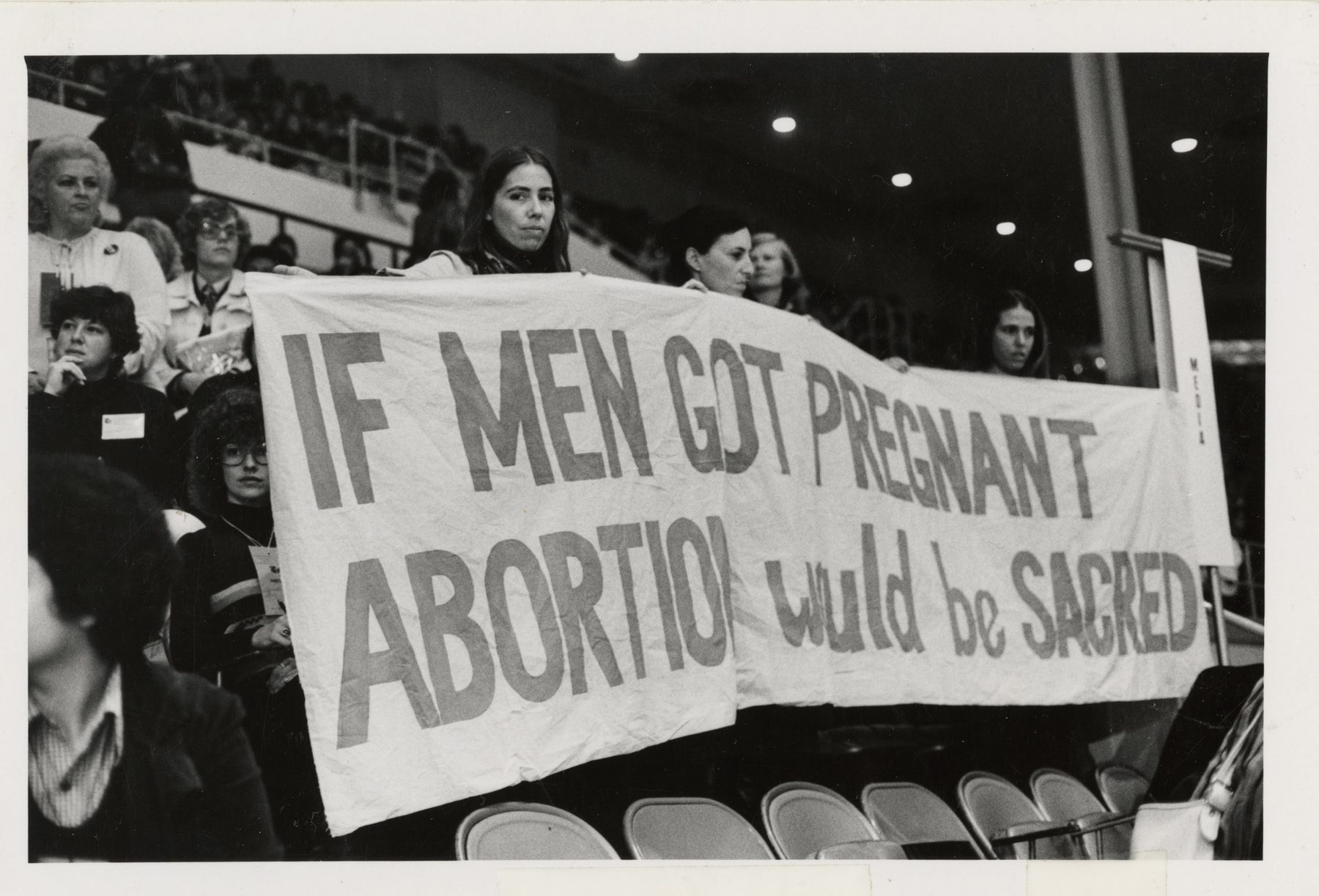
Roe v. Wade. On January 22, 1973, the Supreme Court decided, 7 to 2, that the right of privacy "is broad enough to encompass a woman's decision whether or not to terminate her pregnancy." Justice Blackmun wrote for the Court; Justices White and Rehnquist dissented tile.loc.gov. Rehnquist wrote that the restrictions on abortion in most states for at least a century were "a strong indication" that the asserted right "is not 'so rooted in the traditions and conscience of our people as to be ranked as fundamental'" tile.loc.gov.
What it changed, in the parties' own documents:
- 1972, before the decision: neither party's platform contains the word abortion presidency.ucsb.edupresidency.ucsb.edu.
- 1976: both platforms address the decision. The Republican platform described a party divided: "There are those in our Party who favor complete support for the Supreme Court decision which permits abortion on demand. There are others who share sincere convictions that the Supreme Court's decision must be changed by a constitutional amendment prohibiting all abortions" presidency.ucsb.edu. It supported the efforts of those seeking an amendment. The Democratic platform recognized "the religious and ethical nature of the concerns" and called it "undesirable to attempt to amend the U.S. Constitution to overturn the Supreme Court decision" presidency.ucsb.edu.
- 1980: the platforms took opposite positions presidency.ucsb.edupresidency.ucsb.edu. The Republican text also recognized "differing views on this question among Americans in general" presidency.ucsb.edu.
"The Democratic Party supports the 1973 Supreme Court decision on abortion rights as the law of the land and opposes any constitutional amendment to restrict or overturn that decision." presidency.ucsb.edu
1980 Democratic Party Platform, adopted August 11, 1980
"There can be no doubt that the question of abortion, despite the complex nature of its various issues, is ultimately concerned with equality of rights under the law. ... we affirm our support of a constitutional amendment to restore protection of the right to life for unborn children." presidency.ucsb.edu
Republican Party Platform of 1980, adopted July 15, 1980
By 1996 the Democratic platform said the party "stands behind the right of every woman to choose, consistent with Roe v. Wade, and regardless of ability to pay," and the Republican platform said "The unborn child has a fundamental individual right to life which cannot be infringed" presidency.ucsb.edupresidency.ucsb.edu.
Historical setting
Richard Nixon won the presidency in 1968 with 301 electoral votes archives.gov. On November 3, 1969, speaking about the war in Vietnam, he asked for the support of a group he named: "And so tonight--to you, the great silent majority of my fellow Americans--I ask for your support" presidency.ucsb.edu. In 1972 he won 520 electoral votes to George McGovern's 17 archives.gov.
At that point the parties still overlapped. A Pew Research Center analysis of the DW-NOMINATE scores of every member of Congress finds that in 1971 and 1972 there were more than 160 moderate Democrats and Republicans in Congress. In the House, 144 Republicans were less conservative than the most conservative Democrat, and 52 Democrats were less liberal than the most liberal Republican pewresearch.org. Members from the 11 former Confederate states made up 31.4 percent of House Democrats and less than 15 percent of House Republicans pewresearch.org.
Watergate
On June 17, 1972, five men were arrested while trying to repair surveillance equipment installed at the Democratic National Committee's headquarters in the Watergate building archives.gov. The Senate created a select committee in February 1973 and began public hearings in May. In July 1973 Alexander Butterfield told the committee about a White House taping system archives.gov. On October 20, 1973, Nixon ordered the special prosecutor, Archibald Cox, fired; Attorney General Elliot Richardson refused and resigned, and Acting Attorney General Robert Bork fired Cox archives.gov.
On July 24, 1974, the Supreme Court unanimously upheld the special prosecutor's subpoena for the tapes. Between July 27 and July 30, the House Judiciary Committee adopted three articles of impeachment: obstruction of the Watergate investigation, misuse of powers, and failure to comply with House subpoenas archives.gov.
"In the past few days, however, it has become evident to me that I no longer have a strong enough political base in the Congress to justify continuing that effort. ... Therefore, I shall resign the Presidency effective at noon tomorrow." presidency.ucsb.edu
Richard M. Nixon, Republican president, address to the nation, August 8, 1974
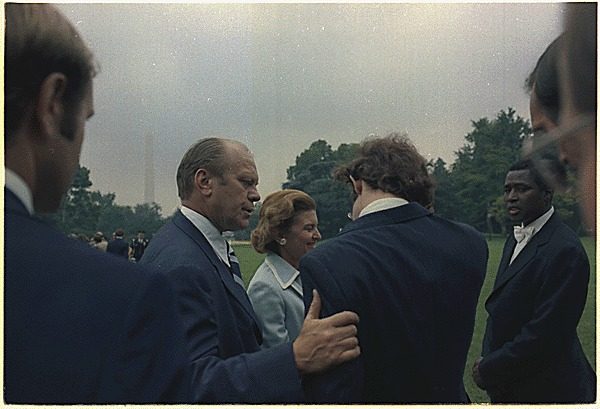
President Gerald Ford pardoned Nixon on September 8, 1974 archives.gov.
The Equal Rights Amendment
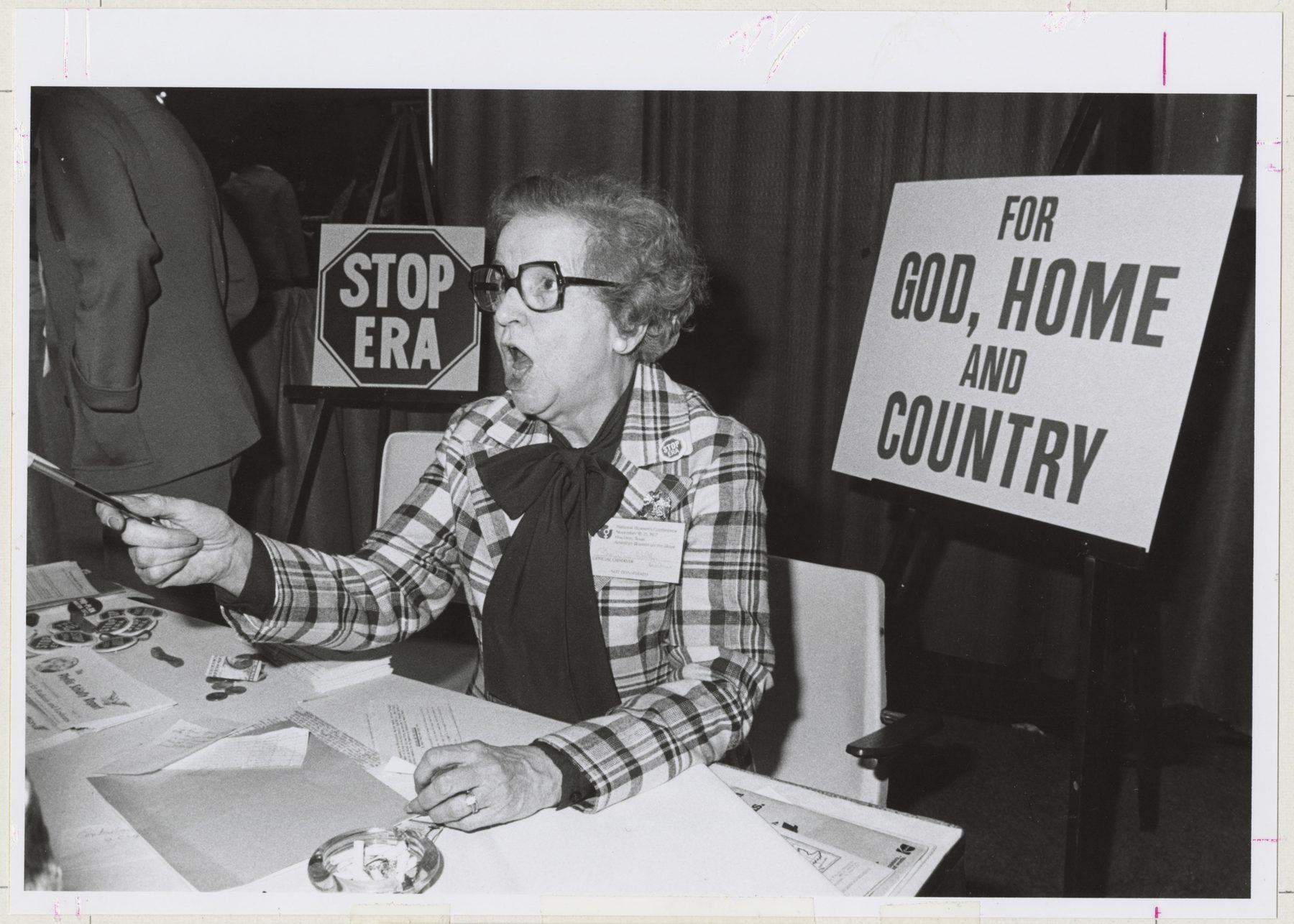
The House passed the Equal Rights Amendment on October 12, 1971, by 354 to 24, and the Senate on March 22, 1972, by 84 to 8. Majorities of both parties voted yes in both chambers voteview.com. Congress set a ratification deadline of March 22, 1979, and in 1978 extended it to June 30, 1982. Thirty-five state legislatures ratified it govinfo.gov.
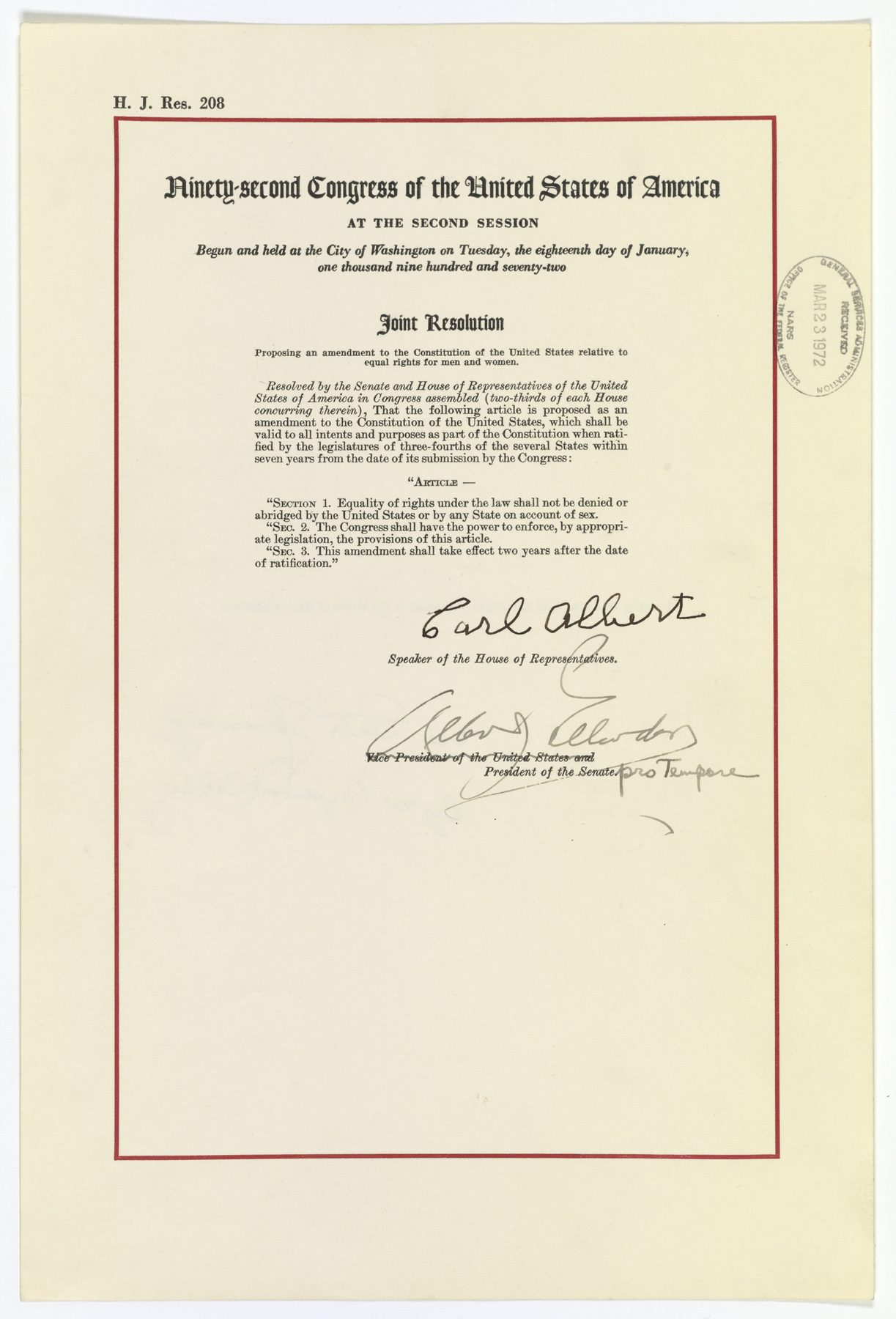
In 1976 the Republican platform said: "The Republican Party reaffirms its support for ratification of the Equal Rights Amendment. Our Party was the first national party to endorse the E.R.A. in 1940" presidency.ucsb.edu. Four years later the two platforms said this:
"The Democratic Party shall withhold financial support and technical campaign assistance from candidates who do not support the ERA." presidency.ucsb.edu
1980 Democratic Party Platform, adopted August 11, 1980
"We acknowledge the legitimate efforts of those who support or oppose ratification of the Equal Rights Amendment." presidency.ucsb.edu
Republican Party Platform of 1980, adopted July 15, 1980
Guns
In 1968 the Republican platform called for "legislation to control indiscriminate availability of firearms, safeguarding the right of responsible citizens to collect, own and use firearms for legitimate purposes" presidency.ucsb.edu. The 1968 Democratic platform called for "effective federal, state and local gun control legislation" presidency.ucsb.edu. In 1972 the Democratic platform called for a ban on the sale of handguns "known as Saturday night specials," and the Republican platform called for intensified efforts "to prevent criminal access to all weapons, including special emphasis on cheap, readily-obtainable handguns" presidency.ucsb.edupresidency.ucsb.edu.
In May 1977, at the National Rifle Association's annual meeting in Cincinnati, about 1,100 voting members attended. In a members' meeting that began at 7:30 p.m. and ran into the next morning, a group calling itself the Federation for NRA and board members ousted the "Old Guard" executives. The NRA's own magazine describes the choice as whether to focus on shooting competition or on "political advocacy for gun-owners' rights." Harlon B. Carter, the first head of the NRA's Institute for Legislative Action, became executive vice president americanrifleman.org.
By 1980 the Republican platform said "the right of citizens to keep and bear arms must be preserved. Accordingly, we oppose federal registration of firearms," and supported removing parts of the Gun Control Act of 1968 presidency.ucsb.edu. The Democratic platform supported federal legislation "to ban 'Saturday night specials'" presidency.ucsb.edu.
On May 5, 1994, the House passed a ban on assault weapons by 216 to 214. Democrats voted 177 to 77 and Republicans 38 to 137 voteview.com. The ban became part of the Violent Crime Control and Law Enforcement Act. The House approved the final bill on August 21, 1994, by 235 to 195, and the Senate on August 25 by 61 to 38, with Democrats 54 to 2 and Republicans 7 to 36 voteview.com. Clinton signed it on September 13, 1994: "we will finally ban these assault weapons from our street that have no purpose other than to kill" presidency.ucsb.edu. The 1996 platforms:
"We oppose efforts to restrict weapons used for legitimate sporting purposes, and we are proud that not one hunter or sportsman was forced to change guns because of the assault weapons ban." presidency.ucsb.edu
1996 Democratic Party Platform, adopted August 26, 1996
"We defend the constitutional right to keep and bear arms. We will promote training in the safe usage of firearms, especially in programs for women and the elderly." presidency.ucsb.edu
Republican Party Platform of 1996, adopted August 12, 1996
Reagan
"It is a crisis of confidence. It is a crisis that strikes at the very heart and soul and spirit of our national will." presidency.ucsb.edu
Jimmy Carter, Democratic president, address to the nation on energy and national goals, July 15, 1979
"In this present crisis, government is not the solution to our problem; government is the problem." presidency.ucsb.edu
Ronald Reagan, Republican president, inaugural address, January 20, 1981
Reagan won 489 electoral votes to Carter's 49 in 1980, and 525 to Walter Mondale's 13 in 1984 archives.gov.
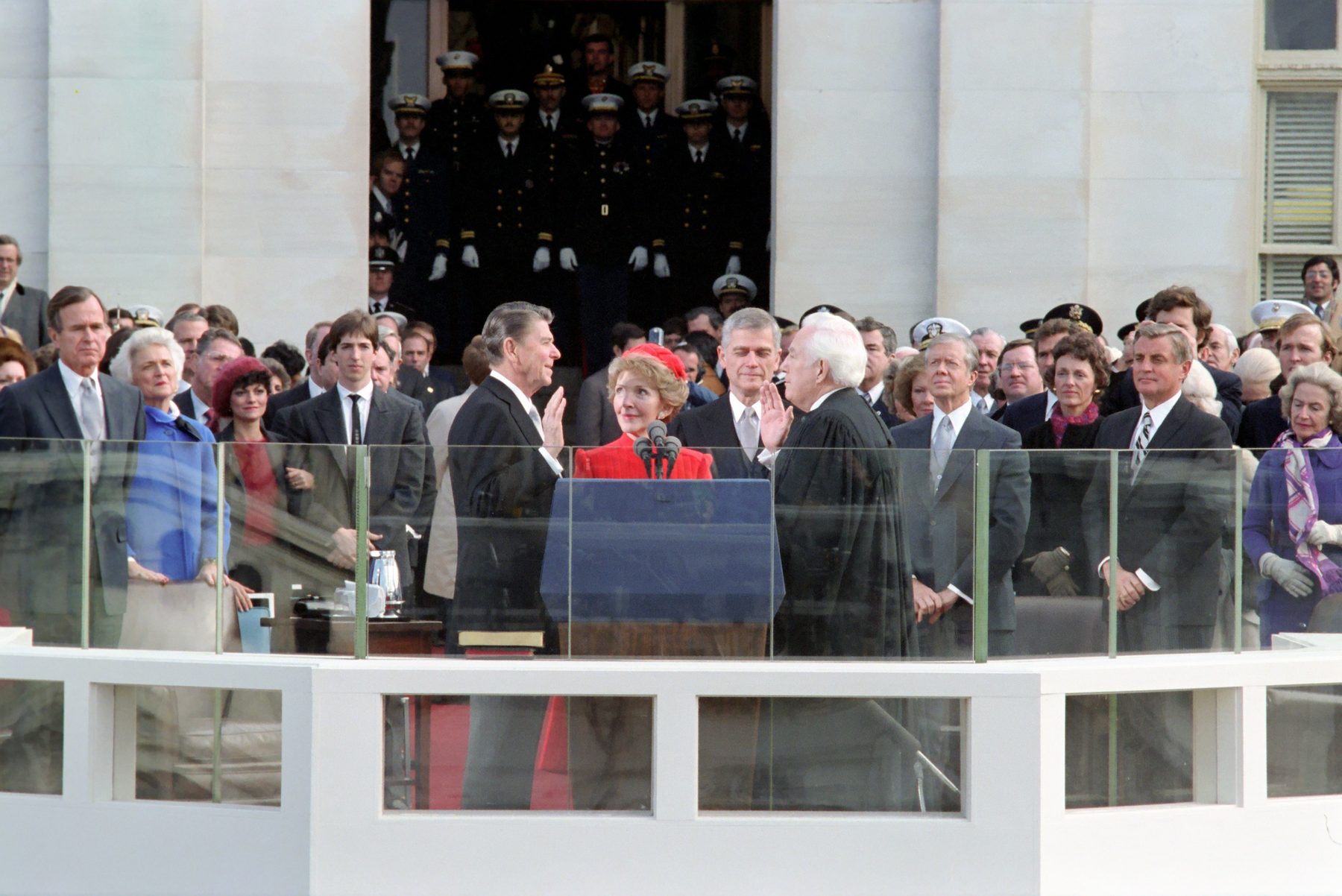
The Fairness Doctrine
The Fairness Doctrine was a Federal Communications Commission policy. As Reagan's veto message described it, it required broadcasters to provide coverage of controversial issues and a reasonable opportunity for the airing of contrasting viewpoints presidency.ucsb.edu. In 1987 Congress voted to write it into law. The Senate passed the Fairness in Broadcasting Act on April 9, 1987, by 59 to 31, with Democrats 41 to 6 and Republicans 18 to 25. The House passed it on June 3 by 302 to 102, with Democrats 223 to 16 and Republicans 79 to 86 voteview.com.
Reagan vetoed it on June 19, 1987, calling the doctrine "antagonistic to the freedom of expression guaranteed by the First Amendment" presidency.ucsb.edu. On June 23 the Senate voted 53 to 45 to refer the veto message to committee voteview.com, and Congress did not override it. In 1987 the FCC repealed the doctrine by a 4 to 0 vote reaganlibrary.gov.
1994
On September 27, 1994, 367 Republican candidates signed the Contract with America on the steps of the Capitol presidency.ucsb.edu. In November, Republicans gained 54 House seats and won control of both the House and the Senate for the first time in 40 years history.house.govhistory.house.gov. Clinton vetoed Republican spending and tax cuts, and the budget impasse led to two government shutdowns history.house.gov.
"The era of big Government is over. But we cannot go back to the time when our citizens were left to fend for themselves." presidency.ucsb.edu
Bill Clinton, Democratic president, State of the Union address, January 23, 1996
"As Republican Members of the House of Representatives and as citizens seeking to join that body we propose not just to change its policies, but even more important, to restore the bonds of trust between the people and their elected representatives." presidency.ucsb.edu
Republican Contract with America, September 27, 1994
The impeachment vote
The House vote on December 19, 1998, is the opening of this chapter. The Senate trial ran from January 7 to February 12, 1999, and ended in acquittal history.house.govsenate.gov.
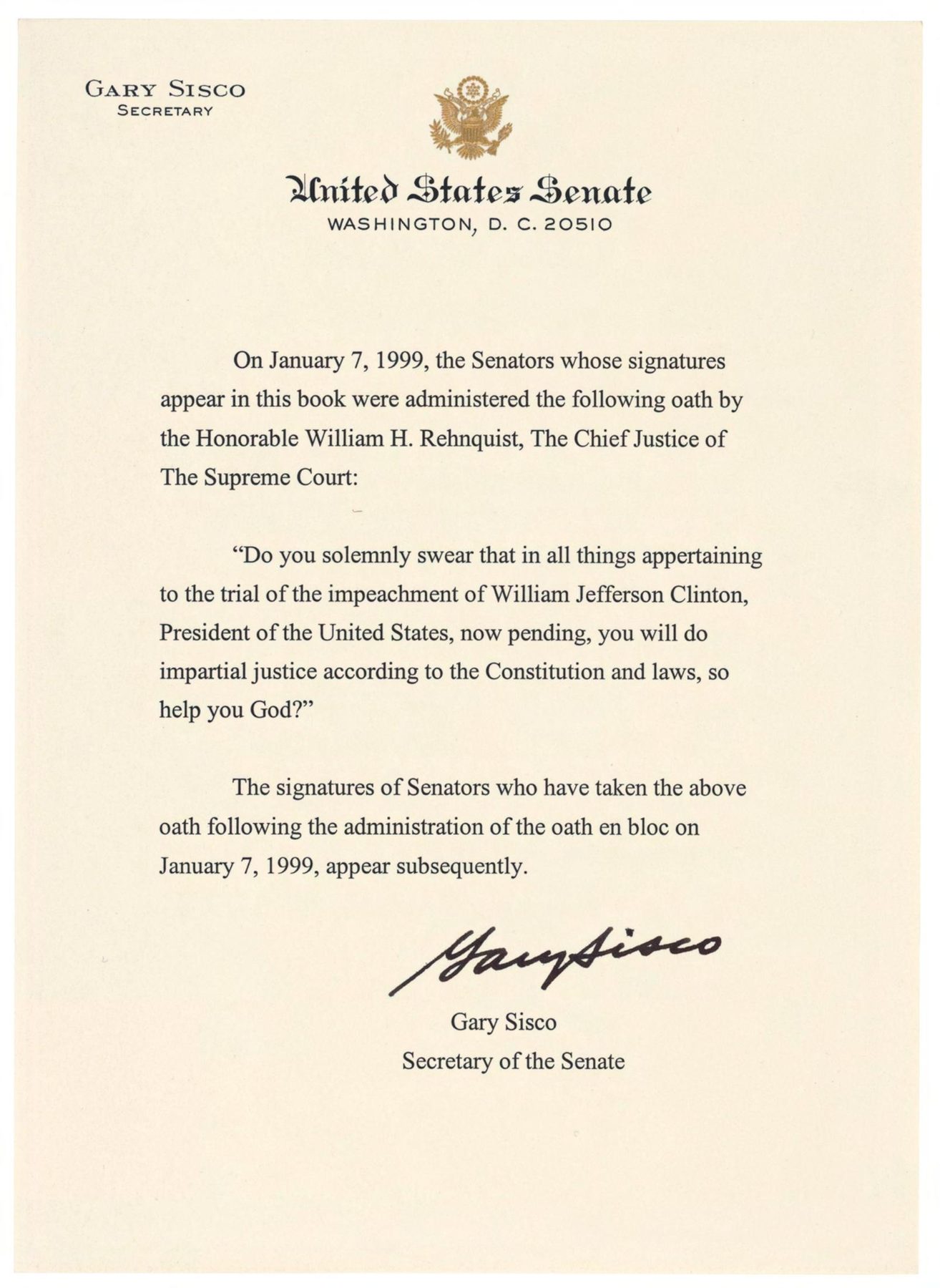
On February 12, 1999, 45 senators voted guilty on Article I and 55 not guilty; on Article II the vote was 50 to 50. All 45 Democrats voted not guilty on both. Ten Republicans voted not guilty on Article I and five on Article II voteview.comsenate.gov.
Religion in this era
"The reason the Baptist Church was formed in this country was because of our belief in absolute and total separation of church and state." presidency.ucsb.edu
Jimmy Carter, Democratic nominee, interview with Playboy magazine, published November 1976
"The truth is, politics and morality are inseparable. And as morality's foundation is religion, religion and politics are necessarily related." presidency.ucsb.edu
Ronald Reagan, Republican president, ecumenical prayer breakfast, Dallas, August 23, 1984
School prayer in the platforms. The Republican platform addressed school prayer in 1972, 1976 and 1980. In 1972 it supported voluntary prayer "providing that such prayers are not prepared or prescribed by the state"; in 1976 it favored "a constitutional amendment" so local communities could conduct non-sectarian prayers in public schools; in 1980 it supported initiatives "to restore the right of individuals to participate in voluntary, non-denominational prayer in schools" presidency.ucsb.edupresidency.ucsb.edupresidency.ucsb.edu.
The Moral Majority. Jerry Falwell founded the Moral Majority, a national political organization, in 1979. For the 1980 elections he claimed to have mobilized as many as four million previously apolitical evangelicals. He closed the organization in 1989 encyclopediavirginia.org.
Islam: Muhammad Ali's draft case. Muhammad Ali, named in the case as Clay, also known as Ali, was convicted for refusing induction into the armed forces after his draft board denied him conscientious objector status. On June 28, 1971, the Supreme Court reversed the conviction in an unsigned opinion with no dissent; Justice Douglas concurred and Justice Marshall took no part. The Court noted the government's concession that his beliefs "were founded on basic tenets of the Muslim religion" tile.loc.gov.
Islam and Iran. After a revolution by Islamic fundamentalists against the Shah of Iran, Iranian students seized the U.S. Embassy in Tehran on November 4, 1979, and held American diplomats hostage for 444 days history.state.gov. A National Archives photograph dated January 20, 1981, the day Reagan took office, shows the aircraft bringing in the 52 freed hostages catalog.archives.gov.

Native American religious freedom. The American Indian Religious Freedom Act became law on August 11, 1978. Its preamble states that federal laws "often deny American Indians access to sacred sites required in their religions" and that traditional ceremonies "have been intruded upon, interfered with, and in a few instances banned" govinfo.gov. On April 17, 1990, in Employment Division v. Smith, the Supreme Court held that Oregon could deny unemployment benefits to two employees fired for using peyote at a ceremony of their Native American Church, because the Free Exercise Clause does not exempt anyone from a neutral, generally applicable law. Justice Scalia wrote for the Court; three justices dissented tile.loc.gov.
Congress answered with the Religious Freedom Restoration Act. The House passed it by voice vote, and the Senate passed it on October 27, 1993, by 97 to 3 presidency.ucsb.eduvoteview.com. Clinton signed it on November 16, 1993: "this act reverses the Supreme Court's decision Employment Division against Smith and reestablishes a standard that better protects all Americans of all faiths in the exercise of their religion" presidency.ucsb.edu.
Evidence
Roll calls by party, counted from Voteview member records; only members recorded yea or nay are included, and the totals match the official tallies. "South" means the 11 states of the former Confederacy voteview.com.
| Vote | Total | Democrats | Republicans | Southern Democrats | Southern Republicans |
|---|---|---|---|---|---|
| Equal Rights Amendment, House, Oct. 12, 1971 | 354 to 24 | 217 to 12 | 137 to 12 | 64 to 8 | 24 to 1 |
| Equal Rights Amendment, Senate, Mar. 22, 1972 | 84 to 8 | 46 to 2 | 37 to 5 | 11 to 2 | 5 to 0 |
| Fairness in Broadcasting Act, Senate, Apr. 9, 1987 | 59 to 31 | 41 to 6 | 18 to 25 | 14 to 2 | 5 to 1 |
| Fairness in Broadcasting Act, House, June 3, 1987 | 302 to 102 | 223 to 16 | 79 to 86 | 60 to 9 | 18 to 19 |
| Assault weapons ban, House, May 5, 1994 | 216 to 214 | 177 to 77 | 38 to 137 | 36 to 41 | 5 to 43 |
| Crime bill final, House, Aug. 21, 1994 | 235 to 195 | 188 to 64 | 46 to 131 | 44 to 30 | 4 to 43 |
| Crime bill final, Senate, Aug. 25, 1994 | 61 to 38 | 54 to 2 | 7 to 36 | 11 to 1 | 0 to 10 |
| Clinton impeachment, Article I, House, Dec. 19, 1998 | 228 to 206 | 5 to 200 | 223 to 5 | 4 to 50 | 71 to 0 |
| Clinton impeachment, Article III, House, Dec. 19, 1998 | 221 to 212 | 5 to 199 | 216 to 12 | 4 to 50 | 71 to 0 |
| Clinton trial, Article I, Senate, Feb. 12, 1999 (guilty to not guilty) | 45 to 55 | 0 to 45 | 45 to 10 | 0 to 8 | 11 to 3 |
| Clinton trial, Article II, Senate, Feb. 12, 1999 (guilty to not guilty) | 50 to 50 | 0 to 45 | 50 to 5 | 0 to 8 | 14 to 0 |
Independents are left out of the party columns: one independent voted yes on the 1994 assault weapons ban and the House crime bill, and one voted no on both 1998 House articles; one senator outside the two parties voted no on the ERA in 1972 and one voted yes voteview.com.
The South changed sides. On the House vote that passed the Civil Rights Act on February 10, 1964, 103 members from the former Confederacy voted: 93 Democrats and 10 Republicans. On Article I of the Clinton impeachment, 125 voted: 54 Democrats and 71 Republicans voteview.com.
Measured polarization:
- In Congress. Between 1971 and 1972 and the current Congress, House Republicans' average DW-NOMINATE score moved from 0.25 to nearly 0.51, and House Democrats' from about negative 0.31 to negative 0.38. Southern House Republicans moved from about 0.29 to 0.57 pewresearch.org.
- In the public. In 1994, 64 percent of Republicans were more conservative than the median Democrat and 70 percent of Democrats were more liberal than the median Republican. In the same 1994 surveys, 17 percent of Republicans had a very unfavorable view of the Democratic Party and 16 percent of Democrats had a very unfavorable view of the Republican Party pewresearch.org. Pew's comparison figures are from 2014: 92 percent, 94 percent, 43 percent and 38 percent pewresearch.org.
What the evidence does not show
The platforms show what each party wrote at its conventions. They do not show what every member of the party believed. The 1976 Republican platform says so in its own words about abortion presidency.ucsb.edu.
The roll calls record votes, not reasons, and they do not show that every member of a party voted with it. The tables list the members who crossed.
The repeal of the Fairness Doctrine is documented here by the votes, the veto and the FCC decision. The sources used for this chapter do not measure its effect on what was broadcast afterward, so this chapter does not state one.
Falwell's figure of four million voters is his own claim, reported as a claim.
Sources
- Congressional Record, House, December 19, 1998, vol. 144, no. 155, pp. H11969 to H11970 (Livingston), H12002 to H12004 (Hyde), H12031 to H12032 (Gephardt). govinfo.gov (locator: pages listed). Accessed 2026-10-30.
- Office of the Historian, U.S. House of Representatives, "List of Individuals Impeached by the House of Representatives." history.house.gov (locator: entry for William J. Clinton). Accessed 2026-10-30.
- Jeffrey B. Lewis, Keith Poole, Howard Rosenthal, Adam Boche, Aaron Rudkin and Luke Sonnet, Voteview: Congressional Roll-Call Votes Database, UCLA, roll call and member files for the 88th, 92nd, 100th, 103rd, 105th and 106th Congresses. voteview.com and voteview.com (also H088, H092, S092, H100, S100, H103, S103, S106) (locator: House 92nd roll 197; Senate 92nd roll 533; Senate 100th rolls 75 and 154; House 100th roll 158; House 103rd rolls 750 and 1005; Senate 103rd rolls 331 and 690; House 105th rolls 1162 and 1164; Senate 106th rolls 17 and 18; House 88th roll 128). Accessed 2026-10-30.
- Roe v. Wade, 410 U.S. 113 (1973), United States Reports, Library of Congress. tile.loc.gov (locator: syllabus; opinion of the Court on the right of privacy; dissent of Justice Rehnquist). Accessed 2026-10-30.
- "1972 Democratic Party Platform," July 11, 1972, The American Presidency Project. presidency.ucsb.edu (locator: full text searched for "abortion"; section on handguns). Accessed 2026-10-30.
- "Republican Party Platform of 1972," August 21, 1972, The American Presidency Project. presidency.ucsb.edu (locator: full text searched for "abortion"; sections on crime and prayer). Accessed 2026-10-30.
- "Republican Party Platform of 1976," August 18, 1976, The American Presidency Project. presidency.ucsb.edu (locator: sections on abortion, women and prayer). Accessed 2026-10-30.
- "1976 Democratic Party Platform," July 12, 1976, The American Presidency Project. presidency.ucsb.edu (locator: abortion paragraph). Accessed 2026-10-30.
- "1980 Democratic Party Platform," August 11, 1980, The American Presidency Project. presidency.ucsb.edu (locator: sections on reproductive rights, the Equal Rights Amendment and handguns). Accessed 2026-10-30.
- "Republican Party Platform of 1980," July 15, 1980, The American Presidency Project. presidency.ucsb.edu (locator: sections on abortion, the Equal Rights Amendment, firearms and prayer). Accessed 2026-10-30.
- "1996 Democratic Party Platform," August 26, 1996, The American Presidency Project. presidency.ucsb.edu (locator: sections on choice and fighting crime). Accessed 2026-10-30.
- "Republican Party Platform of 1996," August 12, 1996, The American Presidency Project. presidency.ucsb.edu (locator: sections on the unborn child and the right to keep and bear arms). Accessed 2026-10-30.
- National Archives, Electoral College results, 1968, 1972, 1980, 1984. archives.gov, archives.gov, archives.gov, archives.gov (locator: results tables). Accessed 2026-10-30.
- Richard M. Nixon, "Address to the Nation on the War in Vietnam," November 3, 1969, The American Presidency Project. presidency.ucsb.edu (locator: closing section). Accessed 2026-10-30.
- Drew DeSilver, "The polarization in today's Congress has roots that go back decades," Pew Research Center, March 10, 2022. pewresearch.org (locator: full article and methodology). Accessed 2026-10-30.
- National Archives, "Watergate and the Constitution," chronology. archives.gov (locator: entries for 1972 to 1974). Accessed 2026-10-30.
- Richard M. Nixon, "Address to the Nation Announcing Decision To Resign the Office of President of the United States," August 8, 1974, The American Presidency Project. presidency.ucsb.edu (locator: full text). Accessed 2026-10-30.
- U.S. House of Representatives, Committee on the Judiciary, House Report 116-378, "Removing the Deadline for the Ratification of the Equal Rights Amendment," 2020. govinfo.gov (locator: Purpose and Summary; Background). Accessed 2026-10-30.
- "Republican Party Platform of 1968," August 5, 1968, The American Presidency Project. presidency.ucsb.edu (locator: crime section). Accessed 2026-10-30.
- "1968 Democratic Party Platform," August 26, 1968, The American Presidency Project. presidency.ucsb.edu (locator: justice and law section). Accessed 2026-10-30.
- "Cincinnati '77: Birthplace of the Modern NRA," American Rifleman, National Rifle Association. americanrifleman.org (locator: full article). Accessed 2026-10-30.
- William J. Clinton, "Remarks on Signing the Violent Crime Control and Law Enforcement Act of 1994," September 13, 1994, The American Presidency Project. presidency.ucsb.edu (locator: full text). Accessed 2026-10-30.
- Jimmy Carter, "Address to the Nation on Energy and National Goals: 'The Malaise Speech,'" July 15, 1979, The American Presidency Project. presidency.ucsb.edu (locator: full text). Accessed 2026-10-30.
- Ronald Reagan, "Inaugural Address," January 20, 1981, The American Presidency Project. presidency.ucsb.edu (locator: full text). Accessed 2026-10-30.
- Ronald Reagan, "Message to the Senate Returning Without Approval the Fairness in Broadcasting Bill," June 19, 1987, The American Presidency Project. presidency.ucsb.edu (locator: full text). Accessed 2026-10-30.
- Ronald Reagan Presidential Library and Museum, "Fairness Doctrine," topic guide. reaganlibrary.gov (locator: full page). Accessed 2026-10-30.
- "The Republican Contract with America," September 27, 1994, The American Presidency Project. presidency.ucsb.edu (locator: preamble and editor's note). Accessed 2026-10-30.
- Office of the Historian, U.S. House of Representatives, "104th Congress (1995 to 1997)," Congressional Profiles. history.house.gov (locator: summary). Accessed 2026-10-30.
- Office of the Historian, U.S. House of Representatives, "Majority Changes in the House of Representatives, 1856 to Present." history.house.gov (locator: row for 1994). Accessed 2026-10-30.
- William J. Clinton, "Address Before a Joint Session of the Congress on the State of the Union," January 23, 1996, The American Presidency Project. presidency.ucsb.edu (locator: full text). Accessed 2026-10-30.
- U.S. Senate, "About Impeachment: Impeachment Cases." senate.gov (locator: entry for William J. Clinton). Accessed 2026-10-30.
- Jimmy Carter, "Interview with 'Playboy' Magazine," published November 1, 1976, The American Presidency Project. presidency.ucsb.edu (locator: section on the Baptist church). Accessed 2026-10-30.
- Ronald Reagan, "Remarks at an Ecumenical Prayer Breakfast in Dallas, Texas," August 23, 1984, The American Presidency Project. presidency.ucsb.edu (locator: full text). Accessed 2026-10-30.
- Mark J. Rozell, "Jerry Falwell (1933 to 2007)," Encyclopedia Virginia, Virginia Humanities. encyclopediavirginia.org (locator: summary, Moral Majority section and timeline). Accessed 2026-10-30.
- Clay, aka Ali v. United States, 403 U.S. 698 (1971), United States Reports, Library of Congress. tile.loc.gov (locator: syllabus and per curiam opinion). Accessed 2026-10-30.
- Office of the Historian, U.S. Department of State, "The Iranian Hostage Crisis," A Short History of the Department of State. history.state.gov (locator: full page). Accessed 2026-10-30.
- National Archives, "Spectators watch one of two C-9 Nightingale aircraft bringing in the 52 freed hostages after their release from Iran," January 20, 1981, NAID 6344603. catalog.archives.gov (locator: catalog record). Accessed 2026-10-30.
- Public Law 95-341, American Indian Religious Freedom, August 11, 1978, 92 Stat. 469. govinfo.gov (locator: preamble). Accessed 2026-10-30.
- Employment Division, Department of Human Resources of Oregon v. Smith, 494 U.S. 872 (1990), United States Reports, Library of Congress. tile.loc.gov (locator: syllabus). Accessed 2026-10-30.
- William J. Clinton, "Remarks on Signing the Religious Freedom Restoration Act of 1993," November 16, 1993, The American Presidency Project. presidency.ucsb.edu (locator: full text). Accessed 2026-10-30.
- Pew Research Center, "Political Polarization in the American Public," June 12, 2014. pewresearch.org (locator: overview). Accessed 2026-10-30.
Last checked against its sources on October 30, 2026. Report a correction.