
How we got here
Today, 2000 to Now: From 420 to 1 to a 36-Point Gap
The short answer
Three days after September 11, 2001, the House voted 420 to 1 and the Senate 98 to 0 to authorize force. From there, the record shows the parties dividing on Iraq, health care, policing, the 2020 count and abortion, while Pew's average party gap on ten political values rose from 15 points in 1994 to 36 points in 2017. Majorities in both parties still give the same answer on questions such as keeping Social Security benefits whole.

Together and Dug in, in this era
Together: a law passed with a majority of both major parties voting yes in both chambers, or a documented agreement across parties, shown with the vote. Dug in: a documented failure to settle by vote, or a break in the system, shown with what followed.
Together (1)
Together · 2001
Authorization for Use of Military Force after September 11
Congress authorized the use of the armed forces against those responsible for the September 11, 2001 attacks.
- House, September 14, 2001: 420 to 1 (Democrats 204 yes, 1 no; Republicans 214 yes, 0 no; total 420 yes, 1 no; Independent 2 yes, 0 no) voteview.com
- Senate, September 14, 2001: 98 to 0 (Democrats 50 yes, 0 no; Republicans 47 yes, 0 no; total 98 yes, 0 no; Independent 1 yes, 0 no) voteview.com
Where it landed: Signed September 18, 2001 as P.L. 107-40. The one no vote in either chamber was a House Democrat. Voteview files the House 420 to 1 vote under H.J. Res. 64; the Congressional Research Service reports the House tabled H.J. Res. 64 and passed S.J. Res. 23 by that 420 to 1 vote.
Voteview, House roll call 339, 107th Congress voteview.com Voteview, Senate roll call 281, 107th Congress voteview.com Congressional Research Service, RS22357, AUMF (P.L. 107-40): Legislative History everycrsreport.com
Dug in (5)
Dug in · 2011
Debt ceiling standoff of 2011 and the first U.S. credit downgrade
Congress raised the debt limit on August 2, 2011, after Treasury had projected its extraordinary measures would run out after about July 8, 2011.
- House, August 1, 2011: 269 to 161 (Democrats 95 yes, 95 no; Republicans 174 yes, 66 no; total 269 yes, 161 no) voteview.com
- Senate, August 2, 2011: 74 to 26 (Democrats 46 yes, 6 no; Republicans 28 yes, 19 no; total 74 yes, 26 no; Independent 0 yes, 1 no) voteview.com
What followed: On August 5, 2011 Standard and Poor's cut the U.S. long-term rating one notch from AAA to AA-plus. GAO estimated the delay raised Treasury's borrowing costs by about $1.3 billion in fiscal year 2011.
Voteview, House roll call 686, 112th Congress voteview.com Voteview, Senate roll call 123, 112th Congress voteview.com GAO-12-701, Debt Limit: Analysis of 2011-2012 Actions Taken and Effect of Delayed Increase on Borrowing Costs gao.gov GAO-12-701 full text gao.gov WBUR (AP), S&P downgrades U.S. credit, August 5, 2011 wbur.org
Dug in · 2013
Government shutdown of 2013
Federal funding lapsed on October 1, 2013, the first day of fiscal year 2014.
- House, October 16, 2013: 285 to 144 (Democrats 198 yes, 0 no; Republicans 87 yes, 144 no; total 285 yes, 144 no) voteview.com
- Senate, October 16, 2013: 81 to 18 (Democrats 52 yes, 0 no; Republicans 27 yes, 18 no; total 81 yes, 18 no; Independent 2 yes, 0 no) voteview.com
What followed: It lasted 16 full days and ended when the President signed a continuing resolution early on October 17, 2013. OMB reported 6.6 million furlough days, about 850,000 people furloughed per day at the peak, $2.0 billion in pay for furloughed time, and almost $4 billion in delayed tax refunds.
Voteview, House roll call 549, 113th Congress voteview.com Voteview, Senate roll call 219, 113th Congress voteview.com Congressional Research Service, RL34680 everycrsreport.com White House (archived), Impacts and Costs of the Government Shutdown, November 7, 2013 obamawhitehouse.archives.gov
Dug in · 2018
Government shutdown of 2018 to 2019
Funding for part of the federal government lapsed on December 22, 2018.
What followed: It ended January 25, 2019 after 35 days, then the longest in history. CBO estimated it reduced GDP by $11 billion, of which about $3 billion would not be recovered.
Congressional Research Service, R41759, Past Government Shutdowns: Key Resources everycrsreport.com FactCheck.org, reporting CBO, The Effects of the Partial Shutdown Ending in January 2019 factcheck.org CBO, The Effects of the Partial Shutdown Ending in January 2019 (primary source; blocked automated fetch) cbo.gov
Dug in · 2023
The House removes its Speaker
The House adopted a resolution declaring the office of Speaker vacant, 216 to 210.
- House, October 3, 2023: 216 to 210 (Democrats 208 yes, 0 no; Republicans 8 yes, 210 no; total 216 yes, 210 no) voteview.com
- House next speaker, October 25, 2023: 220 to 209 (Democrats 0 yes, 209 no; Republicans 220 yes, 0 no; total 220 yes, 209 no) voteview.com
What followed: The House had no Speaker from October 3 until it elected a new one on October 25, 2023, by 220 to 209.
Voteview, House roll call 518, 118th Congress voteview.com Voteview, House roll call 522, 118th Congress voteview.com
Dug in · 2025
Government shutdown of 2025
Federal funding lapsed on October 1, 2025 after the Senate did not reach the 60 votes needed to advance a continuing resolution.
- Senate sept19, September 19, 2025: 44 to 48 (Democrats 1 yes, 44 no; Republicans 43 yes, 2 no; total 44 yes, 48 no; Independent 0 yes, 2 no) voteview.com
- Senate oct1 cloture, October 1, 2025: 55 to 45 (Democrats 2 yes, 43 no; Republicans 52 yes, 1 no; total 55 yes, 45 no; Independent 1 yes, 1 no) voteview.com
- Senate nov10, November 10, 2025: 60 to 40 (Democrats 7 yes, 38 no; Republicans 52 yes, 1 no; total 60 yes, 40 no; Independent 1 yes, 1 no) voteview.com
- House nov12, November 12, 2025: 222 to 209 (Democrats 6 yes, 207 no; Republicans 216 yes, 2 no; total 222 yes, 209 no) voteview.com
What followed: It ended after 43 days when the House passed the Senate-amended bill 222 to 209 on November 12, 2025, funding most of the government through the end of January; 42 million SNAP participants did not receive food aid during the lapse.
Voteview, Senate roll call 528, 119th Congress voteview.com Voteview, Senate roll call 537, 119th Congress voteview.com Voteview, Senate roll call 618, 119th Congress voteview.com Voteview, House roll call 284, 119th Congress voteview.com NHPR (NPR), House votes to end the longest ever government shutdown, November 12, 2025 nhpr.org
September 14, 2001: 420 to 1
At 11:17 p.m. on Friday, September 14, 2001, the House of Representatives finished a roll call on a joint resolution "to authorize the use of United States Armed Forces against those responsible for the recent attacks launched against the United States." The tally was 420 yeas and 1 nay. Republicans voted 214 to 0, Democrats 204 to 1, independents 2 to 0 clerk.house.gov.
The one nay was Representative Barbara Lee, a Democrat from California clerk.house.gov.
That morning the Senate had passed the same authorization, S.J. Res. 23, "by a unanimous vote of 98 yeas" govinfo.gov. Two senators did not vote senate.gov. Under an order agreed in advance, the House's vote also passed the Senate's resolution govinfo.gov.
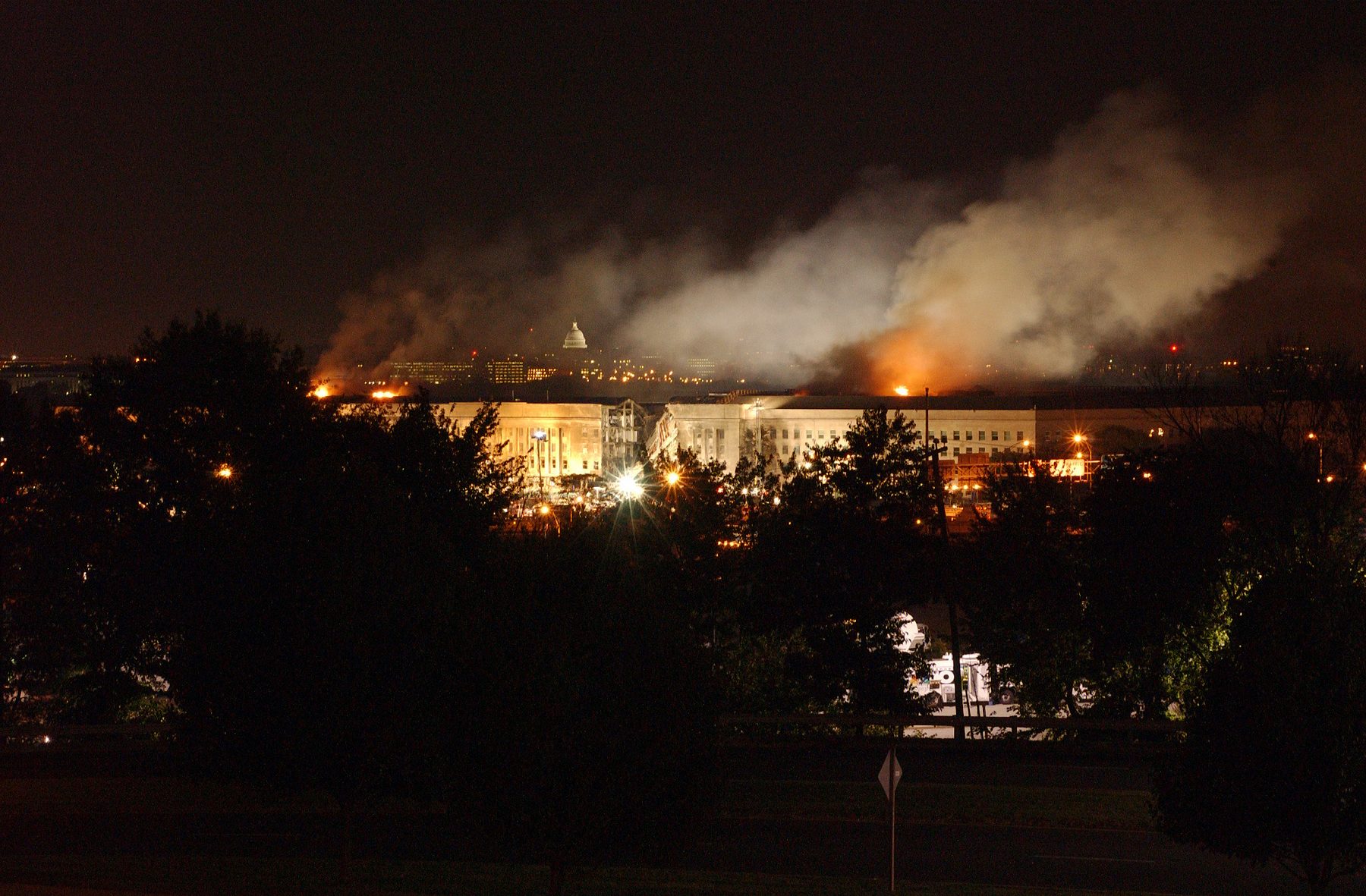
Three days earlier, 2,973 people had died in the attacks of September 11, which the 9/11 Commission called "the largest loss of life" on American soil "as a result of hostile attack in its history" govinfo.gov.
The one thing that changed everything
The single event of this era that official records tie to the most later decisions is September 11, 2001.
- The dead. 2,973 people, including 343 members of the New York Fire Department, 37 Port Authority police officers and 23 New York police officers govinfo.gov.
- A war authority still in use. Under the 2001 authorization, the Congressional Research Service reported in 2015, U.S. forces "have conducted military operations in Afghanistan since October 2001," and the use of force expanded to targets "in Pakistan, Yemen, Somalia, Libya, and most recently, Syria." The same report said the Obama administration relied on it for "a new campaign against the Islamic State in Iraq and Syria" everycrsreport.com.
- A new department. The Homeland Security Act of November 25, 2002 combined "all or part of 22 different federal departments and agencies" into the Department of Homeland Security, which opened on March 1, 2003 dhs.gov.
- A second war vote. Thirteen months later, Congress voted on force against Iraq. That vote split the parties (below) clerk.house.govsenate.gov.

2000: decided by 537 votes
The era opened with a recount in one state. In Florida, the official result was 2,912,790 votes for George W. Bush and 2,912,253 for Al Gore, a margin of 537 fec.gov. Nationally, Gore received 50,999,897 votes and Bush 50,456,002 fec.gov. Bush won the Electoral College 271 to 266; the National Archives notes that he "received fewer popular votes than Albert Gore Jr., but received a majority of electoral votes" archives.gov.
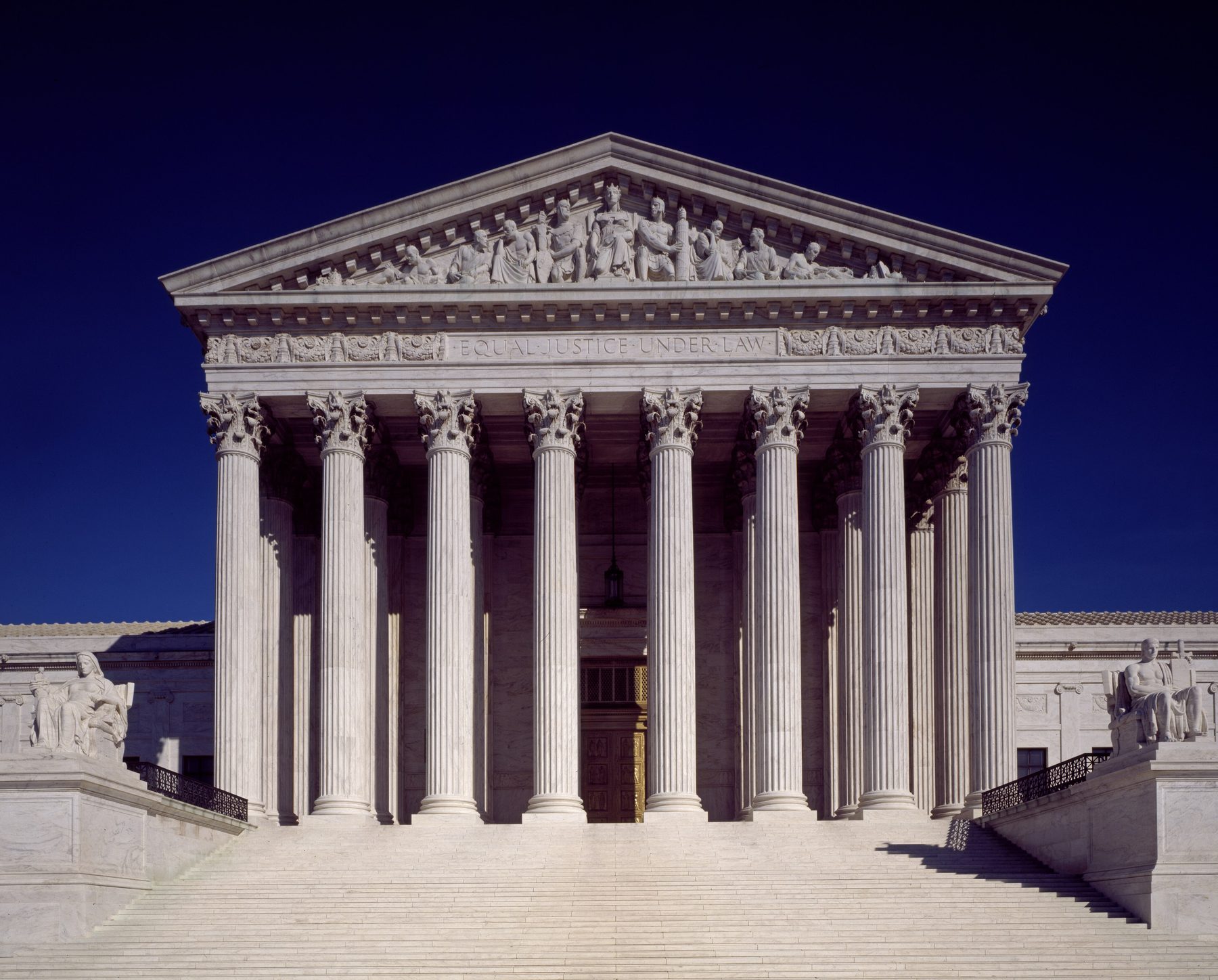
On December 12, 2000, the Supreme Court ended the Florida recount in Bush v. Gore. The unsigned opinion found that the recount's lack of uniform standards violated the Equal Protection Clause and stated: "Seven Justices of the Court agree that there are constitutional problems with the recount ordered by the Florida Supreme Court that demand a remedy... The only disagreement is as to the remedy." Four justices, Stevens, Souter, Ginsburg and Breyer, dissented law.cornell.edu.
The next evening, both men spoke.
"Let there be no doubt, while I strongly disagree with the court's decision, I accept it. I accept the finality of this outcome which will be ratified next Monday in the Electoral College. And tonight, for the sake of our unity as a people and the strength of our democracy, I offer my concession." presidency.ucsb.edu
Al Gore, Vice President, Democratic nominee, address conceding the election, December 13, 2000
"Our nation must rise above a house divided. Americans share hopes and goals and values far more important than any political disagreements. Republicans want the best for our nation, and so do Democrats. Our votes may differ, but not our hopes." presidency.ucsb.edu
George W. Bush, Governor of Texas, Republican nominee, address from the Texas House chamber accepting election, December 13, 2000
Iraq, 2002: the first split
On October 10, 2002, the House passed the resolution "To Authorize the Use of United States Armed Forces Against Iraq," 296 to 133. Republicans voted 215 to 6. Democrats voted 81 to 126 clerk.house.gov. The one House independent voted no clerk.house.gov. Early on October 11, the Senate passed it 77 to 23: Republicans 48 to 1, Democrats 29 to 21, and the one independent, Senator Jeffords of Vermont, voted no senate.gov.
Democrats split. House Democratic leader Richard Gephardt told the House he had "decided to vote for this resolution" and voted yes govinfo.govclerk.house.gov. Three days before the House vote, President Bush had said: "Approving this resolution does not mean that military action is imminent or unavoidable" presidency.ucsb.edu.
"I rise in opposition to the resolution on national security grounds. The clear and present danger that our country faces is terrorism. I say flat out that unilateral use of force without first exhausting every diplomatic remedy and other remedies and making a case to the American people will be harmful to our war on terrorism." govinfo.gov
Rep. Nancy Pelosi (D-Calif.), House floor debate, October 10, 2002
"As a free society, we have to defeat dangers before they ripen. The war on terrorism will be fought here at home, unless we summon the will to confront evil before it attacks... history informs us that the dangers of complacency and inaction far outweigh the calculated risks of confronting evil." govinfo.gov
Rep. Tom DeLay (R-Tex.), House floor debate, October 10, 2002
Speakers on both sides of that debate described Iraq as holding banned weapons. Pelosi said: "Yes, he has chemical weapons, he has biological weapons, he is trying to get nuclear weapons." DeLay spoke of "Saddam's weapons of mass destruction" govinfo.gov. After the 2003 invasion, the Iraq Survey Group's final report to the Director of Central Intelligence stated: "ISG has not found evidence that Saddam Husayn possessed WMD stocks in 2003." It added that the evidence left open the possibility that some weapons existed, "although not of a militarily significant capability" govinfo.gov.
Sorted by place, school and church
In 1994, 10% of Americans held consistently liberal or consistently conservative views. By 2014 it was 21%. Over the same years, the share of Republicans to the right of the median Democrat rose from 64% to 92%, and the share of Democrats to the left of the median Republican rose from 70% to 94% pewresearch.org.
Pew has asked the same ten political values questions since 1994. "Across 10 measures," it reported in 2017, "the average partisan gap has increased from 15 percentage points to 36 points." In 1994 the party gap was about as wide as the gap between Black and white Americans (14 points on average). By 2017 the party divide was "much wider than any of these demographic differences" pewresearch.org. On one item, the share of Democrats saying immigrants strengthen the country rose from 32% in 1994 to 84% in 2017; among Republicans it moved from 30% to 42% pewresearch.org.
Pew's 2024 study of voters traced where the parties now draw their support pewresearch.org:
- Place. In 2008, rural voters were evenly split. In the 2024 report, Republicans led among rural voters 60% to 35%. Urban voters were Democratic by 60% to 37%. The suburbs were about evenly divided.
- Education. 63% of white voters without a four-year degree associated with the Republican Party, up substantially over 15 years. White college graduates, mostly Republican in the 1990s, were closely divided.
- Religion. White evangelical Protestants aligned with Republicans 85% to 14%. Religiously unaffiliated voters were 70% Democratic. (More in Religion in this era.)
Sorted by screen
Named studies have measured what news sources do, with different results by medium.
- Cable, 2014. Among consistent conservatives, 47% named Fox News as their main source for government and political news. No single source was named by more than 15% of consistent liberals; they were more than twice as likely as other web users to name NPR, MSNBC or the New York Times pewresearch.org.
- Cable, measured as cause. Economists Stefano DellaVigna and Ethan Kaplan compared 9,256 towns and found that where Fox News entered cable systems between 1996 and 2000, "Republicans gain 0.4 to 0.7 percentage points" in presidential vote share nber.org. Gregory Martin and Ali Yurukoglu, using channel position on cable lineups, estimated that Fox News "increases Republican vote shares by 0.3 points among viewers induced into watching 2.5 additional minutes per week" nber.org.
- The internet. Levi Boxell, Matthew Gentzkow and Jesse Shapiro found polarization grew fastest "for the demographic groups least likely to use the internet and social media," including those over 75, which "argue[s] against the hypothesis that the internet is a primary driver of rising political polarization" nber.org.
- Facebook, 2020. A field experiment with 23,377 users cut their exposure to like-minded sources by about one-third during the 2020 election. It found "no measurable effects" on eight measures, including affective polarization and ideological extremity. The same study found like-minded content made up the majority of what users saw nature.com.
Health care, 2009 to 2017
On September 9, 2009, President Obama took his health plan to a joint session of Congress. When he said his reforms "would not apply to those who are here illegally," the official transcript records Representative Joe Wilson of South Carolina, a Republican, calling out: "You lie!" presidency.ucsb.educlerk.house.gov.
The Senate passed the Patient Protection and Affordable Care Act on December 24, 2009, 60 to 39. 58 Democrats and 2 independents voted yes; 39 Republicans voted no; one Republican, Senator Bunning of Kentucky, did not vote senate.gov. On March 21, 2010, the House passed it 219 to 212. Democrats voted 219 to 34. Republicans voted 0 to 178 clerk.house.gov.
"Imagine a society and an economy where a person could change jobs without losing health insurance, where they could be self-employed or start a small business." govinfo.gov
Rep. Nancy Pelosi (D-Calif.), Speaker of the House, closing the debate, March 21, 2010
"In this economy, with this unemployment, with our desperate need for jobs and economic growth, is this really the time to raise taxes, to create bureaucracies, and burden every job creator in our land? The answer is no... They're disgusted because what they see is one political party closing out the other from what should be a national solution." govinfo.gov
Rep. John Boehner (R-Ohio), Republican leader, House floor, March 21, 2010
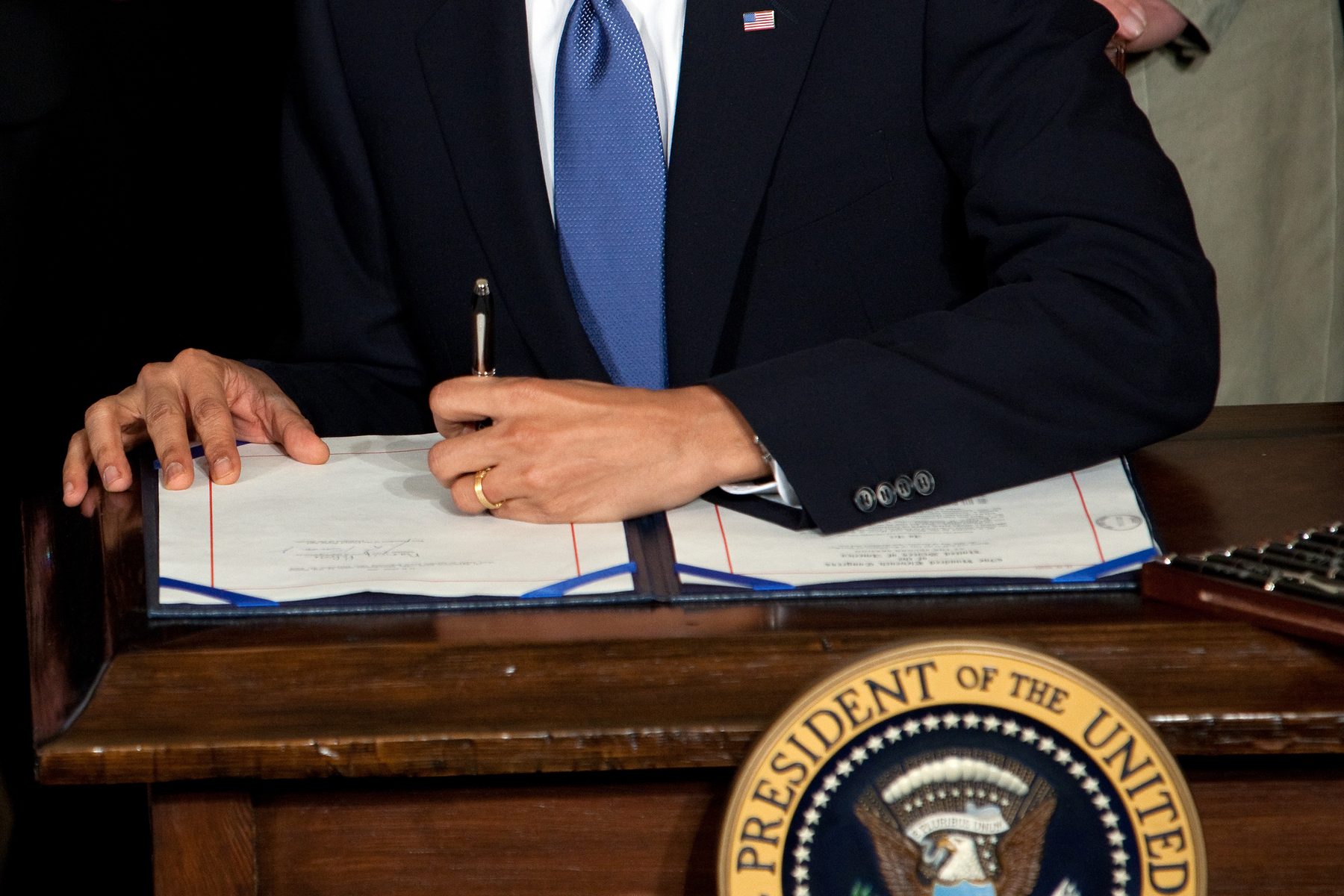
President Obama signed the bill on March 23, 2010, as Public Law 111-148 presidency.ucsb.edu.
On January 19, 2011, the new Republican House passed H.R. 2, the "Repealing the Job-Killing Health Care Law Act," 245 to 189. Republicans voted 242 to 0; Democrats voted 3 to 189 clerk.house.gov. On July 28, 2017, at 1:24 a.m., a Senate amendment to repeal parts of the law failed 49 to 51. All 49 yes votes were Republican. The 51 no votes were 46 Democrats, 2 independents and 3 Republicans: Susan Collins, John McCain and Lisa Murkowski senate.gov.
Marriage, 2015
On June 26, 2015, the Supreme Court held 5 to 4 in Obergefell v. Hodges that "The Fourteenth Amendment requires a State to license a marriage between two people of the same sex." Justice Kennedy wrote for the Court; Chief Justice Roberts and Justices Scalia, Thomas and Alito each wrote dissents law.cornell.edu.
"They ask for equal dignity in the eyes of the law. The Constitution grants them that right." law.cornell.edu
Justice Anthony Kennedy, opinion of the Court
"But this Court is not a legislature. Whether same-sex marriage is a good idea should be of no concern to us." law.cornell.edu
Chief Justice John Roberts, dissenting
Public opinion moved in both parties, at different speeds. In Pew's surveys, support for same-sex marriage rose from 19% to 44% among Republicans and leaners between 2004 and 2019, and from 43% to 75% among Democrats and leaners pewresearch.org.
2016
Hillary Clinton received 65,853,516 votes and Donald Trump 62,984,825, in the Federal Election Commission's official count fec.gov. Trump won the Electoral College 304 to 227; seven electors voted for other people archives.gov.
"None of us can raise a family, build a business, heal a community or lift a country totally alone. America needs every one of us to lend our energy, our talents, our ambition to making our nation better and stronger." presidency.ucsb.edu
Hillary Clinton, accepting the Democratic nomination, Philadelphia, July 28, 2016
"I have visited the laid-off factory workers, and the communities crushed by our horrible and unfair trade deals. These are the forgotten men and women of our country... People who work hard but no longer have a voice. I am your voice!" presidency.ucsb.edu
Donald Trump, accepting the Republican nomination, Cleveland, July 21, 2016
How the parties see each other
Pew has asked how many people in each party hold a very unfavorable view of the other party.
| Year | Republicans, very unfavorable of Democrats | Democrats, very unfavorable of Republicans |
|---|---|---|
| 1994 | 17% | 16% |
| 2014 | 43% | 38% |
| 2017 | 45% | 44% |
| 2022 | 62% | 54% |
Sources: 1994 and 2014 pewresearch.org; 2017 pewresearch.org; 2022 pewresearch.org.
In 2014, 36% of Republicans said Democratic policies "threaten the nation's well-being," and 27% of Democrats said the same of Republican policies pewresearch.org. By 2022, 72% of Republicans called Democrats more immoral than other Americans, up from 47% in 2016; 63% of Democrats said the same of Republicans, up from 35% pewresearch.org.
Researchers call this affective polarization: dislike of the other party, as distinct from disagreement on policy. Comparing twelve wealthy democracies over four decades, Boxell, Gentzkow and Shapiro found that "the US experienced the largest increase in polarization over this period," while six of the countries saw it fall nber.org.
Pandemic relief, 2020
On March 25, 2020, the Senate passed the CARES Act, a $2.2 trillion coronavirus relief law, 96 to 0: 45 Democrats, 49 Republicans and 2 independents voted yes voteview.com. On March 27 the House agreed by voice vote, so the House left no recorded party split taxnews.ey.com. It was enacted that day as Public Law 116-136 govinfo.gov.
Policing, 2020
On May 25, 2020, Minneapolis police officers restrained George Floyd face down for about nine minutes and 29 seconds; Officer Derek Chauvin kept his knee on Floyd's neck, and Floyd was pronounced dead at Hennepin County Medical Center. A jury convicted Chauvin of second-degree unintentional murder, third-degree murder and second-degree manslaughter, and he was sentenced to 270 months. The Minnesota Court of Appeals affirmed in 2023 mn.gov.
Each party wrote a bill. On June 24, 2020, a motion to end debate on taking up the Republican JUSTICE Act failed in the Senate, 55 to 45, short of the three-fifths of senators required. The yes votes were 52 Republicans, 2 Democrats and 1 independent. Republican leader Mitch McConnell voted no and then entered a motion to reconsider the vote senate.govgovinfo.gov. The next day the House passed the Democratic George Floyd Justice in Policing Act, 236 to 181. Democrats voted 233 to 0; Republicans voted 3 to 180 clerk.house.gov.
"The names of George Floyd, Breonna Taylor, and Ahmaud Arbery continue to ring in the Nation's ears, a searing reminder of the desperate need to reform policing and truly address injustice in America... So much of the anger in the country right now is directed at the lack of accountability for police officers who violate Americans' rights." govinfo.gov
Sen. Chuck Schumer (D-N.Y.), Democratic leader, Senate floor, June 24, 2020
"I have been stopped 18 times in the last two decades... Not only do we hear you, not only do we see you, but we are responding to your pain, because we in America believe that justice should be applied equally to all of our citizens, with no exceptions... But on this bill, if you don't think we are right, make it better. Don't walk away." govinfo.gov
Sen. Tim Scott (R-S.C.), Senate floor, June 24, 2020, before the JUSTICE Act vote
January 6, 2021
The official 2020 count: Joe Biden 81,268,924 votes and Donald Trump 74,216,154 fec.gov; 306 electoral votes to 232 archives.gov. On December 11, 2020, the Supreme Court denied Texas's request to sue Pennsylvania, Georgia, Michigan and Wisconsin over their elections "for lack of standing," finding that Texas "has not demonstrated a judicially cognizable interest in the manner in which another State conducts its elections" supremecourt.gov.
On January 6, 2021, Congress met in joint session to count the electoral votes. During the debate on an objection to Arizona's votes, the House recessed at 2:29 p.m. and did not reconvene until 9:02 p.m. govinfo.gov. A week later, Republican leader Kevin McCarthy described "the violent mob that descended upon this body" and said that "for several hours last week, mob law tried to interfere with constitutional law" govinfo.gov. When the count resumed, the objections to Arizona and Pennsylvania failed. In the House, the Arizona objection failed 121 to 303 (Republicans 121 to 83, Democrats 0 to 220) and the Pennsylvania objection failed 138 to 282 (Republicans 138 to 64, Democrats 0 to 218) clerk.house.gov. In the Senate, they failed 6 to 93 and 7 to 92; every yes vote was Republican senate.gov. "Neither House sustained the objection, so all votes were counted," the National Archives records archives.gov.
On January 13, 2021, the House impeached President Trump for "high crimes and misdemeanors," 232 to 197. Democrats voted 222 to 0. Republicans voted 10 to 197 clerk.house.gov.
"We, you and I, hold in trust the power that derives most directly from the people of the United States, and we bear the responsibility to fulfill the oath that we all swear before God and before one another: the oath to defend the Constitution against all enemies, foreign and domestic, so help us God... Words matter. Truth matters. Accountability matters." govinfo.gov
Rep. Nancy Pelosi (D-Calif.), Speaker of the House, January 13, 2021
"I believe impeaching the President in such a short timeframe would be a mistake. No investigations have been completed. No hearings have been held... Most Americans want neither inaction nor retribution. They want durable, bipartisan justice... The President bears responsibility for Wednesday's attack on Congress by mob rioters." govinfo.gov
Rep. Kevin McCarthy (R-Calif.), Republican leader, January 13, 2021
On February 13, 2021, 57 senators voted guilty and 43 not guilty. The 57 were 48 Democrats, 2 independents and 7 Republicans: Richard Burr, Bill Cassidy, Susan Collins, Lisa Murkowski, Mitt Romney, Ben Sasse and Pat Toomey senate.gov. The Constitution requires "the Concurrence of two thirds of the Members present" to convict archives.gov, so the former president was acquitted.
On January 20, 2025, President Trump commuted the sentences of 14 people convicted of offenses related to January 6, granted "a full, complete and unconditional pardon to all other individuals convicted" of such offenses, and directed the Attorney General to seek dismissal of all pending indictments whitehouse.gov.
Abortion, 2022
On June 24, 2022, in Dobbs v. Jackson Women's Health Organization, the Supreme Court held: "The Constitution does not confer a right to abortion; Roe and Casey are overruled; and the authority to regulate abortion is returned to the people and their elected representatives." Justice Alito wrote for five justices. Chief Justice Roberts concurred in the judgment. Justices Breyer, Sotomayor and Kagan dissented supremecourt.gov.
"Today, our daughters have fewer rights than their grandmothers... With a Democratic Congress, we will pass national legislation to make Roe the law of the land again." presidency.ucsb.edu
2024 Democratic Party Platform, dated August 19, 2024
"We believe that the 14th Amendment to the Constitution of the United States guarantees that no person can be denied Life or Liberty without Due Process, and that the States are, therefore, free to pass Laws protecting those Rights. After 51 years, because of us, that power has been given to the States and to a vote of the People." presidency.ucsb.edu
2024 Republican Party Platform, adopted at the Republican National Convention, July 15, 2024
In Pew's survey of January 2026, 84% of Democrats and Democratic leaners said abortion should be legal in all or most cases; 63% of Republicans and Republican leaners said it should be illegal in all or most cases pewresearch.org.
Guns, 2022: an exception
Four weeks before the Senate vote, 19 children were "gunned down in their Texas elementary school" in Uvalde, as Senator Chris Murphy described it on the floor. "Within 2 days of the Uvalde massacre," Murphy said, he, Senators John Cornyn, Thom Tillis and Kyrsten Sinema and others had started talking about "the things that could get 60 votes" govinfo.gov.
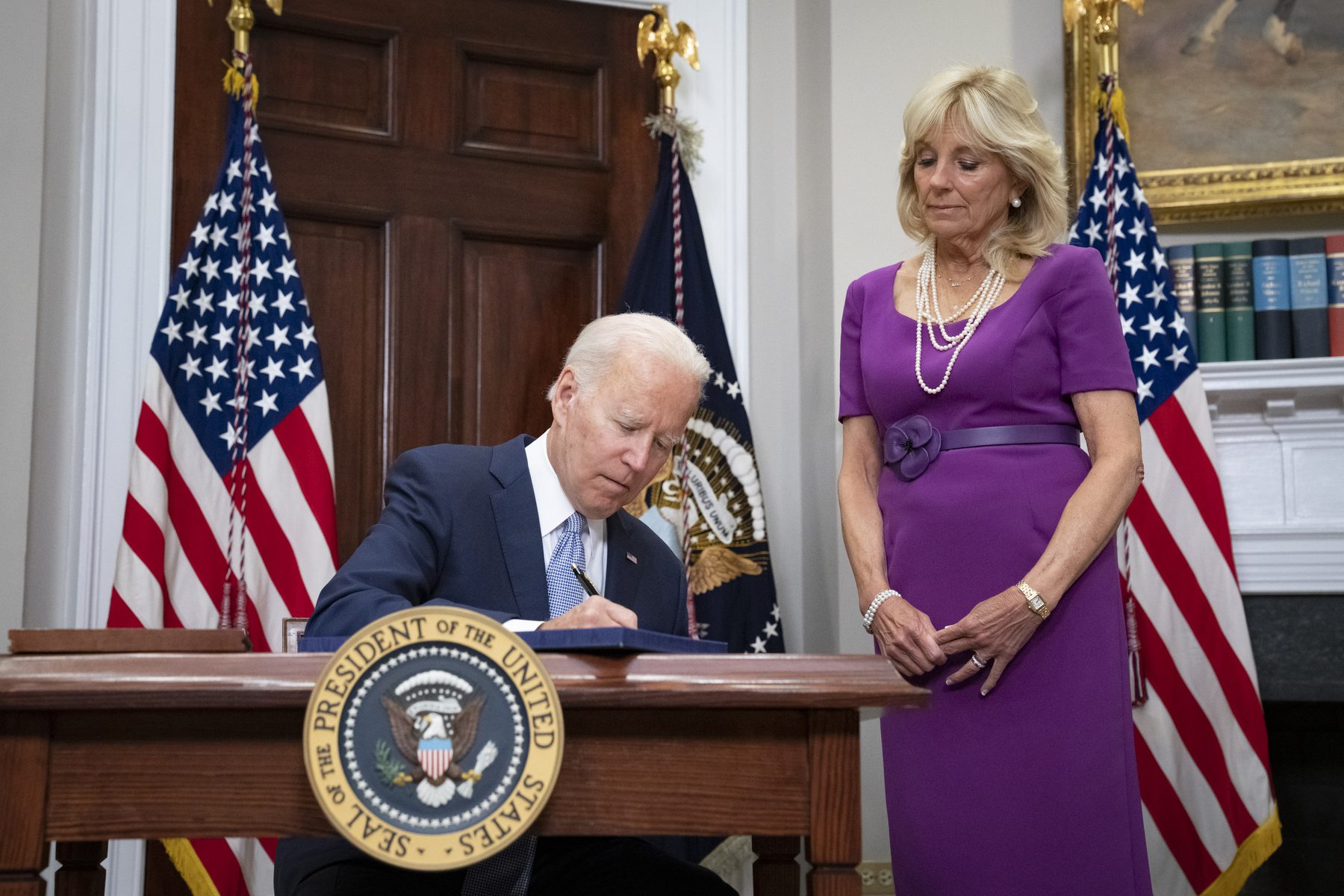
On June 23, 2022, the Senate passed the Bipartisan Safer Communities Act 65 to 33. 48 Democrats, 2 independents and 15 Republicans voted yes; 33 Republicans voted no, and 2 did not vote senate.gov. On June 24 the House passed it 234 to 193. Democrats voted 220 to 0; Republicans voted 14 to 193 clerk.house.gov. President Biden signed it on June 25 presidency.ucsb.edu.
"This bill is a compromise. It doesn't do everything I want. But what we are doing will save thousands of lives without violating anyone's Second Amendment rights." govinfo.gov
Sen. Chris Murphy (D-Conn.), Senate floor, June 23, 2022
"And that standard is: Will it save lives? Will it save lives? And I believe the answer to that is yes... Unless a person is adjudicated mentally ill or is a violent criminal, no one's Second Amendment rights will be impacted by this legislation, period." govinfo.gov
Sen. John Cornyn (R-Tex.), Senate floor, June 23, 2022
2024
Donald Trump received 77,302,580 votes and Kamala Harris 75,017,613 fec.gov. Trump won the Electoral College 312 to 226 archives.gov.
Religion in this era
Christians and the parties. In Pew's 2024 study of voters, 85% of white evangelical Protestant voters identified with or leaned Republican and 14% Democratic, and Republicans had gained among white Catholics pewresearch.org. Since 2007, the share of self-described liberals who identify as Christian fell from 62% to 37%; among conservatives it fell from 89% to 82% pewresearch.org. In the 119th Congress (2025), 265 of 270 Republicans (98%) and 196 of 262 Democrats (75%) identify as Christian pewresearch.org.
The religiously unaffiliated. 29% of U.S. adults are religiously unaffiliated: 5% atheist, 6% agnostic and 19% "nothing in particular" pewresearch.org. These voters "have long aligned with the Democratic Party" and in Pew's 2024 study were 70% Democratic pewresearch.org. Kyrsten Sinema, elected in 2012, was the first member of Congress to describe her religion as "none" pewresearch.org.
Latter-day Saints. In 2012 Republicans nominated Mitt Romney, who had said in 2007: "I believe in my Mormon faith and I endeavor to live by it" presidency.ucsb.edu. He lost to Barack Obama, 206 electoral votes to 332 archives.gov. The 119th Congress has nine Latter-day Saint members pewresearch.org.
Jewish Americans and Israel votes. In Pew's 2019 and 2020 survey, 71% of Jewish Americans were Democrats or leaned Democratic pewresearch.org. On April 20, 2024, the House passed the Israel Security Supplemental Appropriations Act 366 to 58. Republicans voted 193 to 21; Democrats voted 173 to 37 clerk.house.gov. The 119th Congress has 32 Jewish members, 29 Democrats and 3 Republicans pewresearch.org.
Muslim Americans. On September 14, 2001, the same day as the force vote, the House agreed to a resolution "condemning bigotry and violence against Arab-Americans, American Muslims, and Americans from South Asia" govinfo.gov. In 2007 Keith Ellison, a Minnesota Democrat, became "the first Muslim to serve in either the U.S. House of Representatives or the U.S. Senate" history.house.gov. On January 27, 2017, Executive Order 13769 suspended entry for 90 days of nationals of the countries referred to in section 217(a)(12) of the Immigration and Nationality Act, suspended the U.S. Refugee Admissions Program for 120 days, and suspended entry of Syrian refugees federalregister.gov. In September 2017, after an agency review, the President issued Proclamation No. 9645, restricting entry for nationals of eight countries. Hawaii, three individuals and the Muslim Association of Hawaii sued, alleging that the stated security concerns were "pretexts for discriminating against Muslims." On June 26, 2018, in Trump v. Hawaii, the Supreme Court upheld the proclamation 5 to 4, noting that three Muslim-majority countries, Iraq, Sudan and Chad, had been removed from the list since January 2017 law.cornell.edu.
Sikh and Hindu Americans. On Sunday, August 5, 2012, a gunman attacked the Sikh Temple of Wisconsin in Oak Creek; "six innocent individuals lost their lives while preparing to attend a Sunday morning worship," and three were severely injured. The House condemned the attack by resolution on September 13, 2012 govinfo.gov. President Obama ordered flags to half-staff presidency.ucsb.edu, and Republican nominee Mitt Romney said: "Our hearts are with the victims, their families, and the entire Oak Creek Sikh community" presidency.ucsb.edu. In 2013 Tulsi Gabbard, a Hawaii Democrat, became the first Hindu in either chamber pewresearch.org; she later served as Director of National Intelligence under President Trump, beginning in 2025 history.house.gov. The 119th Congress has four Hindu members pewresearch.org.
Buddhist Americans. Mazie Hirono of Hawaii, elected in 2012, was the first Buddhist elected to the Senate pewresearch.org. The 119th Congress has three Buddhist members, all Democrats: Hirono, Hank Johnson and Derek Tran pewresearch.org.
ISIS: is that religion? The State Department lists ISIS, "formerly al-Qa'ida in Iraq," as a Foreign Terrorist Organization, first designated December 17, 2004 state.gov. On September 19, 2014, an open letter addressed to its leader, Abu Bakr al-Baghdadi, and "to the fighters and followers of the self-declared 'Islamic State'," listed more than 120 Muslim scholars and leaders from around the world as signers. It stated: "It is forbidden in Islam to kill the innocent" and "It is forbidden in Islam to declare a caliphate without consensus from all Muslims" lettertobaghdadi.com.
"ISIL is not Islamic. No religion condones the killing of innocents. And the vast majority of ISIL's victims have been Muslim." presidency.ucsb.edu
Barack Obama, President, address to the nation, September 10, 2014
"We are also taking strong measures to protect our Nation from radical Islamic terrorism... We will work with our allies, including our friends and allies in the Muslim world, to extinguish this vile enemy from our planet." presidency.ucsb.edu
Donald Trump, President, address to a joint session of Congress, February 28, 2017
In that address, Obama asked Congress for "additional authorities and resources to train and equip" the Syrian opposition presidency.ucsb.edu. On September 17, 2014, the House voted 273 to 156 for an amendment authorizing the Secretary of Defense "to train and equip appropriately vetted elements of the Syrian opposition" govinfo.govclerk.house.gov. Republicans voted 159 to 71; Democrats voted 114 to 85 clerk.house.gov. For the new campaign against ISIS, the Congressional Research Service reported, the administration relied on the 2001 authorization everycrsreport.com.
Where they still agree
The same surveys that measure the gap also find shared ground.
- 79% of Americans say Social Security benefits "should not be reduced in any way," including 77% of Republicans and 83% of Democrats pewresearch.org.
- 72% support limits on what individuals and organizations can spend on campaigns, "including comparable majorities in both parties" pewresearch.org.
- 70% say the people in members' own districts have too little influence on Congress pewresearch.org.
Ten such questions, each with at least 65% agreement in both parties, are collected in the starting ten.
What comes next
In 2001 the House voted 420 to 1. In 2017 the average gap between the parties on ten values was 36 points. In 2024, 79% of Americans, including 77% of Republicans and 83% of Democrats, gave the same answer on Social Security. What's next starts from those numbers.
Sources
- Office of the Clerk, U.S. House of Representatives, Roll Call 342 (2001), "H. J. Res. 64, To authorize the use of United States Armed Forces against those responsible for the recent attacks launched against the United States," September 14, 2001. clerk.house.gov (locator: vote totals and votes by party). Accessed 2026-10-30. Barbara Lee's vote: same page, member list.
- Congressional Record, Daily Digest, Senate and House chamber action, vol. 147, no. 120, pp. D897 to D900, September 14, 2001. govinfo.gov (locator: Senate: "Use of Force Authorization ... 98 yeas (Vote No. 281)"; House: H.J. Res. 64 and S.J. Res. 23, H. Con. Res. 227). Accessed 2026-10-30. House section: govinfo.gov.
- U.S. Senate, Roll Call Vote 107th Congress, 1st Session, Vote Number 281, "On the Joint Resolution (S.J. Res. 23)," September 14, 2001. senate.gov (locator: vote counts and grouped vote positions; read via the Internet Archive copy at web.archive.org, Wayback timestamp 2015). Accessed 2026-10-30.
- National Commission on Terrorist Attacks Upon the United States, The 9/11 Commission Report, 2004, chapter 9, "Heroism and Horror." govinfo.gov (locator: p. 311). Accessed 2026-10-30.
- Congressional Research Service, "2001 Authorization for Use of Military Force: Issues Concerning Its Continued Application," R43983, April 14, 2015. everycrsreport.com (locator: summary, paragraphs 1 and 2). Accessed 2026-10-30.
- U.S. Department of Homeland Security, "Creation of the Department of Homeland Security." dhs.gov (locator: introductory paragraphs; Homeland Security Act of 2002, Public Law 107-296, November 25, 2002). Accessed 2026-10-30.
- Office of the Clerk, U.S. House of Representatives, Roll Call 455 (2002), "H. J. Res. 114, To Authorize the Use of United States Armed Forces Against Iraq," October 10, 2002. clerk.house.gov (locator: vote totals and votes by party). Accessed 2026-10-30. Member votes of Pelosi, DeLay and Gephardt: same page, member list.
- U.S. Senate, Roll Call Vote 107th Congress, 2nd Session, Vote Number 237, "On the Joint Resolution (H.J.Res. 114)," October 11, 2002. senate.gov (locator: vote counts and grouped vote positions; read via the Internet Archive copy at web.archive.org). Accessed 2026-10-30.
- Federal Election Commission, "2000 Official Presidential General Election Results." fec.gov (locator: Chart 1, Florida row and totals; read via the Internet Archive copy at web.archive.org). Accessed 2026-10-30.
- National Archives, Office of the Federal Register, "2000 Electoral College Results." archives.gov (locator: Distribution of Electoral Votes and Notes). Accessed 2026-10-30.
- Supreme Court of the United States, Bush v. Gore, 531 U.S. 98, decided December 12, 2000, Legal Information Institute, Cornell Law School. law.cornell.edu ; law.cornell.edu (locator: per curiam opinion, equal protection holding and paragraph beginning "Seven Justices"; opinion headings for the dissents). Accessed 2026-10-30.
- Albert Gore, Jr., "Address Conceding the 2000 Presidential Election," December 13, 2000, The American Presidency Project, ed. Gerhard Peters and John T. Woolley. presidency.ucsb.edu (locator: paragraph beginning "Now the U.S. Supreme Court has spoken"). Accessed 2026-10-30.
- George W. Bush, "Address in Austin Accepting Election as the 43rd President of the United States," December 13, 2000, The American Presidency Project, ed. Gerhard Peters and John T. Woolley. presidency.ucsb.edu (locator: paragraphs beginning "Our nation must rise above a house divided" and "Republicans want the best"). Accessed 2026-10-30.
- Congressional Record, House, "Authorization for Use of Military Force Against Iraq Resolution of 2002," vol. 148, October 10, 2002. govinfo.gov (locator: pp. H7776 to H7778: remarks of Ms. Pelosi, Mr. DeLay and Mr. Gephardt). Accessed 2026-10-30.
- George W. Bush, "Address to the Nation on Iraq From Cincinnati, Ohio," October 7, 2002, The American Presidency Project, ed. Gerhard Peters and John T. Woolley. presidency.ucsb.edu (locator: paragraph beginning "Later this week, the United States Congress will vote"). Accessed 2026-10-30.
- Central Intelligence Agency, Iraq Survey Group, Comprehensive Report of the Special Advisor to the DCI on Iraq's WMD, with Addendums (Duelfer Report), Volume 1, report of September 30, 2004, U.S. Government Publishing Office. govinfo.gov (locator: "Sorting Out Whether Iraq Had WMD Before Operation Iraqi Freedom," PDF p. 96). Accessed 2026-10-30.
- Pew Research Center, "Political Polarization in the American Public," June 12, 2014. pewresearch.org (locator: overview paragraphs on ideological consistency, the median Democrat and Republican, and very unfavorable views). Accessed 2026-10-30.
- Pew Research Center, "The Partisan Divide on Political Values Grows Even Wider," October 5, 2017. pewresearch.org (locator: overview; "Party gaps much larger than demographic differences"; immigrants and partisan antipathy paragraphs). Accessed 2026-10-30.
- Pew Research Center, "Changing Partisan Coalitions in a Politically Divided Nation," April 9, 2024. pewresearch.org (locator: overview bullets on education, rural voters and religious groups). Accessed 2026-10-30.
- Pew Research Center, "Political Polarization & Media Habits," October 21, 2014. pewresearch.org (locator: section "Media Sources: Nearly Half of Consistent Conservatives Cite Fox News"). Accessed 2026-10-30.
- Stefano DellaVigna and Ethan Kaplan, "The Fox News Effect: Media Bias and Voting," NBER Working Paper 12169, April 2006 (published in the Quarterly Journal of Economics, 2007). nber.org (locator: abstract). Accessed 2026-10-30.
- Gregory J. Martin and Ali Yurukoglu, "Bias in Cable News: Persuasion and Polarization," NBER Working Paper 20798, December 2014, revised June 2016. nber.org (locator: abstract). Accessed 2026-10-30.
- Levi Boxell, Matthew Gentzkow and Jesse M. Shapiro, "Is the Internet Causing Political Polarization? Evidence from Demographics," NBER Working Paper 23258, March 2017. nber.org (locator: abstract). Accessed 2026-10-30.
- Brendan Nyhan and others, "Like-minded sources on Facebook are prevalent but not polarizing," Nature 620, 137 to 144, published July 27, 2023. nature.com (locator: abstract). Accessed 2026-10-30.
- Barack Obama, "Address Before a Joint Session of the Congress on Health Care Reform," September 9, 2009, The American Presidency Project, ed. Gerhard Peters and John T. Woolley. presidency.ucsb.edu (locator: paragraphs on immigrants and the interjection "You lie!"). Accessed 2026-10-30.
- Office of the Clerk, U.S. House of Representatives, Roll Call 165 (2010), "H. R. 3590, Patient Protection and Affordable Care Act, On Motion to Concur in Senate Amendments," March 21, 2010. clerk.house.gov (locator: vote totals and votes by party). Accessed 2026-10-30. Wilson (SC), Republican: same page, member list.
- U.S. Senate, Roll Call Vote 111th Congress, 1st Session, Vote Number 396, "On Passage of the Bill (H.R. 3590 as Amended)," December 24, 2009. senate.gov (locator: vote counts and grouped vote positions; read via the Internet Archive copy at web.archive.org). Accessed 2026-10-30.
- Congressional Record, House, H.R. 3590 and H.R. 4872 debate, vol. 156, part 2, March 21, 2010. govinfo.gov (locator: pp. H1895 to H1896: remarks of Mr. Boehner and Ms. Pelosi). Accessed 2026-10-30.
- Barack Obama, "Remarks on Signing the Patient Protection and Affordable Care Act," March 23, 2010, The American Presidency Project, ed. Gerhard Peters and John T. Woolley. presidency.ucsb.edu (locator: editorial note: "H.R. 3590, approved March 23, was assigned Public Law No. 111-148"). Accessed 2026-10-30.
- Office of the Clerk, U.S. House of Representatives, Roll Call 14 (2011), "H. R. 2, Repealing the Job-Killing Health Care Law Act," January 19, 2011. clerk.house.gov (locator: vote totals and votes by party). Accessed 2026-10-30.
- U.S. Senate, Roll Call Vote 115th Congress, 1st Session, Vote Number 179, "On the Amendment (McConnell Amdt. No. 667), to H.R. 1628," July 28, 2017. senate.gov (locator: vote counts and grouped vote positions; read via the Internet Archive copy at web.archive.org). Accessed 2026-10-30.
- Supreme Court of the United States, Obergefell v. Hodges, No. 14-556, decided June 26, 2015, Legal Information Institute, Cornell Law School. law.cornell.edu (locator: syllabus holding and lineup; opinion of the Court, final paragraph; Roberts, C.J., dissenting, introduction and conclusion). Accessed 2026-10-30.
- Pew Research Center, "Attitudes on Same-Sex Marriage," fact sheet, May 14, 2019. pewresearch.org (locator: chart data "by political party identification (2001-2019)," rows 2004 and 2019). Accessed 2026-10-30.
- Federal Election Commission, "Official 2016 Presidential General Election Results," January 30, 2017. fec.gov (locator: popular vote totals for Clinton and Trump; read via the Internet Archive copy at web.archive.org). Accessed 2026-10-30.
- National Archives, Office of the Federal Register, "2016 Electoral College Results." archives.gov (locator: Distribution of Electoral Votes; notes on Hawaii, Texas and Washington). Accessed 2026-10-30.
- Hillary Clinton, "Address Accepting the Presidential Nomination at the Democratic National Convention in Philadelphia, Pennsylvania," July 28, 2016, The American Presidency Project, ed. Gerhard Peters and John T. Woolley. presidency.ucsb.edu (locator: paragraphs beginning "Twenty years ago I wrote a book" and "America needs every one of us"). Accessed 2026-10-30.
- Donald J. Trump, "Address Accepting the Presidential Nomination at the Republican National Convention in Cleveland, Ohio," July 21, 2016, The American Presidency Project, ed. Gerhard Peters and John T. Woolley. presidency.ucsb.edu (locator: paragraphs beginning "I have visited the laid-off factory workers" and "I am your voice!"). Accessed 2026-10-30.
- Pew Research Center, "As Partisan Hostility Grows, Signs of Frustration With the Two-Party System," August 9, 2022. pewresearch.org (locator: overview paragraphs on immoral, dishonest and very unfavorable views). Accessed 2026-10-30.
- Levi Boxell, Matthew Gentzkow and Jesse M. Shapiro, "Cross-Country Trends in Affective Polarization," NBER Working Paper 26669, January 2020, revised November 2021. nber.org (locator: abstract). Accessed 2026-10-30.
- Minnesota Court of Appeals, State of Minnesota v. Derek Michael Chauvin, A21-1228, filed April 17, 2023. mn.gov (locator: Facts, "Floyd's Arrest and Death" and procedural history, pp. 2 to 6). Accessed 2026-10-30.
- U.S. Senate, Roll Call Vote 116th Congress, 2nd Session, Vote Number 126, "On Cloture on the Motion to Proceed (S. 3985, JUSTICE Act)," June 24, 2020. senate.gov (locator: vote counts and grouped vote positions; read via the Internet Archive copy at web.archive.org). Accessed 2026-10-30.
- Congressional Record, Daily Digest, Senate, vol. 166, no. 116, p. D523, June 24, 2020. govinfo.gov (locator: "Justice Act, Cloture"). Accessed 2026-10-30.
- Office of the Clerk, U.S. House of Representatives, Roll Call 119 (2020), "H. R. 7120, George Floyd Justice in Policing Act," June 25, 2020. clerk.house.gov (locator: vote totals and votes by party). Accessed 2026-10-30.
- Congressional Record, Senate, vol. 166, no. 116, June 24, 2020. govinfo.gov (locator: pp. S3162 to S3163, remarks of Mr. Schumer; and pp. S3169 to S3170, remarks of Mr. Scott of South Carolina, govinfo.gov). Accessed 2026-10-30.
- Federal Election Commission, "Official 2020 Presidential General Election Results." fec.gov (locator: popular vote totals for Biden and Trump; read via the Internet Archive copy at web.archive.org). Accessed 2026-10-30.
- National Archives, Office of the Federal Register, "2020 Electoral College Results." archives.gov (locator: Distribution of Electoral Votes and Notes). Accessed 2026-10-30.
- Supreme Court of the United States, Order List, Texas v. Pennsylvania, et al., No. 155, Orig., December 11, 2020. supremecourt.gov (locator: order in pending case). Accessed 2026-10-30.
- Congressional Record, Daily Digest, House of Representatives, vol. 167, no. 4, January 6, 2021. govinfo.gov (locator: entries "Joint Session" and "Recess"). Accessed 2026-10-30.
- Congressional Record, House, "Impeaching Donald John Trump, President of the United States, for High Crimes and Misdemeanors," vol. 167, January 13, 2021. govinfo.gov (locator: p. H166, remarks of Ms. Pelosi; pp. H171 to H172, remarks of Mr. McCarthy). Accessed 2026-10-30.
- Office of the Clerk, U.S. House of Representatives, Roll Call 10 (2021), "On Agreeing to the Objection (Arizona)," January 6, 2021. clerk.house.gov (locator: vote totals and votes by party). Accessed 2026-10-30. And Roll Call 11 (2021), On Agreeing to the Objection (Pennsylvania), January 7, 2021, clerk.house.gov.
- U.S. Senate, Roll Call Vote 117th Congress, 1st Session, Vote Number 1, "On the Objection (Arizona electoral votes)," January 6, 2021. senate.gov (locator: vote counts and grouped vote positions; read via the Internet Archive copy at web.archive.org). Accessed 2026-10-30. And Vote Number 2 (Pennsylvania), January 7, 2021, senate.gov.
- Office of the Clerk, U.S. House of Representatives, Roll Call 17 (2021), "H. Res. 24, Impeaching Donald John Trump, President of the United States, for high crimes and misdemeanors," January 13, 2021. clerk.house.gov (locator: vote totals and votes by party). Accessed 2026-10-30.
- U.S. Senate, Roll Call Vote 117th Congress, 1st Session, Vote Number 59, "Guilty or Not Guilty (Article of Impeachment Against Former President Donald John Trump)," February 13, 2021. senate.gov (locator: vote counts and grouped vote positions; read via the Internet Archive copy at web.archive.org). Accessed 2026-10-30.
- National Archives, "The Constitution of the United States: A Transcription." archives.gov (locator: Article I, Section 3). Accessed 2026-10-30.
- The White House, "Granting Pardons and Commutation of Sentences for Certain Offenses Relating to the Events at or Near the United States Capitol on January 6, 2021," proclamation, January 20, 2025. whitehouse.gov (locator: sections (a) and (b) and final directive). Accessed 2026-10-30.
- Supreme Court of the United States, Dobbs v. Jackson Women's Health Organization, No. 19-1392, decided June 24, 2022, slip opinion. supremecourt.gov (locator: syllabus, "Held" and lineup). Accessed 2026-10-30.
- Democratic Party, "2024 Democratic Party Platform," August 19, 2024, The American Presidency Project, ed. Gerhard Peters and John T. Woolley. presidency.ucsb.edu (locator: section on reproductive freedom, paragraphs beginning "More than one in three women" and "President Biden, Vice President Harris, and Democrats are committed"). Accessed 2026-10-30.
- Republican Party, "2024 Republican Party Platform," July 8, 2024 (adopted July 15, 2024), The American Presidency Project, ed. Gerhard Peters and John T. Woolley. presidency.ucsb.edu (locator: chapter 8, item 4, "Republicans Will Protect and Defend a Vote of the People, from within the States, on the Issue of Life"; APP note on adoption). Accessed 2026-10-30.
- Pew Research Center, "Public Opinion on Abortion," fact sheet, March 12, 2026. pewresearch.org (locator: "Views on abortion by party identification, 2026," survey of January 20 to 26, 2026). Accessed 2026-10-30.
- Congressional Record, Senate, vol. 168, June 23, 2022. govinfo.gov (locator: p. S3115, remarks of Mr. Cornyn; pp. S3142 to S3143, remarks of Mr. Murphy, govinfo.gov). Accessed 2026-10-30.
- U.S. Senate, Roll Call Vote 117th Congress, 2nd Session, Vote Number 242, "On the Motion to Concur in the House amendment to S. 2938 with an amendment (Amdt. No. 5099)," June 23, 2022. senate.gov (locator: vote counts and grouped vote positions; read via the Internet Archive copy at web.archive.org). Accessed 2026-10-30.
- Office of the Clerk, U.S. House of Representatives, Roll Call 299 (2022), "S. 2938, On Concurring in the Senate Amendments to the House Amendment," June 24, 2022. clerk.house.gov (locator: vote totals and votes by party). Accessed 2026-10-30.
- Joseph R. Biden, Jr., "Press Release: Bills Signed: S. 2089 and S. 2938," June 25, 2022, The American Presidency Project, ed. Gerhard Peters and John T. Woolley. presidency.ucsb.edu (locator: full text). Accessed 2026-10-30.
- Federal Election Commission, "Official 2024 Presidential General Election Results." fec.gov (locator: popular vote totals for Trump and Harris; read via the Internet Archive copy at web.archive.org). Accessed 2026-10-30.
- National Archives, Office of the Federal Register, "2024 Electoral College Results." archives.gov (locator: Distribution of Electoral Votes). Accessed 2026-10-30.
- Pew Research Center, "Religious Landscape Study: Executive Summary," February 26, 2025. pewresearch.org (locator: "At present" bullets; political ideology bullet). Accessed 2026-10-30.
- Pew Research Center, "Faith on the Hill: The religious composition of the 119th Congress," January 2, 2025. pewresearch.org (locator: paragraphs on Latter-day Saints, Jewish, Muslim, Hindu and Buddhist members, and party composition). Accessed 2026-10-30.
- Pew Research Center, "Faith on the Hill: The Religious Composition of the 113th Congress," November 16, 2012. pewresearch.org (locator: "Congress' First Hindu and Other Firsts"). Accessed 2026-10-30.
- Mitt Romney, "Address at the George Bush Presidential Library in College Station, Texas ("Faith in America")," December 6, 2007, The American Presidency Project, ed. Gerhard Peters and John T. Woolley. presidency.ucsb.edu (locator: paragraph beginning "There are some for whom these commitments are not enough"). Accessed 2026-10-30.
- National Archives, Office of the Federal Register, "2012 Electoral College Results." archives.gov (locator: Distribution of Electoral Votes). Accessed 2026-10-30.
- Pew Research Center, "Jewish Americans in 2020," May 11, 2021. pewresearch.org (locator: overview, paragraph beginning "Politically, U.S. Jews"). Accessed 2026-10-30.
- Office of the Clerk, U.S. House of Representatives, Roll Call 152 (2024), "H. R. 8034, Israel Security Supplemental Appropriations Act, 2024," April 20, 2024. clerk.house.gov (locator: vote totals and votes by party). Accessed 2026-10-30.
- U.S. House of Representatives, History, Art & Archives, "ELLISON, Keith." history.house.gov (locator: Extended Biography, first paragraph). Accessed 2026-10-30.
- Executive Order 13769, "Protecting the Nation From Foreign Terrorist Entry Into the United States," January 27, 2017, Federal Register, 82 FR, February 1, 2017. federalregister.gov (locator: Sec. 3(c) and Sec. 5(a), (c)). Accessed 2026-10-30.
- Supreme Court of the United States, Trump v. Hawaii, No. 17-965, decided June 26, 2018, Legal Information Institute, Cornell Law School. law.cornell.edu (locator: syllabus, including paragraphs 3(b) and 3(d) and lineup). Accessed 2026-10-30.
- U.S. House of Representatives, H. Res. 775, 112th Congress, engrossed September 13, 2012. govinfo.gov (locator: full text). Accessed 2026-10-30.
- Barack Obama, "Proclamation 8846, Honoring the Victims of the Tragedy in Oak Creek, Wisconsin," August 6, 2012, The American Presidency Project, ed. Gerhard Peters and John T. Woolley. presidency.ucsb.edu (locator: full text). Accessed 2026-10-30.
- Mitt Romney, "Statement by Mitt Romney on Today's Shooting in Wisconsin," August 5, 2012, The American Presidency Project, ed. Gerhard Peters and John T. Woolley. presidency.ucsb.edu (locator: full text). Accessed 2026-10-30.
- U.S. House of Representatives, History, Art & Archives, "GABBARD, Tulsi." history.house.gov (locator: Concise Biography). Accessed 2026-10-30.
- U.S. Department of State, Bureau of Counterterrorism, "Foreign Terrorist Organizations." state.gov (locator: designated list, entry dated December 17, 2004). Accessed 2026-10-30.
- "Open Letter to Dr. Ibrahim Awwad Al-Badri, alias 'Abu Bakr Al-Baghdadi'," 24th Dhul-Qi'da 1435 AH / September 19, 2014, lettertobaghdadi.com. lettertobaghdadi.com (locator: Executive Summary; Open Letter salutation; List of Signatories; read via the Internet Archive copy of 2015 at web.archive.org). Accessed 2026-10-30.
- Barack Obama, "Address to the Nation on United States Strategy To Combat the Islamic State of Iraq and the Levant Terrorist Organization (ISIL)," September 10, 2014, The American Presidency Project, ed. Gerhard Peters and John T. Woolley. presidency.ucsb.edu (locator: paragraphs beginning "Now, let's make two things clear" and "Across the border, in Syria"). Accessed 2026-10-30.
- Donald J. Trump, "Address Before a Joint Session of the Congress," February 28, 2017, The American Presidency Project, ed. Gerhard Peters and John T. Woolley. presidency.ucsb.edu (locator: paragraphs beginning "Our obligation is to serve" and "As promised, I directed the Department of Defense"). Accessed 2026-10-30.
- Congressional Record, Daily Digest, House of Representatives, vol. 160, September 17, 2014. govinfo.gov (locator: entry "Making continuing appropriations for fiscal year 2015," McKeon amendment). Accessed 2026-10-30.
- Office of the Clerk, U.S. House of Representatives, Roll Call 507 (2014), "H. J. Res. 124, On Agreeing to the Amendment (McKeon of California, Part B)," September 17, 2014. clerk.house.gov (locator: vote totals and votes by party). Accessed 2026-10-30.
- Pew Research Center, "Americans' views of government aid to the poor, role in health care and Social Security," June 24, 2024. pewresearch.org (locator: section on the future of Social Security). Accessed 2026-10-30.
- Pew Research Center, "Americans' Dismal Views of the Nation's Politics," September 19, 2023. pewresearch.org (locator: overview bullets on influence and campaign spending limits). Accessed 2026-10-30.
- Voteview, Senate roll call 508, 116th Congress, passage of H.R. 748, March 25, 2020. voteview.com Accessed 2026-10-31.
- EY Tax News, "House approves CARES Act by voice vote," March 27, 2020. taxnews.ey.com Accessed 2026-10-31.
- GovInfo, Public Law 116-136, Coronavirus Aid, Relief, and Economic Security Act. govinfo.gov Accessed 2026-10-31.
Last checked against its sources on October 30, 2026. Report a correction.